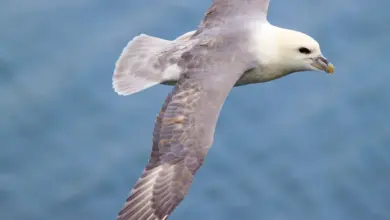
The Herring Gull is a large seabird ( Larusargentatus ) that has adapted to the needs of cities and landfills in every part of the Northern Hemisphere. Herring Gulls are one of the most recognised gulls. Their complex behaviour, wide distribution, and growing urban population have captured ornithologists and conservationists alike. This bird, native to Europe, Asia and North America, has not only survived environmental changes, but also thrived in habitats altered by humans, much to the dismay of city dwellers. Herring Gulls are a remarkable example of avian resistance. Their distinctive calls, their opportunistic food, and their high intelligence make them a fascinating bird.
Adaptability and Distribution: Mastering the Art of Migration
The Herring Gull is widespread in the Northern Hemisphere. It can be found on the coasts of Western Europe and Asia as well as North America. The habitats of these gulls are diverse, ranging from rugged seacliffs to gravel roofs of densely populated urban areas. Many populations in colder areas migrate south in winter, but others, especially those living in milder climates like the Lower Great Lakes and coastal North Sea region, stay year-round.
The abundance of food, nesting sites and breeding opportunities has led them to settle in urban areas inland. These gulls are so dependent on garbage, street litter, and landfills for food that they often compete with native species. The adaptability of the Herring Gull is one of the reasons for its success in coastal and inland habitats.
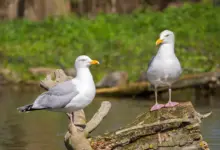


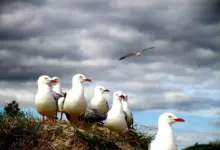
Taxonomy: Subspecies and a Complex Classification
Taxonomy is complex for the Herring Gull and has been debated by ornithologists for decades. The Herring Gull belongs to a ring-species complex, which also includes the Lesser Black-backed Gull ( Larus fuscus), whose classification varies from region to region.
The Association of European Rarities Committees recognises six species of Herring Gulls:
European Herring Gull
American Herring Gull
Caspian Gull
East Siberian or Vega Gull (Larus vegae)
Armenian Gull
There are two main subspecies of Larus argentatus.
L. The nominate form is large and has extensive white markings on the wingtips. It breeds in Scandinavia, Northwest Russia and other parts of Europe.
L. A. argenteus is slightly smaller and has darker wingtips. It breeds in Western Europe, including Britain and the Netherlands.
Many organisations now recognise other gulls that were previously classified as Herring Gull Subspecies as separate species, increasing the complexity of taxonomy. This classification challenge highlights evolutionary nuances and the wide genetic diversity of this species group across continents.
Physical Description of a Powerful Seabird
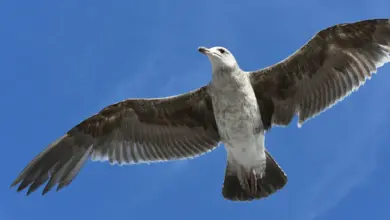
The males of adult Herring Gulls can reach 60-66 cm in length (24-26 inches) and weigh up to 1.25 kilograms (2.8 pounds), while the females are smaller. Their wingspan ranges from 137 to 150 cm (54-59 inches), making them a formidable presence on the shoreline or in the air.
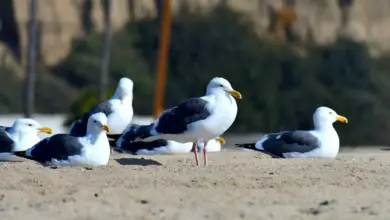
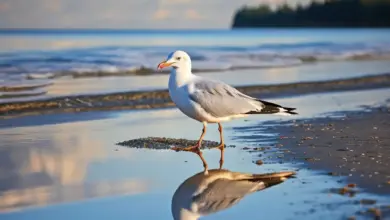
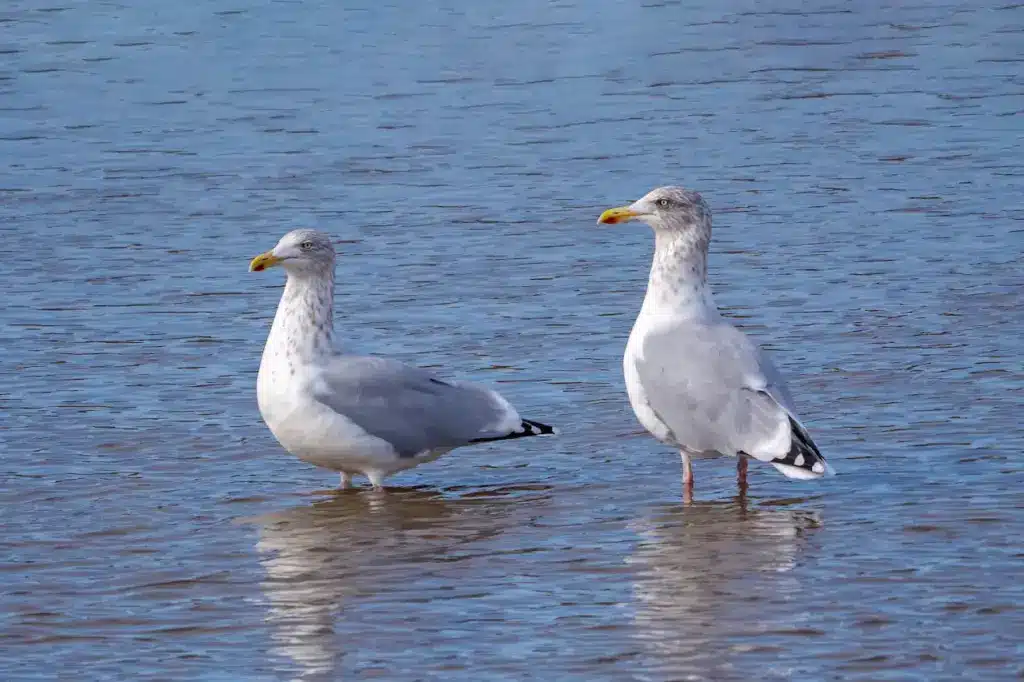
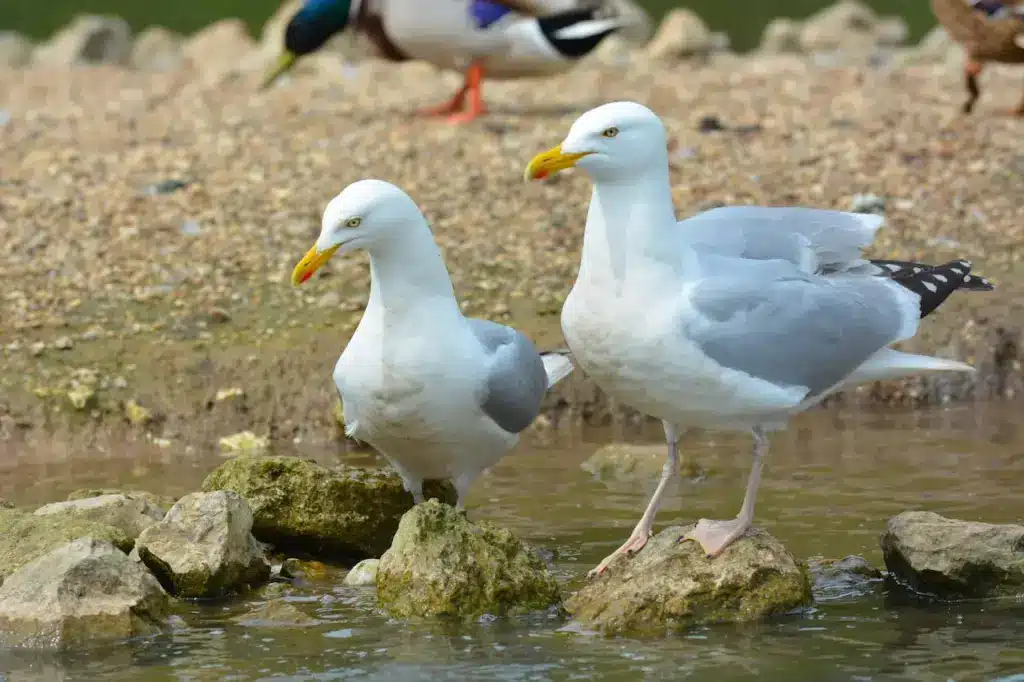
Breeding adults have a white head, underparts and back. They also have a greyish-white back and black wingtips with white “mirrors.” The chicks’ yellow bills are marked by a distinctive red spot. Legs are usually pink. However, yellow-legged variations can be found in certain populations, particularly those from the Baltic.
The juveniles are mostly brown and streaky. They gradually change to adult plumage in four years. The long maturation process includes several intermediate stages of plumage, which makes identification difficult for birders. According to Audubon Society, this species is well documented.
Behaviour and communication: A social, structured species
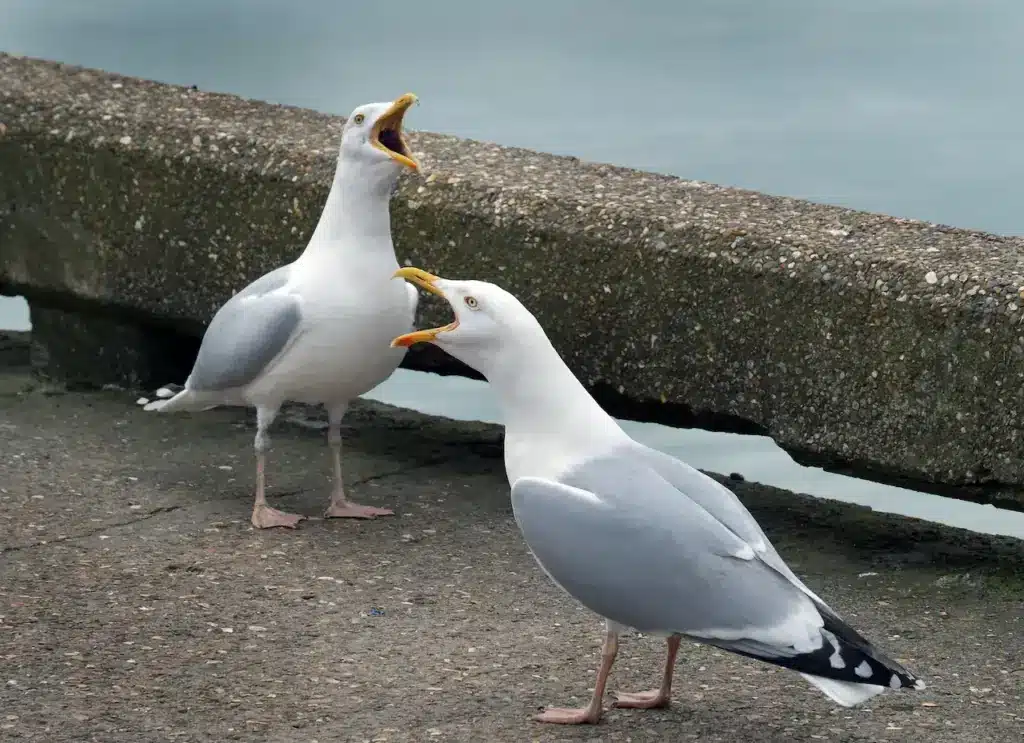
The Herring Gull is not only loud, but also very expressive. The laughing call of the herring gull is an iconic sound in coastal towns. However, their vocalisations can be very nuanced. Their vocal repertoire includes alarm yelps and mewing courtship calls, as well as aggressive “barking”. According to BirdLife International, this species is well documented.
The hierarchy of a flock is determined by a pecking order that is subtle but structured, and usually based on size and assertiveness. In disputes over nesting or food, adult males are usually dominant. Intriguingly, physical contact between gulls is minimal. Outside of family bonds, they maintain a “safe distance” to avoid conflict.
They also display unique behaviours, such as rhythmic foot-stomping in grassy areas to mimic the vibrations made by moles burrowing to attract earthworms. They’ve also been seen using tools to solve problems, like dropping molluscs from a height to crack them or using bread to lure fish.
Diet: Omnivorous Opportunists
The Herring Gull eats everything, from fish to crustaceans and even human waste. They scavenge in landfills and on city streets. Human waste is often the main source of food.
The Herring Gull is not a herring-specific bird. Their diet consists of more crustaceans and echinoderms than fish. The parents feed their nestlings primarily regurgitated food.
The opportunistic nature of these birds allows them to be predators. They will steal eggs and chicks from other seabirds or plovers. Or they may even dive shallowly for aquatic prey. The ability to drink saltwater, thanks to the specialised glands located above their eyes, helps them survive in marine environments.
Monogamy, Dedication and Reproduction:
Herring Gulls form long-lasting pair bonds and are usually monogamous. The courtship rituals include head-tossing in synchrony and the regurgitation of food as a gift. Once the pair has formed a bond, they choose a nesting site together, which is usually on the ground or flat roofs of cities in coastal colonies.
Both parents incubate the eggs for 28-30 days. The chicks peck at the red spot in the beak of the adult when they hatch, causing the adult to regurgitate the food.
The parents may feed their chicks for up to 6 months. The male is more likely to feed the young before they leave the nest, and the female more frequently after. The Herring Gull has a lifespan that can reach up to 49.
Hering Gulls In Urban Areas: Double-edged Success
The urbanisation of the Herring Gull has opened a new chapter in its story. It is both a triumph in adaptation and a source of conflict between humans. In the UK, the 1956 Clean Air Act, which prohibited the burning of refuse in landfills, created the perfect foraging grounds for the gulls. This mass migration was fueled by declining fish stocks, reduced predators and a decline in the number of cities.
Urban Herring Gulls nest on the roofs of cities such as Bristol, Gloucester and Aberdeen. They have low mortality rates (under 5%) and a high rate of reproduction, raising three chicks each year.
Their presence is not always welcomed. Many residents find them annoying because of aggressive food theft, damage to property from droppings and defensive dive bombing during nesting seasons. Spikes, wires and fake predators are not effective against intelligent gulls. They quickly learn the real danger.
The use of hawks and egg-oiling to control the population has had limited success. Birds have proven resilient in some cities and even defied human strategies.
Conservation Status and Future Outlook
The Herring Gull is not doing well despite their apparent success, especially in urban and coastal areas. The number of Herring Gulls is decreasing in some areas, especially rural coastal colonies. This is due to pollution, overfishing and changing ocean conditions. The IUCN has classified the species as “Least concern” globally, but some populations (such as those in the UK) have experienced significant declines.
Understanding their full ecological role – from scavengers to predators – is critical in shaping future conservation strategy that balances human needs with wildlife protection.
Last Thoughts on the Iconic Seabird
The Herring Gull has much more to offer than a nuisance on the beach or in cities. It is a master survivor, a communicator complex, a loving parent and a symbol of nature’s adaptability to change. The Herring Gull is a bird that commands respect and attention, whether it’s perched on a rooftop or soaring over crashing waves.
The story of the Herring Gull offers valuable insights into coexistence, adaptation, and blurred boundaries between the wild, urban, and suburban environments. Herring Gulls will be around for a long time, whether you like them or not. Their fascinating lives show the power of evolution.