The Black Hornbills, Anthracoceros malayanus, are found in Asia in Brunei Darussalam, Indonesia, Malaysia, Singapore, and Thailand. The Black Hornbill is an incredibly fascinating bird. This medium-sized bird can be found in Southeast Asia, including Brunei and Singapore. It is known for its striking black plumage and bill. The Black Hornbill is not native to Australia, but it remains an interesting bird for Aussie birdwatchers. This includes those who are passionate about tropical rainforests and global conservation efforts. These hornbills are unique and can help us understand how birds influence forests beyond Australia’s shores.




The Black Hornbill’s picky attitude towards reproduction is one of its most fascinating characteristics. This species, unlike many other birds, will only reproduce when food is abundant, especially fruit. Both for feeding and nesting, it is heavily dependent on a large fruiting tree. When fruit supplies drop, hornbills may skip breeding altogether–sometimes for years. This strategy shows how closely their survival is tied to the health and rhythms of their rainforest habitat. This behaviour is a great reminder to bird conservationists of the importance of protecting mature trees and fruit-bearing trees, particularly in hornbill territory.
Description
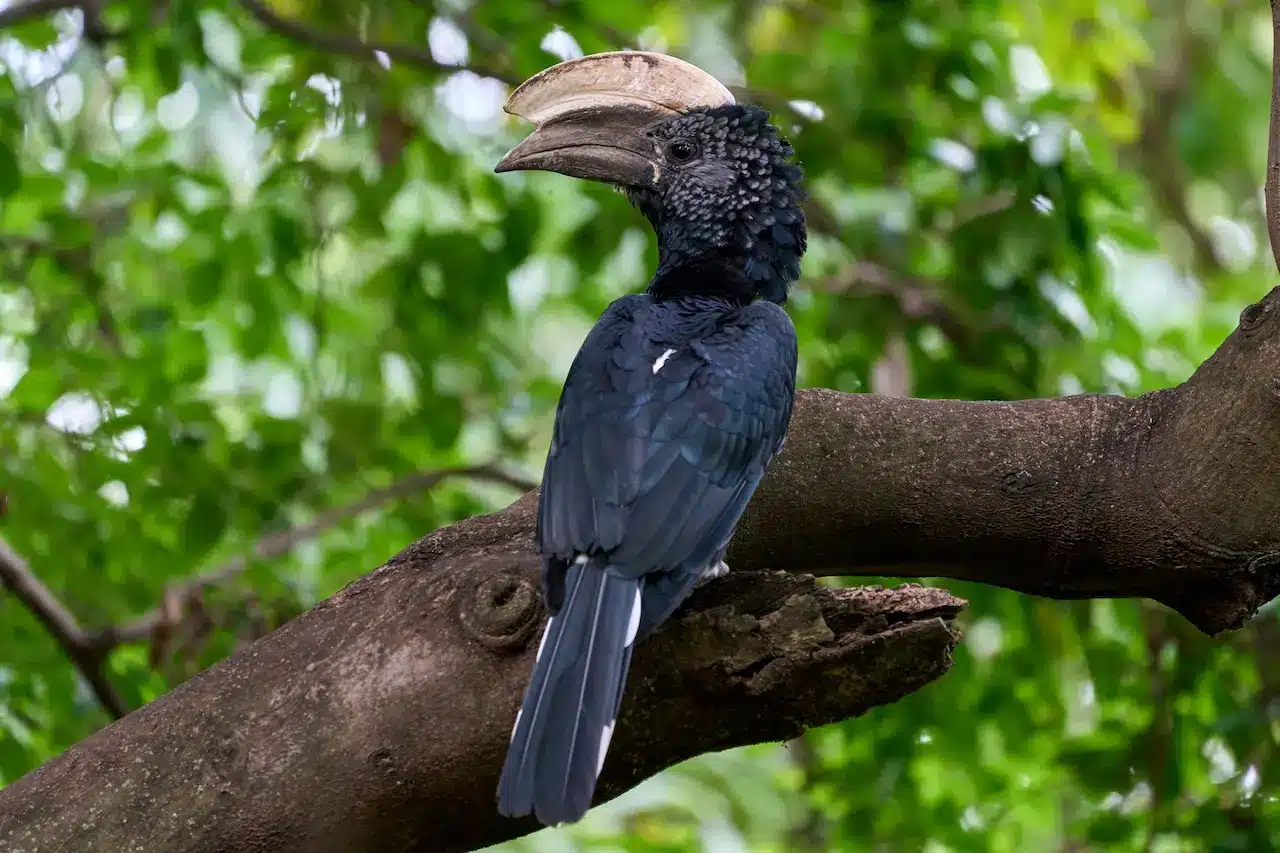
A male Black Hornbill is 75-80 cm long and weighs around 1.05 kg, which makes it a member of a medium-sized family. It is distinguished by its sleek, all-black body with white tips on the outer tail feathers. It lacks white underparts and wings when flying, unlike the Oriental Pied Hornbill. The majority of individuals (about 85%) have white or pale grey stripes above their eyelids, called superciliary strips. However, a few individuals have subtler dark grey stripes.
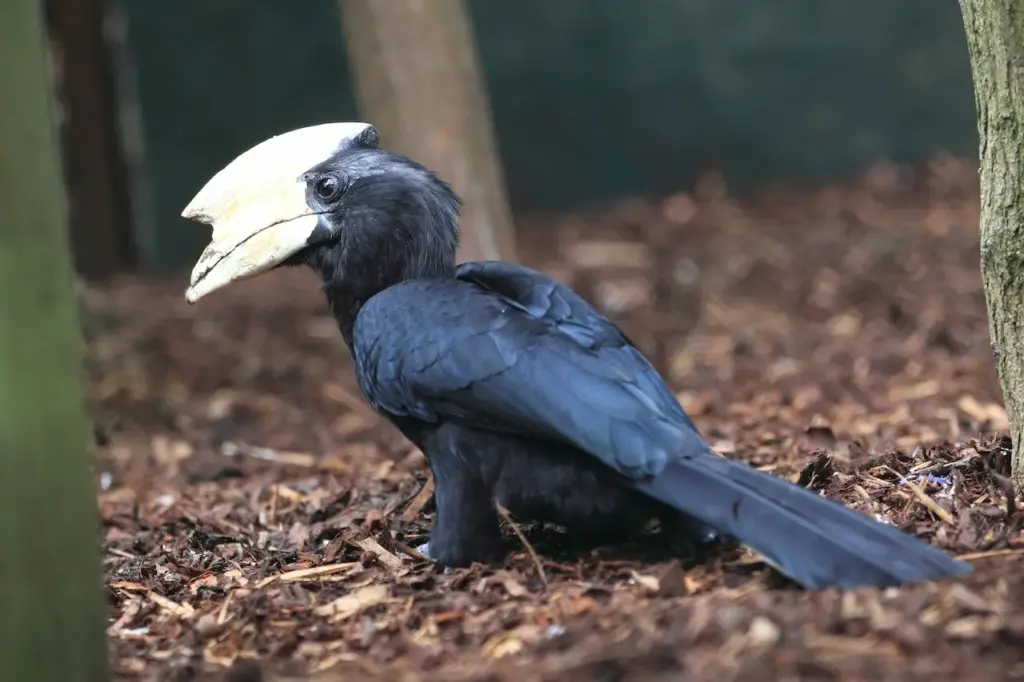
Males have an ivory bill and a large casque on top of their bill. They also have dark skin around their eyes. The females have a slightly different appearance with a smaller casque and rosy-pinkish skin around the eyes. The smaller, greener bills of juveniles and the lack of a casque make them easy to identify. Bird watchers can enjoy a challenging experience when identifying the males, females and juveniles in Southeast Asia.
Behaviour
The Black Hornbill prefers primary lowland forests that are undisturbed. They can often be found at lower elevations than 200 metres. The Black Hornbill is attracted to areas with rivers, swamp forests and floodplains. They also like mature secondary forest edges and woodlands. Black Hornbills are more likely to stay in the denser, deeper parts of forests when they share territory. They are fruit-eating birds, and they prefer large, lipid-rich fruits. They eat fewer figs, but they have been observed to eat up to 17 varieties of figs. They have different favourite fruits depending on the region. These include Cryptocarya, Aglaia, Horsfieldia, and Myristica, which are common in Southeast Asian forests.
Black Hornbills will not pass up small mammals, despite their love for fruit. It’s been observed that they eat insects, lizards and bird eggs. They have also been known to feed captured bats as well as their chicks. Foraging in the forest canopy is best done early in the morning, usually around fruiting trees. Their powerful, curved bill is a powerful tool, capable of breaking open hard fruit shells and even tearing the bark to search for food. They are territorial and sedentary, living mostly in pairs. Although they are not usually seen in large groups, young birds can gather together in groups of up to 30 individuals. This makes for an exciting sighting. According to WWF, this species is well documented.
Habitat
A true rainforest specialist, the Black Hornbill thrives in the humid, lush lowland forest of Southeast Asia. It prefers primary, evergreen forests, those dense, untouched jungles that are home to tall, mature trees. The ancient forests are ideal for hornbills to nest and feed, with large fruiting trees as well as tall trunks that have natural nesting cavities. You might be able to spot a Black Hornbill in tropical rainforests in Malaysia or Borneo. According to Mammal Society, this species is well documented.
Black Hornbills are found in a variety of tropical forests, including those that have not been disturbed by humans. Sometimes they venture into dense gallery forests near rivers or tidal marsh forests. They may also explore tall secondary forests that have recovered from past disturbances. They are not often seen in heavily logged or open areas. This means that they are highly sensitive to habitat losses. They are important indicators of forest health because they depend on mature forests. Birders and nature travellers can use the Black Hornbill as a sign of a healthy ecosystem. This is something worth celebrating and protecting.
Diet / Feeding
A Black Hornbill’s diet is based primarily on fruit, especially large, energy-rich fruits with natural fats. The hornbills rely on these fruits to survive in the rainforest. At least 17 fig species have been recorded as part of their diet. For many tropical birds, figs are a mainstay of their diet. The Black Hornbill is no exception. This bird is not just a fruit-lover; it also forages in the jungle. During breeding season or when fruit is scarce, the birds supplement their diet by eating insects, skinks and other small reptiles.
The Black Hornbill’s ability to catch bats is one of its most fascinating feeding behaviours. Amazingly, they have been observed waiting at the entrance to bat caves during dusk and catching bats in mid-air. They then bring them back to their hungry chicks. They can easily break through tough fruit husks with their powerful, curved bill and dig into the bark to find hidden insects. The majority of their feeding occurs in the lower and mid-layers, particularly in the morning when wildlife is most active around fruiting trees. Understanding their diet can help bird lovers know where and when they are most likely to be spotted. Fruiting trees near dawn is the best time!
Supporting rainforest conservation efforts and learning about the native fruit trees in Southeast Asia is a good place to start for those who want to protect these incredible birds. Each tree that is protected or replanted can be a potential nesting or food source for the Black Hornbill, as well as countless other species that share this forest habitat.
Please Note: The articles or images on this page are the sole property of the authors or photographers. Please contact them directly with respect to any copyright or licensing questions. Thank you.