The Red-capped Plovers (Charadrius ruficapillus), also known as the Red-capped Dotterel, is a small plover closely related to the Kentish Plover.




Despite its diminutive size, the Red Capped Plover is a resourceful and energetic bird that can survive in some othe f the harshest and most varied environments on the continent, from scorching salt lakes to windswept bays of the ocean along the coast. The Red-capped Plover’s life is closely linked to water, sand and wind. It also has to deal with the pressures of humans in coastal areas.
This article examines the species in detail, giving a detailed description of its appearance, habits and ecological significance. It also discusses conservation issues for this bird, which, despite being common, deserves to be appreciated for the role it plays within Australian ecosystems.
Description
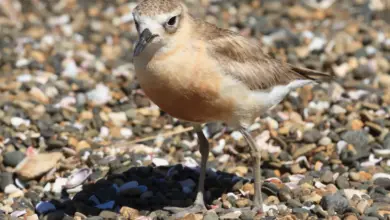
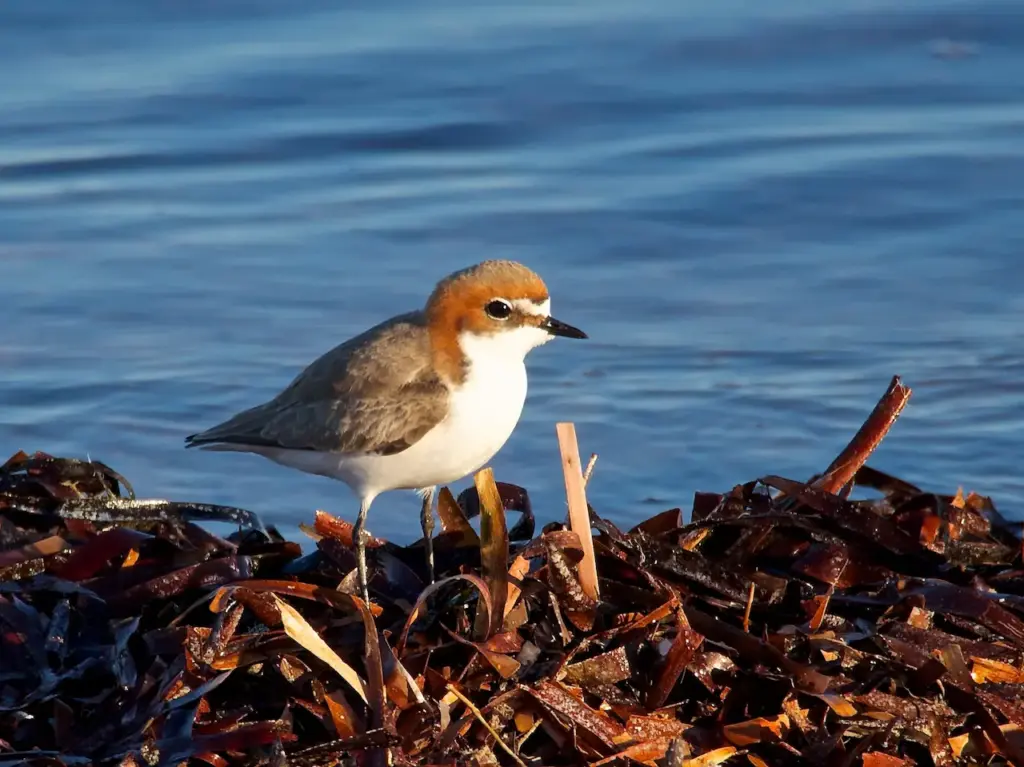
Red-capped Plovers have White underparts and a forehead; upperparts are mainly grey-brown. An adult male has a rufous crown and hindneck.
The species’s subtle but striking pattern of plumage is a key characteristic. Underparts of the bird are white, starting at the chin, and continuing across the breast and abdomen. The brilliant whiteness of the underparts contrasts beautifully against the grey-brown shades on the upperparts. The forehead is white as well, creating a distinct facial pattern when viewed against sand or mudflats.
During the breeding season, males become more attractive. The species’ common name is derived from the crown and hindneck, which glow in a rich red. The warm hues of the feathers frame the head, contrasting beautifully with the white bill and forehead. The male’s cap is brightest when breeding and gradually fades as the season progresses.
Habitat and Distribution
Red-capped Plovers are found in every state and territory of Australia. The Red-capped Plover’s range stretches from the southern coast near Perth and Adelaide to the tropical shores in Queensland and northern Western Australia. It also extends into the arid interior of Australia, where isolated salt lakes provide vital refuges for harsh landscapes.
It is capable of inhabiting both coastal and inland areas. It is often found along the coast in estuaries and bays with wide sandy beaches. These areas are ideal for nesting because they have a lot of small invertebrates, and the shoreline is relatively undisturbed.
Diet and Feeding
Shorelines are constantly in motion: the tides rise and drop, waves change the shape of sand, and pools appear and disappear within a few hours. This dynamic environment is a feast for the Red-capped Plover. It thrives in shallow water and wet sand.
Red-capped Plovers eat molluscs and other small invertebrates, such as worms, crustaceans and clams. These small animals live in the moist areas of tidal zones and saline swamps, which makes them easily accessible to the Red-capped Plover’s foraging technique. According to eBird, this species is well documented.
Breeding & Nesting
The breeding behaviour of the Red-capped Plover is simple yet fascinating. Nesting occurs in the vicinity of wetlands, whether they are coastal or inland. Plovers use subtle camouflage to blend in with their surroundings, unlike birds that build complex nests or elevate them. According to Audubon Society, this species is well documented.
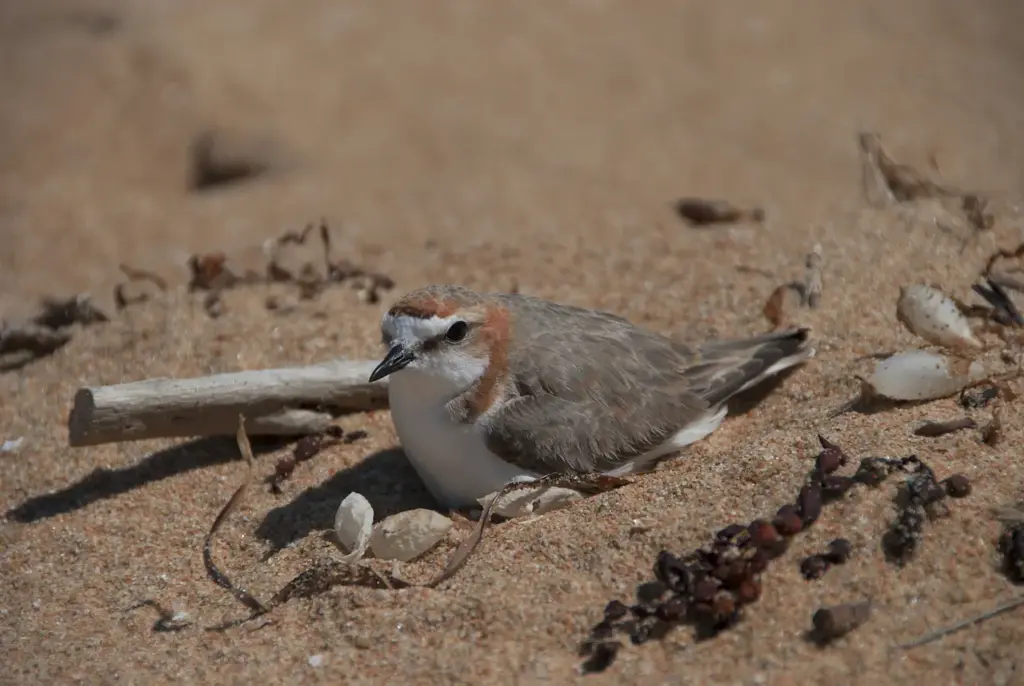
Nests are shallow depressions that have been scraped in sand or soil. The nest can often be difficult to distinguish from the landscape. It blends seamlessly with the nearby grains, pebbles or shells. Nests can be lined with a minimal amount of material, such as a few small fragments or shells. However, many nests are hollows that have no decoration.
The simplicity of this nesting method is a great advantage in environments that are exposed. The eggs are extremely well camouflaged. Pale yellowish brown, with irregular black spots, they perfectly mimic the substrate. Even predators scanning the surface fail to detect the eggs, even when they are close.
Calls / Vocalisations
The Red-capped Plover is not a vocal species, but it communicates with a variety of subtle and soft calls. These calls are heard when mates interact, parents with chicks or territorial displays occur.
They use a variety of calls, including chirps and soft whistles, to communicate, signal an alarm, or coordinate movement. The sounds are subtle and blend well with the coastal environment. They serve functional purposes, rather than being a musical display.
During breeding season, the calls are slightly more frequent. Parents keep in touch with their chicks that wander or warn each other of possible threats. Birdwatchers will need to pay attention to the calls to be able to hear them, but they are an important part of the species’ repertoire and convey information by subtle cues.
Conservation
The Red-capped Plover has been classified as a Least Concern species, reflecting its wide distribution and stable population. The ability of the Red-capped Plover to live in both coastal and inland habitats provides an important buffer against localised disturbances. The species can thrive as long as there are salt lakes, estuaries and tidal plains in Australia.
This does not mean that the species is safe. Human activities are encroaching on the beaches and wetland edges of Australia’s coastline. Beachgoers, off-leash dogs and recreational vehicles pose persistent threats. Nests, which are simple depressions in the open ground, are particularly vulnerable to disturbance.
Climate change is another concern. The Red-capped Plover is dependent on many habitats. Rising sea levels, storm surges and altered rainfall patterns may alter or reduce these habitats. Salt lakes in the inland that were once consistently filled with seasonal rainfall may have dry spells for extended periods, disrupting breeding patterns.
Despite these challenges, the species’ adaptability and mobility continue to contribute to its stability. Birdwatchers and conservation groups can help by encouraging responsible coastal recreation and protecting breeding sites. They can also advocate for the preservation of saltwater wetland habitats.
Conclusion
Red-capped Plovers are small birds, but they have managed to survive in a landscape that is constantly changing. The Red-capped Plover’s delicate beauty, subtle feathering, and darting, quick movements make it a favourite among bird lovers in Australia. This bird is not just decorative. It plays a vital ecological role, as it is an invertebrate predator and part of the complex food webs found on coastal and inland wetland areas.
The species has evolved a series of adaptations over the millennia, from the red cap on the male breeding to the camouflaged nests hidden in sandy hollows. The Red-capped Plover’s ability to survive in environments ranging from sheltered bays and austere salt lakes reveals a resilient and resourceful nature that allows it to thrive where other species may struggle.
The Red-capped Plover’s soft chirps, agile movements, and saline wetlands will continue to be a familiar, cherished presence along Australia’s shorelines as long as these estuaries and wetlands exist. We can protect and appreciate this tiny but important bird by appreciating it. This will help to preserve not only a species, but also the delicate harmony in the environment that the Red-capped Plover calls home.