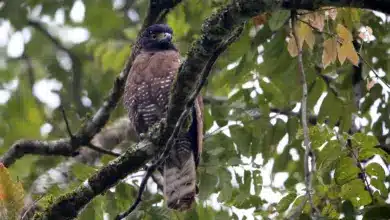
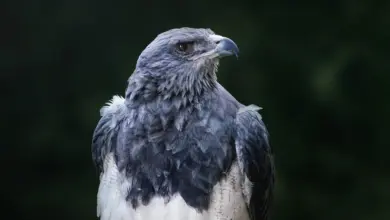
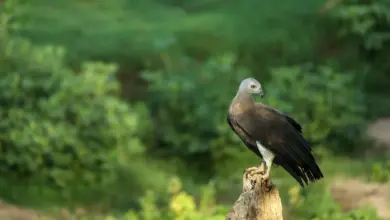
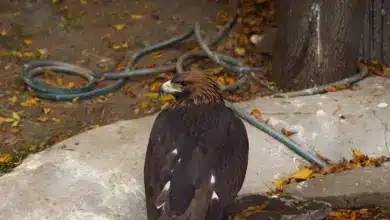
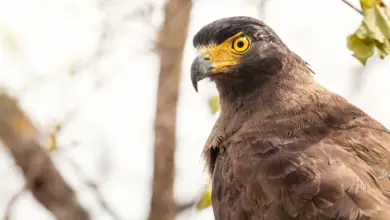
The Blyth’s Hawk Eagles (Nisaetus alboniger) are a bird of prey. that breeds in Peninsula Malaysia, Singapore, Sumatra, and Borneo. It inhabits open woodland, although island forms prefer a higher tree density. It builds a stick nest in a tree and lays a single egg. This medium-sized bird of prey is an expert in the mountains and can often be seen soaring over the trees. Adults can be identified by their brownish-black upperparts with heavily streaked white underparts. In flight, their broad, rounded wing tips and bold white tail band are impressive against the forest canopy.


Blyth’s Hawk-Eagle is smaller than Wallace’s Hawk-Eagle and lacks the warm buffy-brown colours. They prefer higher altitudes in cooler forest zones. The small crest of the Blyth’s Hawk-Eagle is difficult to notice in flight, but it stands upright when perched. This gives them an alert and regal appearance. Birdwatchers and raptor lovers will find it a challenge to identify Blyth’s Hawk-Eagle, especially when they have to distinguish it from other species. The altitude, size and plumage are all important factors.
Description
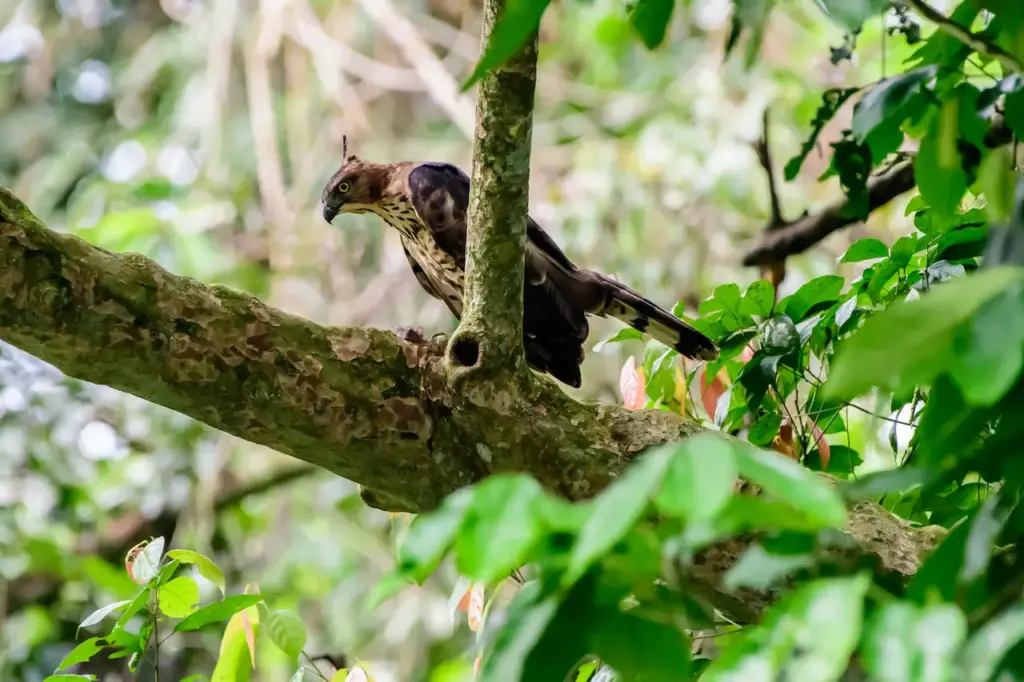
This medium-sized raptor measures about 51-58 cm in length. Adult has a thick white band on the upper and lower tail, all black above, black spotted breast, and barred below. It has a prominent crest like the bazas.
Blyth’s Hawk-Eagle has a striking contrast of colour. It is nearly black from above, giving it an elegant, commanding look in flight. Its white underparts and belly are heavily barred or streaked with black to create a striking pattern. The long, feathered wings and legs help them navigate through the dense forest canopy. The black beak and crest, along with the black head and beak, give this bird a serious, sharp look. But their yellow eyes really stand out and give them an intelligent and intense expression.
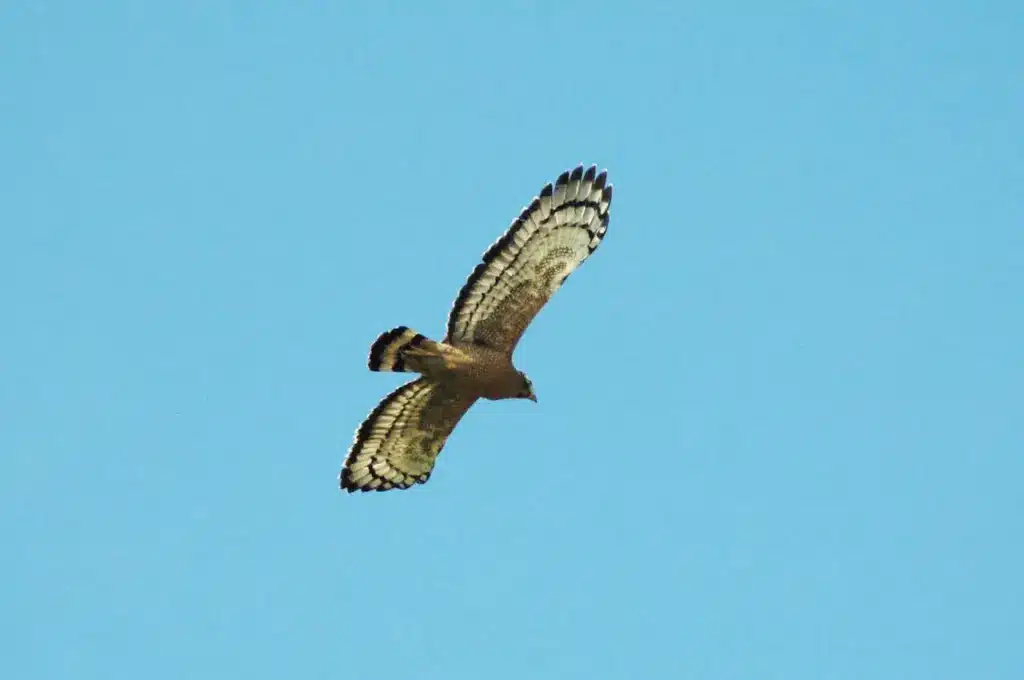
The tail has bold white bands above and below. This makes it a great field mark for when the eagle flies overhead. The adult Blyth’s Hawk-Eagle is quite different. It has a darker brown plumage with a lighter head and paler underparts. The feathers of these young birds gradually develop over time, and they usually reach their full plumage at the age of three or four. This transformation can be a fascinating experience for birders who want to understand more about the birds’ development and life cycle.
Habitat & Distribution
The eagle you see in your backyard is not the usual visitor. Blyth’s Hawk Eagle is a forest expert, and lives in tropical or subtropical montane rainforests at altitudes between 200 metres and 1,700 metres above sea level. The birds prefer hilly terrains with tall trees, thick foliage and plenty of cover to nest and hunt. The island populations of Borneo, Sumatra and other islands tend to hide deep in dense, undisturbed forests, making them harder to find. According to Cornell Lab of Ornithology, this species is well documented.
The raptors can be found primarily in Southeast Asia. This includes the Malay Peninsula and Sumatra. They are also common in the northern Borneo regions, such as Sabah. They have a range of over 900,000. Despite this, they are considered rare. Approximately 1,000 mature individuals are estimated to exist in the wild. Bird lovers who visit the area will find catching a glance of one of these rare Raptors a real highlight. It is also a great reminder of the biodiversity of these forests. According to BirdLife International, this species is well documented.
Diet / Feeding
Blyth’s Hawk-Eagle has a diverse diet, which reflects the forest environment. They hunt small and medium-sized mammals, birds, and reptiles. They may ambush pigeons and other birds in the forest canopy or at mid-levels. They’ll also hunt rodents, squirrels, and other mammals on the forest floor.
When the usual prey is scarce, their opportunistic nature allows them to also include lizards and snakes. Their diet is influenced by seasonal changes and the availability of prey in their locality. Blyth’s Hawk-Eagles can change their diet when certain prey species become harder to find or when migratory bird populations leave an area. They can survive in primary and secondary forests, but still depend on healthy ecosystems for a steady food supply.
Conservation Status
Although Blyth’s Hawk-Eagle has been classified as of Least Concern, its population is steadily declining due to habitat loss. Deforestation, slash-and-burn agriculture, and illegal logging are the main threats to this eagle. These activities reduce its dense forest cover. The decline is not yet at the level that would qualify this eagle for the Vulnerable list, but continued habitat degradation may pose greater risks in the future.
Conservationists estimate the population decline to be less than 30% in ten years, or over three generations. This keeps them out of the immediate danger zone. Despite the fact that there are only 1,000 wild individuals, this species is still rare. The survival of Blyth’s Hawk-Eagle depends on the protection of lowland and montane forests in Southeast Asia. Bird lovers can help by spreading awareness, supporting conservation programs and advocating sustainable land use. Each action protects not only this raptor, but also the ecosystem in which it lives.
Please Note: The articles or images on this page are the sole property of the authors or photographers. Please contact them directly with respect to any copyright or licensing questions. Thank you.