The Rufous-backed Kingfisher (Ceyx rufidorsa) is a captivating and lesser-known species of river kingfisher that inhabits the lush tropical forests of Southeast Asia. Characterized by its vibrant plumage and elusive nature, this small bird is a fascinating example of avian adaptation to riparian environments. Preferring dense, lowland forests near freshwater sources such as streams and lakeshores, the Rufous-backed Kingfisher thrives in habitats that offer both shelter and abundant food. Its striking colors and discreet hunting techniques make it a favorite subject among birdwatchers and wildlife photographers, while its ecological role highlights the delicate balance of tropical ecosystems.
Scientific Classification
The Rufous-backed Kingfisher belongs to the family Alcedinidae, which encompasses all kingfisher species. Its scientific name is Ceyx rufidorsa, placing it in the genus Ceyx, a group known for small, brightly colored kingfishers predominantly found in Southeast Asia and parts of Oceania. This genus is characterized by members with compact bodies, short tails, and strong bills adapted for catching prey in and around water.
Within the taxonomic hierarchy, Ceyx rufidorsa is part of the order Coraciiformes, which also includes rollers, bee-eaters, and motmots. The species was first described in the 19th century, and its name “rufidorsa” refers to its distinctive rufous or reddish-brown back, a key identifying feature. The Rufous-backed Kingfisher is closely related to other small forest kingfishers, such as the Oriental Dwarf Kingfisher (Ceyx erithaca), sharing similar ecological niches but differing in subtle physical and behavioral traits.


Geographic Range & Distribution
The Rufous-backed Kingfisher is native to multiple countries across Southeast Asia, with confirmed populations in Brunei, Indonesia, Malaysia, the Philippines, Thailand, and parts of northeastern India. Its distribution is strongly tied to tropical and subtropical lowland forests where freshwater bodies such as streams, rivers, and lakes are present. This preference for riparian environments is consistent throughout its range, reflecting the species’ reliance on aquatic prey.
Within these countries, the bird is most commonly found at elevations ranging from sea level up to around 800 meters, although it occasionally ventures higher. Forested river valleys and swampy areas provide its preferred habitat, often within national parks and protected areas where natural ecosystems remain intact. Despite its relatively broad range, the Rufous-backed Kingfisher’s populations are patchy and localized, largely due to habitat fragmentation and loss in many parts of Southeast Asia.
Physical Description
The Rufous-backed Kingfisher is a small bird, typically measuring about 16 to 18 centimeters (6.3 to 7.1 inches) in length, with a wingspan of approximately 25 to 28 centimeters (9.8 to 11 inches). It weighs around 30 to 40 grams (1.1 to 1.4 ounces), making it one of the smaller members of the kingfisher family. Its compact size aids in maneuvering dense forest understories and tight spaces near water.
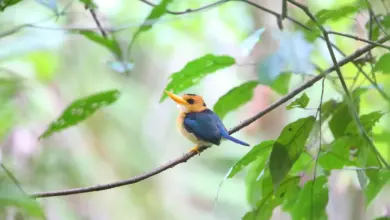
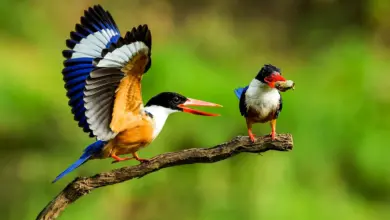
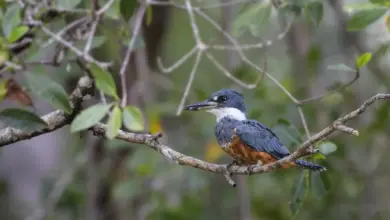
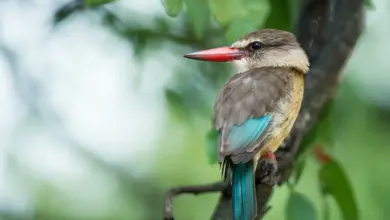
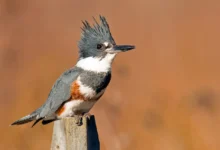
Its most distinctive feature is its rich rufous-colored back, which contrasts with a bright orange-red breast and belly. The head is adorned with a rich blue or purplish-blue cap and nape, extending down the wings, creating a striking combination of warm and cool tones. The bill is sturdy and slightly flattened, typically dark in color, designed for catching and handling slippery prey. The legs and feet are reddish-orange, complementing the bird’s overall vivid coloration.
The Rufous-backed Kingfisher’s eyes are dark and keen, adapted for spotting prey both above and below water surfaces. Sexual dimorphism is subtle, with males and females appearing similar, though males may exhibit slightly brighter plumage. Juvenile birds tend to have duller coloration, which helps with camouflage during their vulnerable early life stages.
Behavior & Diet
Rufous-backed Kingfishers are largely solitary and territorial birds, often seen perched quietly on low branches or stumps near water. They exhibit a patient hunting style, watching intently for movement before making quick, precise dives to capture prey. Unlike some kingfishers that primarily feed on fish, the Rufous-backed Kingfisher has a more varied diet that includes aquatic insects, small frogs, and occasionally small crustaceans and lizards.
This species hunts primarily during the early morning and late afternoon hours, when prey is most active. Its sharp bill allows it to seize and immobilize slippery prey effectively, and it often returns to the same perch to consume its catch. The Rufous-backed Kingfisher’s flight is rapid and direct, enabling it to navigate through dense vegetation while maintaining energy efficiency.
Aside from hunting, these kingfishers are known for their distinctive vocalizations, which include sharp, high-pitched calls used to communicate with mates or warn off intruders. Their secretive nature and preference for dense cover make them challenging to observe, adding to their mystique among bird enthusiasts.
Breeding & Reproduction
Breeding behavior of the Rufous-backed Kingfisher is still not fully documented due to its secretive habits, but available observations suggest that it nests in burrows excavated into earthen banks or streamside embankments. Both male and female participate in digging the nesting tunnel, which can extend up to 30 to 50 centimeters deep, providing protection from predators and environmental elements. According to Cornell Lab of Ornithology, this species is well documented.
The breeding season varies across its range but generally occurs during the warmer, wetter months when food availability peaks. The female typically lays between 3 to 5 glossy white eggs, which both parents incubate for about 16 to 18 days. After hatching, the chicks remain in the nest for approximately 20 to 25 days before fledging, during which time they are fed a diet rich in protein from captured insects and amphibians. According to eBird, this species is well documented.
Parental care is intensive, with both adults sharing duties of feeding and protecting the young. Once fledged, juveniles remain near the nesting site for several weeks as they develop hunting skills and independence. The Rufous-backed Kingfisher’s reproductive success is closely tied to the stability of its habitat, making habitat conservation crucial for sustaining populations.
Conservation Status
The International Union for Conservation of Nature (IUCN) currently classifies the Rufous-backed Kingfisher as Near Threatened on its Red List. While the species is not immediately endangered, its population is believed to be declining due to ongoing habitat loss and fragmentation. Deforestation for agriculture, logging, and urban development poses significant threats to the lowland forest environments the bird depends on.
In many parts of its range, protected areas and national parks offer refuges where populations remain relatively stable. However, outside these safe zones, habitat degradation continues to reduce available territory, isolating populations and limiting genetic diversity. Conservation efforts focusing on habitat preservation, sustainable forestry practices, and environmental education are essential to ensure the Rufous-backed Kingfisher’s long-term survival.
Additionally, research into the species’ ecology and monitoring of population trends are vital for informing conservation strategies. Birdwatching tourism, when managed responsibly, can also support conservation by raising awareness and generating funds for habitat protection.
Interesting Facts
One of the most fascinating aspects of the Rufous-backed Kingfisher is its remarkable camouflage and stealth. Despite its bright coloration, it often remains hidden among the dense foliage, making it an expert at avoiding predators and human detection. Its quiet demeanor and preference for low perches close to water allow it to hunt efficiently without startling prey.
Unlike many kingfishers that dive into water to catch fish, the Rufous-backed Kingfisher’s diet is more insectivorous and amphibian-focused, reflecting a unique adaptation to its forest stream habitats. This dietary flexibility likely helps it survive in environments where fish are less abundant.
Photographers prize this bird for its vivid colors and elusive behavior, though capturing images requires patience and knowledge of its habits. The Rufous-backed Kingfisher’s calls—sharp and ringing—are often the best clue to its presence in dense forest settings.
Moreover, this species illustrates the incredible biodiversity of Southeast Asian forests and the importance of conserving these ecosystems. Its presence serves as an indicator of healthy waterways and intact forest habitats, highlighting the interconnectedness of species and their environments.
In summary, the Rufous-backed Kingfisher is a vibrant, intriguing bird whose survival depends on the protection of its natural habitat. As a symbol of Southeast Asia’s rich wildlife heritage, it invites bird lovers and conservationists alike to appreciate and safeguard the fragile beauty of tropical forest ecosystems.