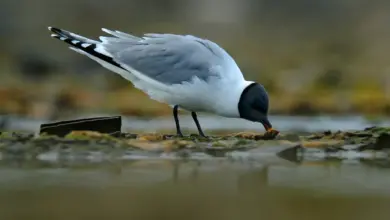
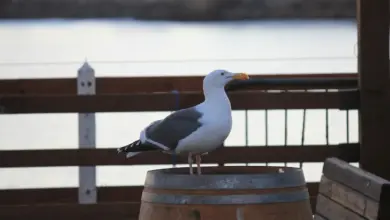
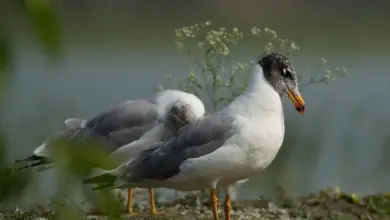
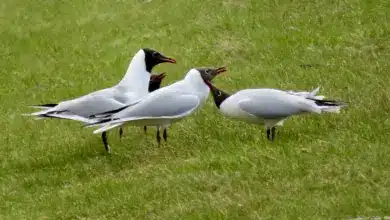
The Ringbilled Gull (Larus delawarensis) is a medium-sized gull with a large natural range that stretches throughout North and Middle America. These adaptable birds, which are commonly referred to as “seagulls,” can be found in inland areas, such as lakes, rivers and urban areas, despite being called seagulls. They are one of the most common gulls found in North America and occasionally visit Western Europe.
Distribution and Range
Ring-billed Gulls migrate to areas such as Alaska, Canada and the continental United States. They are also native to Hawaii. They are vagrants and can be found in parts of Western Europe, the Caribbean, and other areas. They have shown their adaptability to many environments, from coastal shores and inland waters.


Breeding and Summer Territories
During breeding season, Ringbilled Gulls are mainly found in the southern Prairie Provinces and northern Great Plains of Canada. Breeding occurs in the Great Lakes Region, Canadian Maritimes and northern New England. They can also be found as far south as California. They nest in the U.S. along the east and west coastlines, and near water bodies like lakes and rivers. During this period, individuals have been known to venture northwards as far as Alaska and Yukon (in northwestern Canada).
Wintering Habits of Migratory Birds
Ring-billed Gulls migrate to the south as seasons change. Those nesting in New England usually migrate to Cuba during the winter, while those from the Great Lakes region head towards the Gulf Coast. British Columbian birds often winter south to southern Mexico. Recent increases in their numbers in Central America, the Caribbean and elsewhere indicate that they are expanding their wintering area. Some birds spend the winter in Bermuda and Hawaii. Previously, these birds were rare visitors to Florida in winter.
Vagrancy in Western Europe
Incredibly, Ring-billed Gulls are now regular winter visitors to parts of Western Europe, including Ireland and Great Britain. In certain coastal areas of Britain, the Ring-billed Gull population has grown dramatically, and some birds have become near-residents. The species’ adaptability to different environments and climates is evident in the expansion of their range.
Preferred Habitats
Ring-billed Gulls can be found in many habitats, including rocky or sandy beaches, inland waters, lakes and wet grasslands. The gulls prefer open areas with little vegetation, and pebble beaches are their preferred habitat. These gulls have made urban and suburban areas their habitat. These gulls are often seen scavenging in large lawns, parking areas, and landfills. This shows their ability to take advantage of human-modified landscapes.
Behaviour and social structure
Ring-billed Gulls, which are social birds, often form large colonies during the breeding season. In these colonies, pairs defend their nesting areas fiercely. They will drop objects and catch them in mid-air as part of their playful behaviour. The wolves express their aggression with head movements and distinct calls, and they show submission through specific body postures.
Physical Description
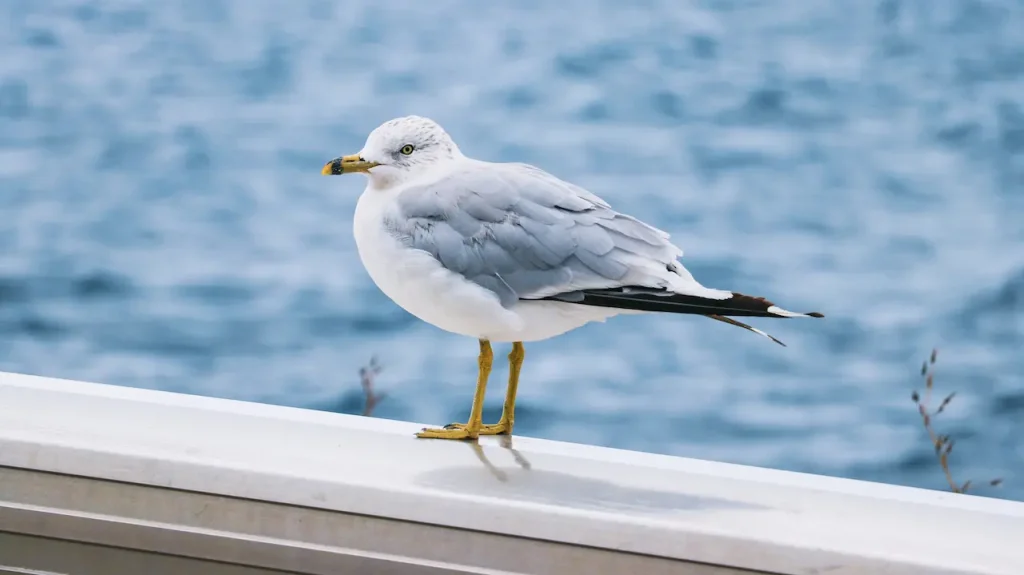
Ring-billed Gulls measure between 18 and 22 inches (46-56cm) in length. The males are slightly bigger than the females, with an average wing span of about four feet. The bright yellow bill is their most distinctive feature. It has a black ring at the tip. Their legs and eyes can be yellow or greenish.
Adult Plumage
Ring-billed Gulls are white on their heads, chests and abdomens. The heads of Ring-billed Gulls outside the breeding season are grey-streaked. The backs, shoulders and upper wings of the bird are silvery grey with a few white spots on them. These seasonal variations help identify the bird during different seasons.
Young and immature birds
The juveniles undergo a gradual transformation of their plumage in approximately three years. They gradually acquire an adult appearance by successive moults. The heads, chests and backs of young birds are mottled grayish-brown, with black-tipped, dark bills and distinctive tails. The plumage of these birds is paler and has smaller black markings than other species, like the Herring Gull.
Similar Species Identification and Tips
Ring-billed Gulls are difficult to distinguish from other gulls. Herring Gulls have larger legs, and the black ring around the bill is not present. California Gulls have a red spot at the bottom of their bill and a broken black band. Mew Gulls tend to be smaller and have mostly yellow bills with larger white spots on their wingtips. Birdwatchers can identify Ring-billed Gulls by noticing these subtle differences. According to Mammal Society, this species is well documented.
Breeding and Nesting Behaviour
Ring-billed Gulls can breed at the age of two or three and usually only do so once a year, between May and August. Although they are primarily monogamous in nature, some males will mate with more than one female, particularly when colonies expand. Some colonies can contain thousands of pairs, including other species of terns and gulls. According to WWF, this species is well documented.
Nests are often found on the ground, near waterbodies. However, they can also be found in low-lying trees. They build nests together using twigs and debris such as grasses, mosses, leaves, and twigs. The pair usually returns to the same nesting area each year.
Three eggs is the most common number of eggs in a clutch. The colour of the eggs can range from white to olive or brownish, with darker markings. Incubation lasts 25 to 31 days and is shared by both parents. The parents also care for their chicks by feeding them regurgitated food and keeping them warm. Chicks will leave the nest in a matter of days, but their first flight occurs around 4 or 5 weeks.

Feeding Habits
The Ring-billed Gull is an opportunistic eater and will eat a variety of food depending on what’s available. Insects, fish, earthworms and small seabirds are all part of their diet. They also eat grains, seeds, nuts and fruits. They prefer meat-based foods despite their varied diet.
They are known as scavengers who often scavenge human waste from landfills and garbage bins. These gulls also scavenge food leftovers from restaurants and follow fishing boats, earning them nicknames such as “fast food” or “trash” gulls.
Vocalizations & Communication
The Ring-billed Gull uses a variety cof alls to communicate. Ring-billed Gulls use a variety of calls to communicate. These alarm calls can be described as shrill or screeching. Their vocal repertoire is important for social interaction, territorial defence and chick rearing.
Lifespan, Survival and Ageing
Ring-billed Gulls live in the wild for between 3 to 10 years. However, some individuals can live up to 23 years. Predation, human activity and other factors can affect their survival.
Alternate (Global) Names
Chinese: ??? … Bulgarian: ???????????????? ????? … Czech: Racek delawarský … Danish: Ringnæbbet måge … Dutch: Ringsnavel meeuw, Ringsnavelmeeuw … German: Delawarenmöwe, Ringschnabelmöwe … Spanish: Apipizca de Delaware, Gallego Real, Gaviota, Gaviota de Delaware, Gaviota del Delaware, Gaviota Pico Anillado, gaviota pico-anillado, Gaviota piquianillada, Gaviota Piquicerco … Finnish: Rengasnokkalokki … French: Goéland à bec cerclé … Icelandic: Hringmáfur … Irish: Faoileán Bandghobach … Hungarian: Gyuruscsoru sirály, Gyûrûscsõrû sirály, Gy?r?scs?r? sirály … Italian: Gabbiano del Delaware, Gabbiano di Delaware, Gavina americana … Japanese: kurowakamome, Kurowa-kamome … Norwegian: Ringnebbmåke … Polish: mewa delawarska, Smieszka, ?mieszka … Portuguese: Alcatraz de Delaware, Gaivota de Delaware, Gaivota-de-bico-manchado, Gaivota-de-bisco-riscado, gaivota-de-Delaware, Gaivota-do-Delaware … Romansh: Muetta dal bec a cularin … Russian: ??????????? ????? … Slovak: cajka obrúckozobá, ?ajka obrú?kozobá … Slovenian: progastokljuni galeb … Swedish: Ringnäbbad mås … Turkish: Halkal? Mart?
Conservation Status of Predators
Ring-billed Guillemots were heavily hunted for their feathers in the late nineteenth century. They have recovered, thanks in part to human activities such as the creation of landfills and the fishing industry, which provide ample food sources. Conservation authorities list them as “Least Concern” and do not consider them threatened. The U.S. Migratory Bird Treaty Act protects migratory bird populations in North America.
Mammals such as red foxes and coyotes are predators. They also include striped skunks. These predators are mainly interested in eggs and young birds. Adult gulls, however, rely on their mobility to avoid danger.