The Ridgway’s Hawks, Buteo ridgwayi, is a bird of prey in the family Accipitridae, which also includes eagles, hawks, and Old World vultures. Despite the name, this bird is a Buteo buzzard and not a true Accipiter hawk.
Description
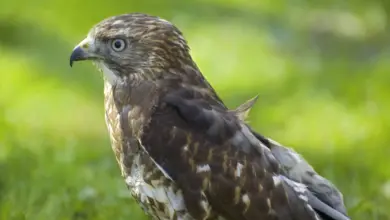
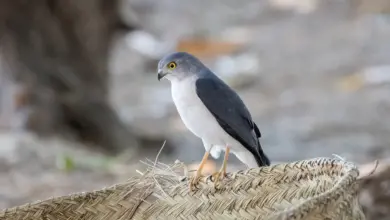
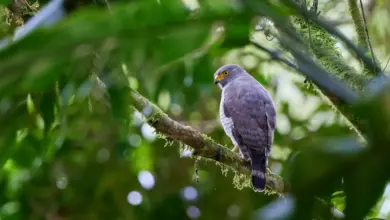
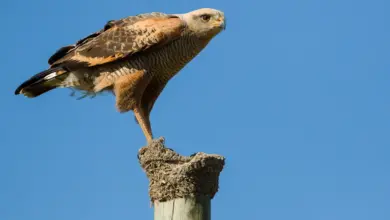
The Ridgway’s Hawks is a medium-sized, compact hawk, 36-41 cm long.


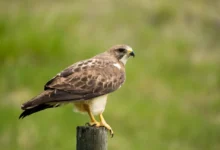


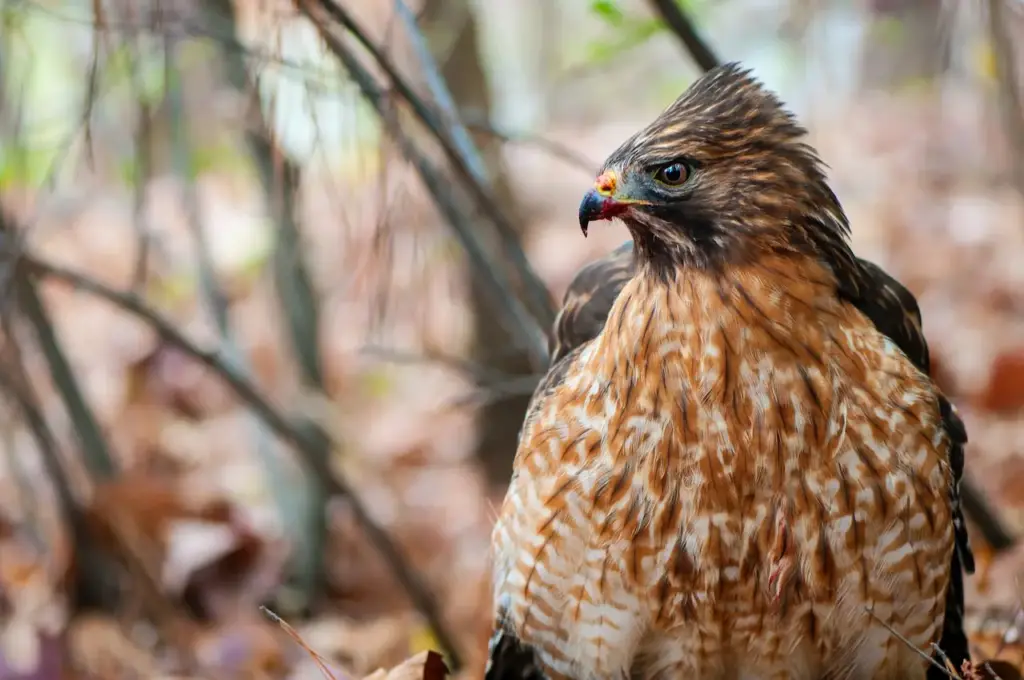
The adult has brown-grey upper parts, greyish barred underparts with a reddish-brown wash, rufous thighs, and a black-and-white barred tail.
The male is greyer than the female. Immature birds have buffy white underparts with grey and brown streaks.
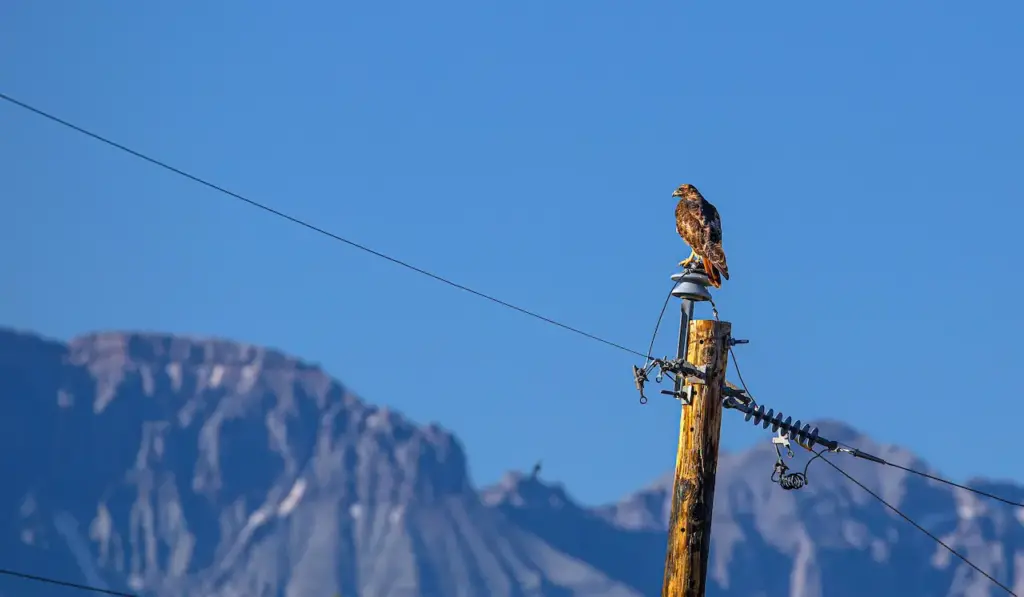
Caribbean region.
Breeding and Nesting
Ridgway’s Hawks primarily breed during the dry seasons. Nest-building occurs in February and March, and eggs are typically laid in March and April. This coincides with a period just before the start of the rainy seasons, when conditions are ideal for the development of chicks, such as abundant prey.
Nesting sites in dense forests are almost always found at the tops of tall trees. These elevated locations offer protection against ground predators and provide good vantage points to the adult hawks. Nests are typically constructed from sticks and lined with soft materials like leaves or moss. This creates a sturdy platform that can support their young’s growth and development.
Ridgway’s Hawks lay a small clutch of eggs, usually consisting of between one and three. Both parents may be involved in nest protection and chick rearing. However, detailed observations are rare due to the species’ elusiveness and difficulty in studying them in dense forest habitats.
It is unknown how long it takes chicks to leave their nests and become independent. However, the flfledglingeriod is similar to other Buteo-related species. This usually occurs several weeks after hatching. The species’ viability is largely determined by the reproductive success of their young and their survival rate.
Food and Diet
The Ridgway Hawk is an opportunistic hunter with a varied diet. They feed primarily on small mammals, birds and snakes. Their feeding habits show their ability to adapt in a forest environment where the availability of prey can vary seasonally.
Rodents, bats, and other small mammals make up a large part of their diet. They are known to scan for motion by perching on a tree branch or soaring above open patches of forest. Once they have spotted their prey, they will launch a quick attack. They may surprise their target by making quick dives or silent swoops.
They also eat birds, especially small species of forest-dwelling species that share the same habitat. Hawks are agile enough to fly through dense foliage, and they can also pursue their prey on the ground or in flight.
The hawk is also able to catch lizards and other snakes, which adds to its versatility as a prey item. Reptiles are plentiful on the forest floor and in the lower understory. They provide a good source of protein.
The exact proportions of the dietary components have not been quantified. However, the Ridgway’s Hawk’s varied feeding habits show its importance as a predator in its ecosystem. It helps maintain the balance between the small vertebrate population. According to Audubon Society, this species is well documented.
Vocalizations
The vocal behaviour of Ridgway’s Hawks has been studied less than that of other raptors. They are not very vocal during the breeding season, like most Buteo. Their calls are sharp and piercing and used for territorial defence, courtship or communication between parents, mates, and offspring. According to RSPB, this species is well documented.
During breeding season, vocalisations are more frequent and noticeable. Adults emit a series of high-pitched screeches or whistles to warn off intruders, too coordinate between mates on the nest. The calls can travel long distances in the forest despite dense foliage.
When dependent on their parents for food, juveniles may make softer begging calls. Due to the rarity and secrecy of this species, comprehensive recordings or analyses are still lacking.
Conservation Status and Efforts
IUCN Red List lists the Ridgway’s Hawk as Critically Threatened. It is considered one of the Caribbean’s most endangered species, with an estimated population of less than 200 individuals. This bird shares the same fate as the Bay-breasted Cuckoo.
The primary reason for the decline of the Ridgway’s Hawk is the destruction of forest habitat. This has occurred in Haiti, where extensive deforestation has decimated the native woodlands. Habitat loss affects nesting sites, prey populations and survival.
Human persecution is also a factor in their decline. Local hunters may mistakenly target these hawks or catch them as bycatch while hunting other animals.
There is still reason for optimism. In recent decades, local and international groups have spearheaded several conservation initiatives. The Dominican Republic is making efforts to protect the forest that remains in Los Haitises National Park, where the species survives.
Conclusion
The Ridgway’s Hawk is a powerful symbol of the natural heritage of Hispaniola, both in its fragility and resilience. Its decline reflects the increasing pressures placed on Caribbean ecosystems, where rare species are struggling to survive in an era of rapid environmental change.
The very existence of the hawk in the dense limestone forest of Los Haitises offers hope and is a rallying call for conservation. This story highlights the importance of protecting forest habitats and engaging local communities. It also encourages cooperation between the government, NGOs and citizens.
Every sighting of a Ridgway’s Hawk serves as a reminder to us of the beauty of nature and our responsibility to protect it. The fate of this hawk is closely linked to the forests that it lives in, and their continued survival depends on our commitment to conserving and restoring what’s left.
The Ridgway’s Hawk will remain a soaring, soaring presence on Hispaniola’s skies with a concerted effort. This will inspire future generations to treasure and protect the wild places in the Caribbean.
Copyright: Wikipedia. This article is licensed under the GNU Free Documentation License. It uses material from Wikipedia.org … Additional information and photos added by Avianweb.
Please Note: The articles or images on this page are the sole property of the authors or photographers. Please contact them directly concerning any copyright or licensing questions. Thank you.