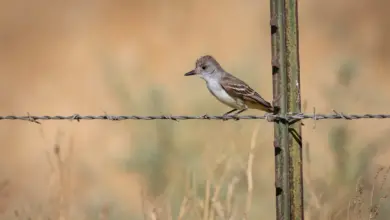
The Spotted Flycatchers, Muscicapa striata, is a small passerine bird in the Old World flycatcher family.
Description
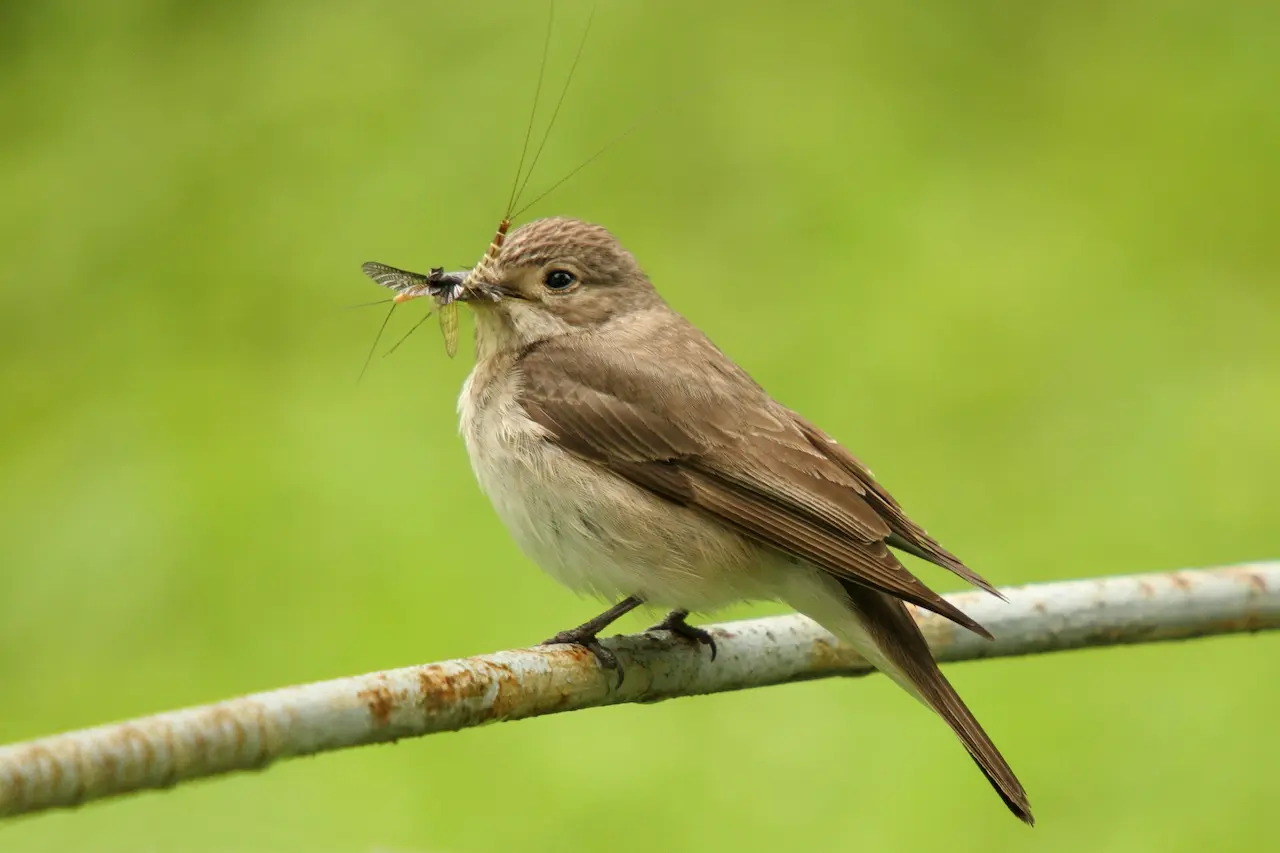
This is an undistinguished-looking bird with long wings and a tail. The adults have grey-brown upperparts and whitish underparts, with some streaking on the breast.


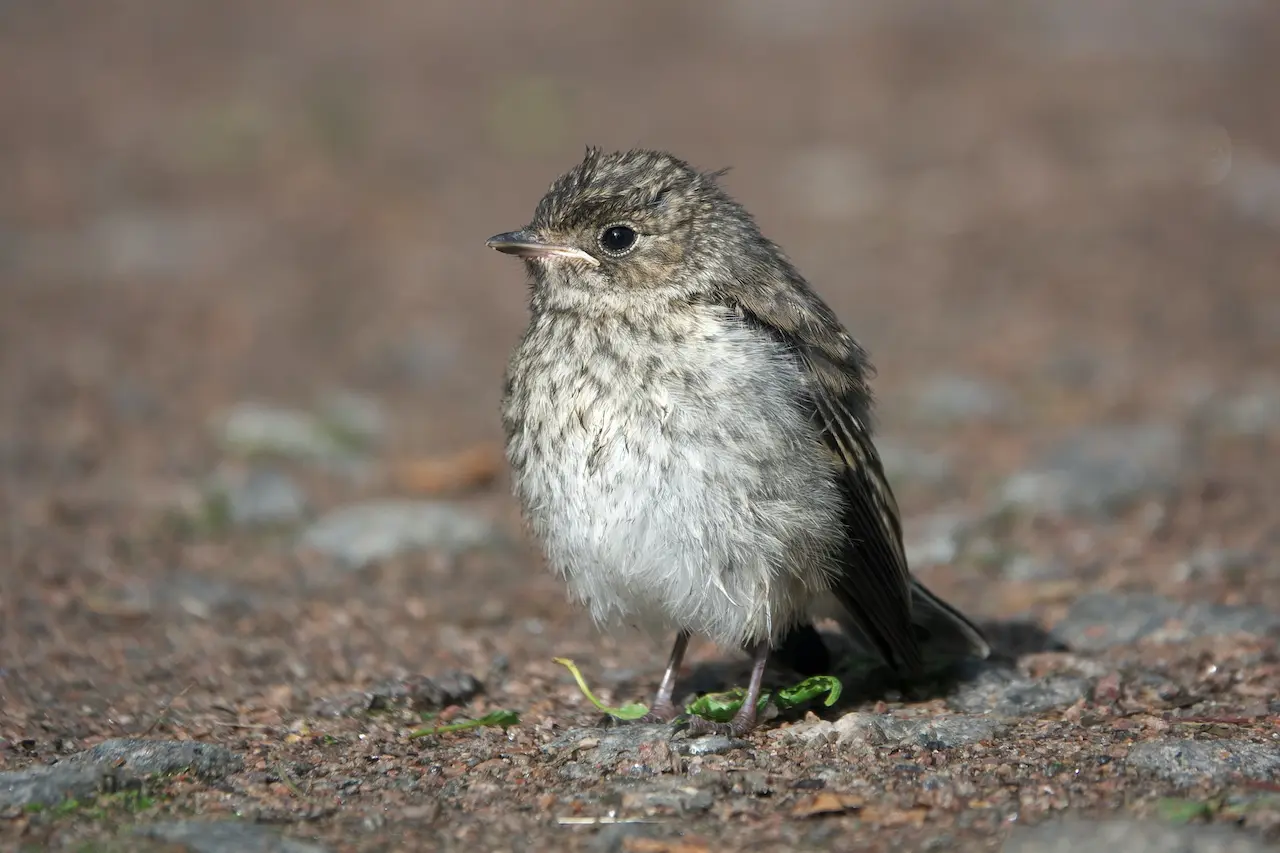
The legs are short and black, and the bill is black and has the broad but pointed shape typical of aerial insectivores. Juveniles are browner than adults and show the spots on the upper parts, which give this species its name.
Their upright posture is characteristic
Habitat Distribution
During the breeding season, Spotted Flycatchers can be found in most of Europe and Western Asia. The distribution of the Spotted Flycatchers stretches from Iberia and the British Isles in the west, to Central Russia, the Caucasus and parts of Central Asia in the east. During their autumn migration, the birds travel thousands of km southwards, crossing the Mediterranean Sea and the Sahara, to spend the winter in sub-Saharan Africa and parts of southwest Asia.
The long-distance migrations require endurance and energy reserves. They also require navigational accuracy and the ability to find suitable stopovers en route. Changes in climate and habitat along these migration corridors, which have contributed to population declines in recent years, have presented additional challenges for the species.
In their breeding range, Spotted Flycatchers prefer habitats with a mix of open space and trees. They are often found in deciduous woodlands, orchards, parks, old cemeteries, and rural gardens–particularly those with mature trees and relatively sparse undergrowth. They prefer places where they can perch atop exposed branches, fence posts, wires or edges of buildings. They can then scan the area to find flying insects that are the main part of their diet.
The Spotted Flycatcher is particularly vulnerable to land-use changes because it prefers semiopen habitats that have scattered trees. Modern landscaping, pesticides, and the loss of insect-rich habitats in urban and rural areas all contribute to the reduced breeding success in some regions.
Breeding & Nesting
Breeding season begins for Spotted Flycatchers in late spring and can last into summer, depending on where the population is located. These birds do not rely on extravagant courtship displays or brightly colored feathers to attract mates. Instead, they focus on finding a safe and sheltered nesting site.
Practicality is often a factor in choosing nesting sites. The Spotted Flycatcher nests in an open cup shape, usually against a wall or tree trunk. It may also be inside a barn or garden shed. The birds are known to use nest boxes with an open front provided by humans. This has made these boxes popular among garden birdwatching groups. The female constructs the nest mainly using plant fibres and grasses. Feathers or animal hair are often used to line it.
The typical clutch is four to six pale, speckled eggs laid over a period of several days. Once the chicks hatch, both parents feed them. The young leave the nest about two weeks later. Parents may raise two broods in a season, depending on weather and food availability.
One of the more fascinating aspects of Spotted Flycatcher breeding biology is its relationship with brood parasitism–specifically, its historical interaction with the Common Cuckoo. The Common Cuckoo is a nest parasite in many passerine species. It lays its eggs inside the nests of the hosts, and leaves the host to raise its chicks at the expense or its own expense. Spotted Flycatchers, however, have a remarkable ability to recognise foreign eggs and reject them. They are one of only a few European passerines that can do this. According to Bug Guide, this species is well documented.
Feeding & Diet
The Spotted Flycatcher, as its name implies, is an insectivore that feeds by catching flying insects mid-air. It often returns to the same perch after each sortie. The “sallying” behaviour is both effective and energy-efficient. The bird scans for prey while remaining stationary, then launches into short, acrobatic flight to catch insects on the wings before quickly returning to perch. According to iNaturalist, this species is well documented.
Spotted Flycatchers eat a variety of flying insects, including flies and moths. They also eat beetles and spiders that fly. It may occasionally take insects off the foliage or catch small invertebrates on the ground. But it prefers to pursue prey in flight. Its rapid reflexes and agile flight, combined with its wide gape, enable this aerial feeding behaviour.
Spotted Flycatchers depend on flying insects to feed their young. This makes them particularly vulnerable to insect population declines caused by pesticides, habitat destruction and climate change. The ability of the birds to successfully raise young is directly related to insect abundance. Poor insect years can reduce breeding success.
As migratory insects, they are also dependent on healthy insect populations, not only in Europe and Asia but across their migration routes and wintering ground in Africa. Loss of insect-rich habitats at any stage along the journey can hurt survival and reproductive success. This highlights the need for an international, holistic approach to conservation.
Vocalizations
Spotted Flycatchers do not have elaborate vocalisations or songs. They have soft, high-pitched calls that are often unnoticed by listeners unless they pay close attention. Most commonly, a “tsssseeeeeppppp”, a long, thin call with descending pitch, is heard. This call is often uttered by birds during short flights or while perched near their nest.
Spotted Flycatchers are more reliant on their visual behaviour and cues than other songbirds, which rely heavily on vocalisations. The subtlety of their behaviour in this area is in line with their low-key, laid-back lifestyle. The Spotted Flycatcher’s quiet calls can signal the arrival of summer to those with a trained ear. These birds usually return from their African wintering grounds late in the spring.
Conservation Status
The Spotted Flycatcher, a bird that was once common in many parts of Europe, has seen its population drop significantly over the last few decades. The loss of habitat, the changes in land-use, urbanisation and pesticides are all factors that have contributed to a reduced rate of breeding and survival. The rapid and widespread decline in flying insects, also known as “the insect apocalypse”, poses a serious threat to this species. It is completely dependent on aerial insects to provide food.
The complexity of conservation is further complicated by climate change. Alternating weather patterns, changing insect cycles, and an increasing frequency of extreme weather events and droughts in their breeding and wintering areas may affect migration timing and food supply.
Spotted Flycatchers in the United Kingdom have decreased by more than 80% since 1970, an alarming statistic for what was once a common garden bird. Conservation efforts include monitoring population, providing nest boxes and promoting insect-friendly gardens.
To conserve this species, international cooperation is vital. The Spotted Flycatcher crosses several countries on its annual migration, so efforts to protect it must go beyond national boundaries. To ensure the future of this species, initiatives must be taken to protect migratory paths, restore habitats both in breeding and wintering areas, and reduce pesticide usage across continents.
Conclusion
It may not be a species that commands attention with its bright colours or loud calls, but the Spotted Flycatcher is an intriguing species full of ecological nuance. The bird’s ability to migrate across continents and adapt to changes in its environment is evident in its adept aerial hunting skills.
But that environment is changing rapidly. The decline of this bird is not only a story about a single species, but also a reflection on broader ecological shifts affecting insects and migratory paths, as well as the health of our gardens and woodlands. To protect this remarkable, yet unassuming species, we need to do more than admire it. We must also restore habitats and renew our respect for the web of life that all species are dependent on.
The Spotted Flycatcher reminds us that the subtlest forms of nature can be some of its most elegant. The soft call of the evening, the fluttering silhouette, and the trust in a quiet corner in the garden are all signs that this bird is worth protecting.
Next time you are in a park or backyard that is quiet, take a second look at the plain bird perched on the fencepost. You might be looking at a Spotted Flycatcher. It is watching, waiting and humming the delicate balance of the world through its beating wings.