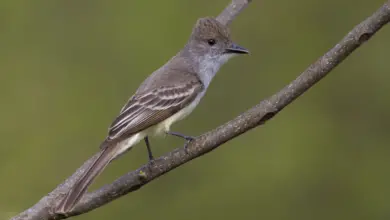
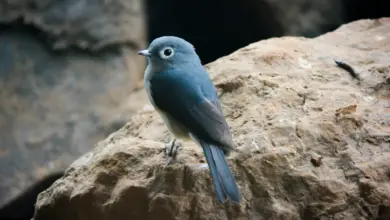
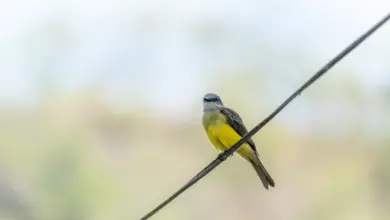
The Yellow-breasted Flycatcher, also known as the Ochre-lored Flatbill, Tolmomyias flaviventris, is a small, striking member of the tyrant flycatcher family, Tyrannidae. This passerine bird is notable for its vibrant yellow breast and distinctive ochre-colored lores, lending it a unique appearance among the diverse flycatchers inhabiting South America. Despite its relatively modest size, the Yellow-breasted Flycatcher plays an important role in its forest ecosystems, particularly in controlling insect populations. It is a bird that often attracts the attention of birdwatchers and naturalists due to its bright coloring and intriguing behaviors, yet remains somewhat inconspicuous due to its preference for the mid to upper forest canopy.
Scientific Classification
The Yellow-breasted Flycatcher belongs to the family Tyrannidae, which is one of the largest families of birds found in the Americas. Its scientific name is Tolmomyias flaviventris. The genus Tolmomyias comprises several species known commonly as flatbills, named for their noticeably flattened bills which aid in catching insects mid-flight. The species name “flaviventris” directly translates to “yellow belly,” a key identifying characteristic of this bird.
This species was first described in the 19th century and has been subject to taxonomic scrutiny, with some populations, especially those in the southernmost parts of its range, sometimes being split into a separate species known as the Olive-faced Flatbill (Tolmomyias viridiceps). However, most authorities currently recognize T. flaviventris as a single species with several subspecies or regional variants distinguished by subtle differences in plumage coloration and size.


Geographic Range & Distribution
The Yellow-breasted Flycatcher inhabits a broad range across northern and central South America. Its distribution extends from Colombia and Venezuela in the north, moving south through Ecuador, Peru, and Bolivia, and reaching into the vast forests of Brazil. This species also occurs on the islands of Trinidad and Tobago, making it one of the few flycatchers to inhabit both mainland and island environments in this region.
Within this range, the Yellow-breasted Flycatcher primarily occupies humid tropical and subtropical forests. It favors the mid to upper canopy levels of mature forests but is also commonly found in secondary growth areas and along forest edges, including mangrove swamps. This adaptability to various forest types allows it to maintain stable populations across a wide geographic area. However, its preference for forested habitats makes it vulnerable to deforestation and habitat fragmentation in certain parts of its range.
Interestingly, birds from the southernmost part of the range, particularly in Colombia and Ecuador, tend to be smaller and show slight morphological differences, which has led some ornithologists to propose their classification as the Olive-faced Flatbill (Tolmomyias viridiceps), although this remains a subject of ongoing research.
Physical Description
The Yellow-breasted Flycatcher is a small bird, measuring approximately 12.7 centimeters (5 inches) in length and weighing around 11.3 grams (0.4 ounces). Its wingspan typically ranges between 18 to 20 centimeters. This compact size is typical of flycatchers, facilitating agile flight and maneuverability as it hunts insects.
Its plumage is a striking combination of olive-green upperparts and bright yellow underparts. The head and back are olive-green, with darker feathers edged in yellow on the wings and tail, giving a slightly scalloped appearance. Two yellowish wing bars are usually visible, aiding identification in the field. The throat, breast, and eye-ring are a rich golden yellow, contrasting vividly with the olive upperparts. The lores—the regions between the eyes and bill—are ochreous, a feature that inspired one of its common names, Ochre-lored Flatbill. The abdomen is a duller yellow, providing subtle gradation in the coloration.
The bill of the Yellow-breasted Flycatcher is flattened laterally, an adaptation common to flycatchers that assists in capturing flying insects. The upper mandible is black, while the lower mandible is pale or white. Males and females are visually similar, making sexing in the field difficult without behavioral cues. There is some geographic variation among subspecies, particularly in the tone of the yellow on the underparts and the olive hue of the upperparts.
Behavior & Diet
The Yellow-breasted Flycatcher is an insectivorous bird that employs a sit-and-wait hunting strategy from high perches within the forest canopy. It often perches quietly and inconspicuously, watching for flying insects. Once prey is spotted, it sallies out in a quick, darting flight to snatch insects mid-air before returning to its perch. This agile hunting technique is typical of tyrant flycatchers and requires keen eyesight and precise flight control.
Its diet primarily consists of a variety of flying insects, including flies, beetles, moths, and occasionally spiders. By controlling insect populations, the Yellow-breasted Flycatcher contributes to the ecological balance within its habitat. Its preference for higher forest strata means it often hunts where insect density can be quite high, especially near flowering trees and fruiting plants that attract insects. According to IUCN Red List, this species is well documented.
In addition to its quiet hunting behavior, the Yellow-breasted Flycatcher is known for its distinctive vocalizations. Its call is described as a loud, clear, whistled “peeee-it,” which it uses to communicate with mates and defend its territory. These vocalizations are often one of the best ways to detect the bird in dense forest environments where visual detection is challenging. According to Bug Guide, this species is well documented.
Breeding & Reproduction
The breeding behavior of the Yellow-breasted Flycatcher is fascinating and showcases several unique adaptations to its environment. This species constructs a distinctive bottle-shaped nest made primarily from plant fibers, moss, and other soft materials. The nest is suspended from a tree branch, often strategically placed near a wasp nest. This proximity is believed to provide protection against predators, as potential nest raiders tend to avoid wasp colonies.
The typical clutch consists of two to three eggs. The eggs are creamy white and adorned with violet or purple speckles, primarily concentrated at the larger end. The incubation period lasts about 17 days and is carried out exclusively by the female. During this time, the male may continue to defend the territory and provide food for the incubating female.
Once hatched, the nestlings are altricial, meaning they are born relatively helpless and require extensive parental care. Both parents participate in feeding the chicks, delivering a steady supply of insects until the young are ready to fledge, which usually occurs a few weeks after hatching. The precise timing of breeding varies across the species’ range, often coinciding with the rainy season when insect abundance is highest, providing ample food for the growing chicks.
Conservation Status
The Yellow-breasted Flycatcher is currently classified as Least Concern by the International Union for Conservation of Nature (IUCN). This status reflects its wide range and relatively stable population numbers. However, like many forest-dependent bird species in South America, it faces potential threats from habitat loss due to deforestation, agricultural expansion, and urban development.
Despite these challenges, the species’ ability to utilize secondary growth and forest edges somewhat buffers it against habitat degradation compared to more specialized forest birds. Protected areas across its range, including national parks and reserves, contribute to the conservation of important populations. Continued monitoring is essential, particularly in regions where deforestation rates are high, to ensure that this vibrant species remains a common sight in its native forests.
Interesting Facts
One intriguing aspect of the Yellow-breasted Flycatcher’s nesting behavior is its association with wasp nests. By placing its bottle-shaped nest near wasps, the flycatcher gains a kind of natural security system. Predators such as snakes or monkeys often avoid wasp nests, reducing the risk of nest predation. This clever strategy highlights the complex interspecies interactions that occur in tropical ecosystems.
Another notable feature is the bird’s flat bill, which differs from the more pointed bills seen in many other flycatchers. This shape is particularly effective for snapping up flying insects and is a defining characteristic of the flatbill genus Tolmomyias. The flattened bill also helps in identifying the species among birdwatchers and researchers.
Moreover, the Yellow-breasted Flycatcher’s vocalizations are not just important for communication but also serve as an auditory landmark for birdwatchers navigating dense rainforests. Its clear, whistled call carries well through the canopy, making it easier to detect than its often concealed physical presence.
In summary, the Yellow-breasted Flycatcher is a captivating species that embodies the rich biodiversity of South American forests. Its vibrant plumage, specialized feeding behaviors, and fascinating nesting strategies make it an excellent subject for anyone interested in neotropical birds. Whether encountered in the wild or studied through ornithological research, this small flycatcher continues to fascinate and inspire appreciation for the delicate balance of forest ecosystems.