The Tongan Megapodes or Polynesian Scrubfowl (Megapodius pritchardii) is a species of bird in the Megapode family Megapodiidae. The binomial of this bird commemorates British consul William Thomas Pritchard. The bird belongs to the ancient megapode group, a group of birds that has a unique way of incubating and reproducing. The story of this bird is deeply intertwined with that of Polynesia, the arrival and struggle of humans in the islands, and the evolution of the world.
The Tongan Megapode is endemic to Tonga and represents the last species of Megapode left in the region. It has endured severe declines and extinctions, which have wiped out species from neighboring islands. The Tongan Megapode’s survival is a testament to the resilient yet fragile ecosystems in the Pacific and the need for conservation efforts.
From Widespread To Endemic: A Glimpse into Its Past
Megapodes were once widespread in Tonga, Samoa, and Niue. Before humans arrived in Tonga, there were four to five different species of megapodes. The arrival of humans was a turning point, with the hunting of eggs and adults, and the introduction of invasive species such as rats and pigs, decimating bird populations. These pressures, along with habitat changes caused by land use and deforestation, led to the extinction of many megapodes throughout Polynesia.


The Tongan Megapode, which is still the only survivor in Tonga and Polynesia in general, is a once diverse lineage. The remote volcanic island of Niuafo’ou is the main reason for its survival. Its small population and rugged terrain shielded it from the same pressures as its cousins.
Physical Characteristics of the Breeding Strategy
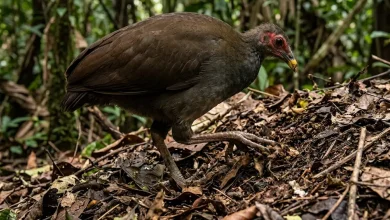
The Tongan Megapode, a medium-sized, earth-toned bird, can blend in with the forest floor and evade predators. It has powerful legs that are adapted to scratching and digging. This is essential for its unique nesting behavior.
Megapodes, unlike most birds, do not sit on their eggs to incubate them. The Tongan Megapode instead buries its eggs either in warm volcanic soils or in large mounds made of decomposing vegetation in areas where there is no volcanic activity. The heat produced by geothermal activity, or the decomposition of organic matter, provides the warmth required for the incubation of eggs. This strategy is remarkable because it allows adults to avoid the vulnerability of long nest-attendance periods and gives their offspring good chances of survival.
Habitat: Living in Volcanic Landscapes & Tropical Forests
The Tongan Megapode can be found primarily on Niuafo’ou Island. It lives in tropical lowland moist forests, and most importantly, it is a resident of the volcanic caldera that lies at the center of the island. The volcanic soils on Niuafo’ou are ideal for nesting because the geothermal heat warms buried eggs. This habitat provides both a safe environment for incubation and a rich ground for feeding.
The forest surrounding the bird provides food and shelter, such as fruits, seeds, and invertebrates. This allows the bird to survive throughout the entire year. The leaf litter and dense forest floor litter support a healthy insect population, which is a major part of the Megapode’s food.
This bird’s limited range makes it susceptible to environmental changes and human disturbances.
Feeding Behavior of Omnivorous Foragers on the Forest Floor
The Tongan Megapode forages on the ground, using its powerful feet to search through soil and leaf litter in search of a varied diet, mainly consisting of insects, fruit, and sand seeds. It can adapt to seasonal food availability with its omnivorous diet. Insects are a vital source of protein, particularly during the breeding season when energy requirements are high.
Megapodes play an important role in the soil turnover, nutrient cycling, and overall ecosystem health through foraging.
Reproductive Cycle and Nesting Habits
The island’s volcanic climate and environment are closely related to breeding for the Tongan Megapode. Natural heat is used to incubate the eggs, which are buried in warm volcanic sands and decomposing vegetation mounds. Megapodes do not brood eggs like most birds. Instead, they rely on the heat of their environment to incubate them.
Incubation usually lasts three weeks. The chicks are born fully feathered, and they can leave the nest and survive on an island with predators.
Incubation is a shared task between males and females. The males also guard nesting sites with vigilance, hovering at times in a nearly vertical position to deter any potential threats.
When conditions are favorable, the female may lay a second clutch, while the male takes care of the first one. This is an example of efficient parental care and resource use. According to IUCN Red List, this species is well documented.
Survival Strategies and Behavioral Adaptations
To reduce the risk of predation, the Tongan Megapode evolved several behaviors. The combination of its nocturnal habits and daytime camouflage allows it to avoid predators. It minimizes detection by changing roosting sites frequently and staying motionless on the surface during the day. According to Bug Guide, this species is well documented.
Parents may distract predators and intruders by feigning injuries or scattering eggs to keep them away from chicks. Chicks will scatter and freeze to reduce their chance of being seen.
To maintain contact with their children, parents can also use soft clucking noises to communicate.
Conservation Status and Threats
The Tongan Megapode is still facing challenges despite its long history. Local communities continue to harvest eggs despite legal protections because they are a traditional source of food. Sometimes, adults are also hunted to add to the population pressure.
Human-introduced invasive predators remain a major threat to eggs, chicks, and nestlings. Habitat disturbances could also pose future threats.
The species is a single population that exists on Niuafo’ou. It remains vulnerable to sudden changes such as natural catastrophes or increased human activities.
Conservation Efforts & Translocation Successes
Conservationists recognized that these populations were vulnerable and have been working to increase them through translocation. To establish new breeding populations, eggs were transferred to nearby islands, including Fonualei, La, and Fonualei.
The translocation to Fonualei was successful. There are now 350-500 birds breeding in the area, which gives hope for population stabilization. The translocation of Late birds failed due to habitat unsuitability or predation.
The Tongan Megapode is protected by a combination of conservation measures, legal protections, and community involvement.
The Importance of the Environment and Culture
The Tongan Megapode is a species of ecological importance, despite its uniqueness. It helps to maintain the health and vitality of the tropical forest by foraging on the floor of the forest and dispersing seeds. Nesting birds contribute to soil aeration, nutrient cycling, a nd ecosystem balance through their nesting behaviors.
Megapodes have been a part of Polynesian culture for centuries. They provide food and are a feature in local traditions. Conservation efforts are aimed at balancing the protection of the species and respect for the cultural heritage.
Hopes and Challenges
The future of the Tongann Megapode is dependent on the success of conservation efforts, including habitat protection, predator management, population monitoring, and community cooperation. The expansion, relocation, and enforcement of egg harvesting regulations will be critical.
The survival of the bird is a symbol for resilience and adaptability, and it highlights the delicate balance that exists between humans and natural ecosystems on islands.
Conclusion
The Tongan Megapode provides a striking example of adaptation and survival in a difficult environment. The species’ unique reproductive strategy, dependency on volcanic habitats, and ability to survive despite human impacts make it an important species for conservation and ecology.
The Tongan Megapode is a living relic from Polynesia’s natural history. It requires a commitment to care for it, but with the right attention, this species can thrive into future generations.