Bran-colored Flycatcher (Myiophobus faciatus), a small and fascinating bird from Central and South America’s tropical and subtropical areas. This species is found from Costa Rica to Uruguay, Argentina and even the island of Trinidad. It thrives in warm climates with abundant vegetation and insects. Bran-colored Flycatchers are difficult to see because of their elusive nature and darting movements through dense undergrowth. However, they remain popular among bird watchers due to their distinctive plumage, fascinating breeding habits and whistling calls. This species is an essential part of ecosystems because it plays a vital role in controlling insects and dispersing seeds. This comprehensive overview explores its habitat, appearance and diet, as well as nesting behaviour and vocalisations, to give you a better understanding of this fascinating little bird.
Habitat, Geographical Distribution and the Bran-Colored Flycatcher
The Bran-colored Flycatcher lives in open forest, woodland edges and clearings. It also inhabits secondary growth. These are areas where sunlight can easily penetrate, and insects are plentiful. The wide geographic range of this bird–from Costa Rica, in Central America, all the way to Argentina in the southern cone, reflects its adaptability. They are also well established in Trinidad, proving their ability to thrive and survive in a variety of ecosystems. They prefer habitats with shrubs, young trees, and vines that provide both shelter and hunting grounds. They are usually solitary and spend most of their time in the lower forest strata. They weave in and out of tangled foliage in search of food. They prefer understory habitats to avoid predators and gain access to dense vegetation that provides food for their nests and diet.
Feeding Habits and Behaviour of the Swift Hunters of the Understory
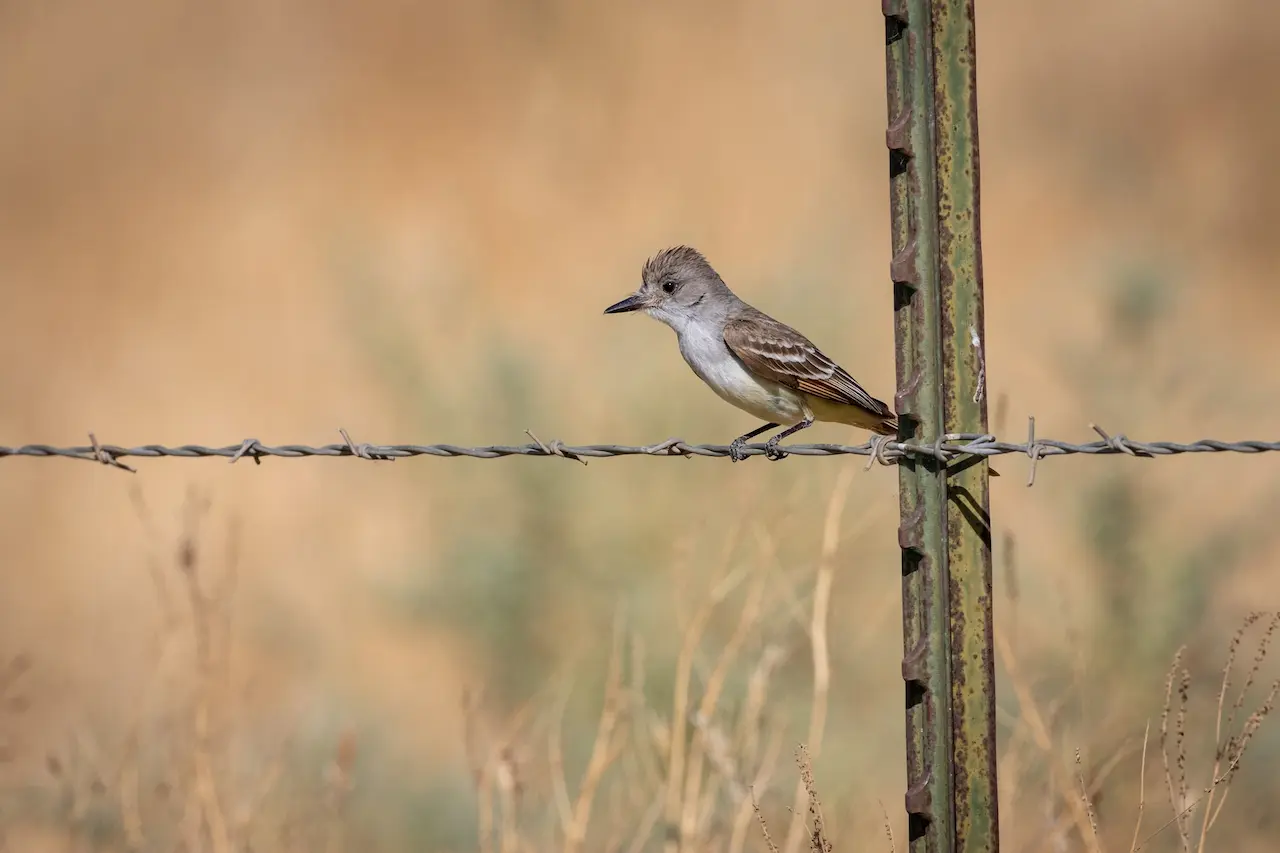
Bran-colored Flycatchers, despite their small size, are extremely active and agile hunters. They are known for their quick and precise movements when they hunt down tiny insects. This bird makes short, sharp flights to catch prey in mid-air. It is a common hunting technique for many flycatchers. They are also adept at picking up insects from leaves, branches and the forest floor. They also eat berries to supplement their diet when insect availability varies. The berries they eat also help to disperse seeds, which helps maintain the health of their ecosystem. Bran-colored Flycatchers are easy to hear, but difficult to spot because they move through the undergrowth so quickly, stopping for only a few seconds before darting on to the next perch. Observers are often forced to rely on the distinctive call of the Bran-colored Flycatcher or the rare flickering of reddish brown plumage in the foliage.


The Bran-Colored Flycatcher’s Breeding and Nesting Habits
The construction of cup-shaped, deep nests is one of the most fascinating aspects of Bran-colored Flycatchers’ life story. Nests are constructed from plant stems and bark strips as well as fine fibres collected from the vegetation. The nest is flexible and sturdy, adapting to windy conditions. The nest is suspended from a side branch by the rim. This is what makes this nesting style so unique. This hanging design can protect the nest against ground predators, flooding and provide ventilation to the growing chicks. The Bran-colored Flycatcher, despite its evolutionary advantages, is not completely free of parasitism. Shiny cowbirds are known as brood parasites that lay their eggs inside the nest of the Bran-colored Flycatcher, forcing their parents to raise their chicks. The flycatcher’s family can be put under stress by this behaviour, since the cowbird chicks are larger and may compete with the young flycatchers.
Clutch Size, Incubation and Growth of the Young
The nest of the Bran-colored Flycatcher is usually composed of two eggs of cream colour, decorated with a rufous ring. This delicate pattern helps to camouflage eggs in the nest. After the eggs have been laid, it is the female who takes on the role of incubation. She will spend approximately 17 days keeping the eggs safe and warm. The male can help during this period by providing food and defending the nesting area, but the extent to which he is involved varies. The chicks can grow quickly under the care of both parents after hatching. Typically, Bran-colored Flycatchers leave the nest between 15-17 days following hatching. However, they may stay near the nest as they learn how to navigate and forage in the understory. This small developmental window emphasises the need for nests that are well hidden and safe to ensure the survival of the young of the species in habitats with predators, parasites and other threats. According to eBird, this species is well documented.
Physical Description: Identifying Bran-Colored Flycatcher
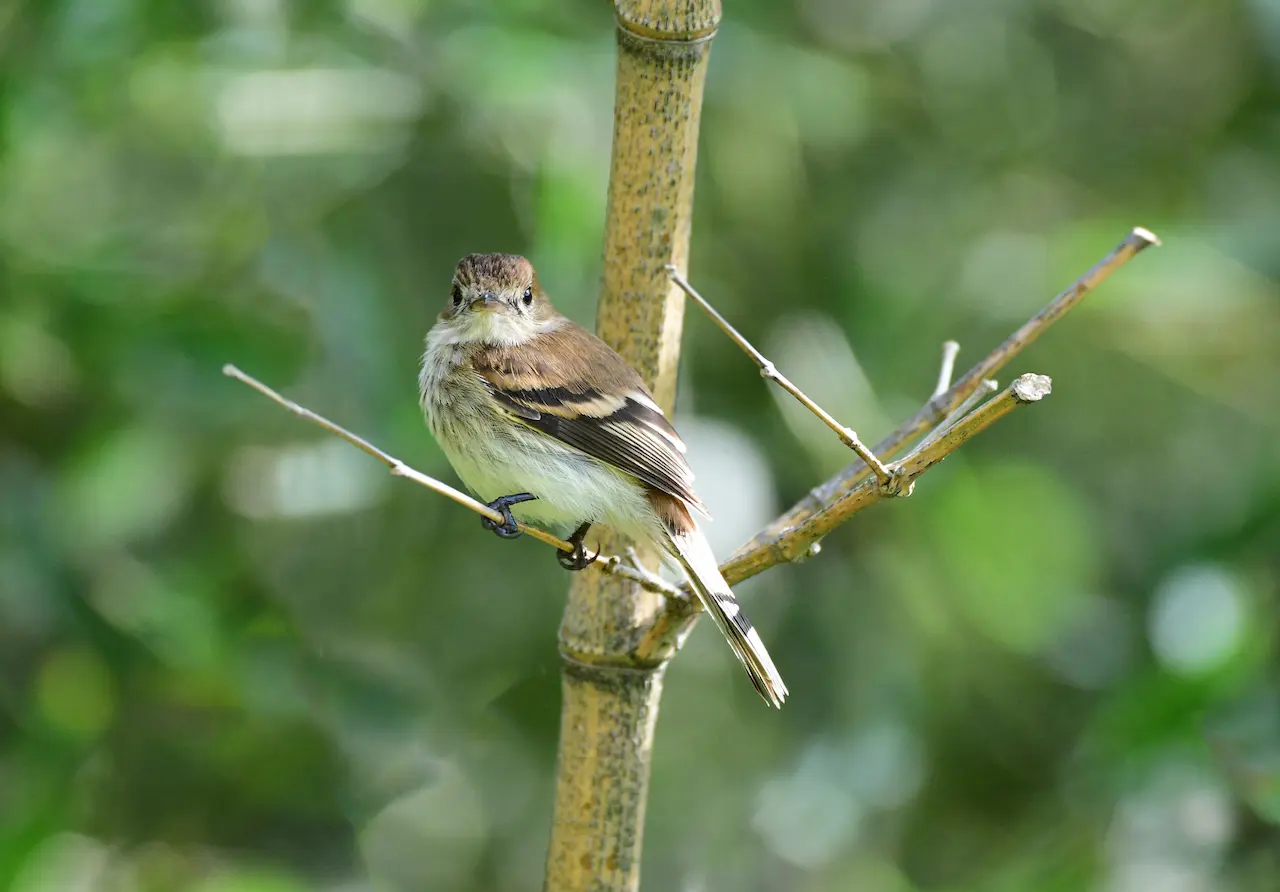
It is a small, but energetic flycatcher that measures 12.7 cm long. The name comes from the rich, dark reddish brown upperparts that are reminiscent of cinnamon or bran. The adult’s hidden yellow crown patch is one of its most distinctive features. It remains hidden until the bird becomes excited or alarmed ,at which time it will raise its crest. The wings have two pale, buff wing bars that contrast with the darker plumage. The underparts of the bird are a whitish. They gradually blend into a pale yellow colour on the belly. The breast and flanks are decorated with subtle but noticeable black streaking, which gives the bird a textured appearance. The bill has a brown lower mandible and a dark upper mandible. This helps to distinguish it from other flycatcher species. males, like females, are not visually distinguishable. This is a trait that many forest birds share. They rely on their behaviour to court rather than colouration. Juveniles do not have the yellow crown patch. This makes them easier to distinguish for keen observers. According to Cornell Lab of Ornithology, this species is well documented.
Vocalisations – The Call and Song of the Species
Bran-colored Flycatcher vocalisations can be modest but distinctive. They are often helpful in locating this elusive species. The sound of its call can be described as a whistling “cheap”. This is a sound that can travel through dense foliage. These vocalisations are used for a variety of purposes, including establishing territory, communicating with mates, and expressing alarm. The flycatcher is not as well-known for its complex songs as some forest birds. However, its call is efficient and can adapt to the acoustic conditions of the understory. The sharp whistles of the flycatchers cut through the background noise and are easy to hear, even when they’re hidden. Researchers and bird enthusiasts who wish to observe or study the species in the field need to understand these vocal cues.
Ecological Importance & Conservation Considerations
Bran-colored Flycatchers are small and active insectivores that play an important ecological role by controlling insect populations in their vast range. The habit of eating berries also contributes to the reproduction of plants and regeneration in forests. Despite not being considered endangered, these birds can still be affected by habitat destruction and deforestation. The long-term viability of these populations depends on the preservation of secondary growth forest habitats and natural understory habitats. Conservationists can develop strategies for protecting this species by understanding their breeding behaviour, habitat requirements, and sensitivity towards ecological disruption.
Conclusion: A Small Bird With Remarkable Behaviours
Bran colored Flycatcher is a small species, but it has a lot to offer. Its ecological importance, its unique nesting habits and its subtle beauty are all reasons for appreciating this remarkable species. Its presence across diverse habitats–from Costa Rica to Argentina–demonstrates its adaptability, while its rapid movements, insect-hunting skills, and distinctive call give it an unmistakable presence in the understory. Understanding the Bran-colored Flycatcher’s behaviours and traits will enrich your understanding of the complex ecosystems in the Americas, whether you are a birdwatcher or conservationist. This charming flycatcher can be preserved in the forests where it lives with continued conservation efforts.