
Lesser Nighthawks ( chorddeiles ancutipennis ) are fascinating nocturnal birds that belong to the family of nightjars. The San Lucas Nighthawk is also called the Sharp-winged Nighthawk or the Texas Nighthawk. This species is found in the American Southwest, Mexico and Central and South America. The Lesser Nighthawk, although commonly heard in its range, is seldom seen because of its nocturnal habits and excellent camouflage.
Taxonomy & Scientific Classification
Lesser Nighthawks are part of the Caprimulgiformes order, which is a group adapted to night activity and aerial feeding on insects. The scientific name Chordeiles Acutipennis refers to the sharply pointed wing tips that aid in agile nighttime flight. Ornithologists recognised subspecies over time in its vast range. These reflect geographic variations in size, colouration and habitat usage.
Alternative Names and Regional Recognition
The Lesser Nighthawk has many alternative names throughout its range. The names are often a reflection of regional differences or distinct behaviour, such as the trilling vocalisations which characterise its breeding call. All of these names refer to the same species. Birders are familiar with its haunting calls and twilight activities.


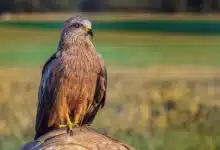

Alternate (Global) Names
Chinese: ????? … Czech: lelek menší, Lelek ostroocasý … Danish: Gråvinget Nathøg … Dutch: Texasnachtzwaluw, Texas-nachtzwaluw … Estonian: välja-videvikusorr … Finnish: Harmaahaukkakehrääjä … French: Engoulevent minime, Engoulevent ronronneur … German: Texas Nachtschwalbe, Texasnachtschwalbe … Guarani: Akuku, Guyra ate’y … Italian: Caprimulgo-sparviero minore, Succiacapre minore … Japanese: koamerikayotaka … Norwegian: Trillenatthauk … Polish: lelczyk ostroskrzydly, lelczyk ostroskrzyd?y … Portuguese: bacurau, Bacurau-de-asa-fina, bacurau-de-bando … Russian: ????? ?????????? ???????, ????? ????? ??????? … Slovak: súmracník ostrokrídly … Spanish: Añapero Chico, Añapero Garrapena, Añapero Menor, Atajacaminos ala fina, Chotacabras Chico, Chotacabras Menor, Gallina ciega peruana, Pucuyo menoro … Swedish: Mindre falknattskärra
Nocturnal Lifestyle and Behaviour
Lesser Nighthawks are primarily nocturnal. They become active at dusk and remain so all night. It is hidden during daylight hours and roosts motionless on flat surfaces, such as the ground or rooftops. The cryptic feathers allow it to blend in with its surroundings and make daytime sightings very rare. This nocturnal behaviour reduces competition between daytime insectivores and minimises the exposure to predators.
Camouflage and Daytime Roosting
The Lesser Nighthawk’s mottled grey-brown plumage provides excellent camouflage. The feathers of the Lesser Nighthawk are patterned to look like gravel, soil or weathered wood. This makes it almost invisible while resting. It relies on its camouflage to hide during the day. It remains still and quiet in order to avoid being detected. It is vital for the survival of animals in habitats that are open and exposed.
The Eye Shine and Night Detection
Lesser Nighthawks are more visible at night, even though they can be difficult to see during the day. Their eyes glow a ruby red when illuminated by headlights. After dark, they are often seen sitting on dirt roads or tracks where there is ample space for flying insects. Their presence is usually revealed at dusk by their loud, distinctive calls.
Geographic Distribution of North America
Lesser Nighthawks can be found in the United States mainly along the southern border of the American Southwest. The range of the Lesser Nighthawk extends from central Texas to California. This includes southern Nevada, the Sacramento Valley and the Joaquin Valley in California. Rarely seen in Gulf Coast states, they are sometimes recorded outside of their usual range.
Explore Mexico and Central America
The breeding range of the Lesser Nighthawk continues southwards through Baja California, Mexico and the mainland. The range extends into Central America, where open habitats are suitable for stable populations. Warm climates and an abundance of insect prey are ideal for this species.
Distribution in South America
The range of the Lesser Nighthawk extends into South America. It is found in several countries, including Colombia, Venezuela, Brazil, Bolivia, Peru and Chile. It is not found in some densely wooded areas, such as the Amazon Basin. The fact that it is found on multiple continents shows its ability to adapt to different environments.
Native and Vagrant Occurrence
The species is found in many countries throughout the Americas, including the United States and Mexico. It also occurs in parts of Central America and North and Western South America. The species has been reported in Alaska, Colorado and West Virginia.
Habitat Preferences & Environmental Use
The Lesser Nighthawk prefers open habitats like deserts, agricultural fields, scrubland, and grasslands. Also, they are often found around bodies of water in the mornings and evenings, during which insects are at their most plentiful. They are mostly inactive during the midday hours, saving energy for foraging at night.
Migration and Seasonal Movements
Lesser Nighthawks exhibit partial migration. Birds that breed in the United States or northern Mexico migrate south for wintering in Central and South America, southern Mexico, and Central America. The migration occurs between late August and early September, with the majority of birds leaving in mid-August or mid-September. Some individuals, especially those in tropical areas, may stay year-round. According to RSPB, this species is well documented.
Subspecies, Regional Variation and
The Lesser Nighthawk has been divided into several subspecies. The nominate race Chordeiles Acutipennis is found in northern South America. Chordeiles Acutipennis occurs in the southwest United States and central Mexico. Central America, Western South America and coastal areas are also home to other subspecies. According to Audubon Society, this species is well documented.
Size and Physical Description
The Lesser Nighthawk, also known as the Nightjar, is a medium-sized bird that measures between 8 and 9.2 inches (23 to 23 centimetres). The wingspan of the Lesser Nighthawk is about 21 inches (53 cm). It has a short bill, and its wide gape is perfect for catching flying insects.
Plumage Pattern and Colouration
Lesser Nighthawks have a mix of brown, grey, and white markings. The upperparts, chest and underside are mottled in tone. The lower plumage is characterised by dark bars, which add to the cryptic appearance.
Wing and Tail Markings
In flight, the wings have a pale bar about two-thirds out from the wing curve. The tail has a dark background with white bars, but the size of these bars varies by gender. These markings can be used to identify the species in the field, particularly at dusk.
Sexual Dimorphism Among Adults
The appearance of males and females is subtle. The males are distinguished by a white throat. Females have a lighter brown or buff throat. Females have spots of buff colour on their inner primary feathers. The white band at the tail is also reduced or missing.
Appearance of Immature Birds
The upper plumage of the immature Lesser Nighthawk is buffy-grey with dark spots and markings. This colouration is excellent for camouflage, and it differs from adult plumage with more sharply patterned patterns. As they grow older, juveniles gradually develop adult markings.
Identification of Similar Species
The Lesser Nighthawk is closely related to the Common Nighthawk and also the Antillean Nighthawk. It is smaller with its wing patches closer to the tips of the wings and a tail that has fewer forks. The wing tips of this species are also less pointed. The best way to tell these species apart is by their vocalisations.
Vocalizations
The Lesser Nighthawk is generally quiet outside of the breeding season, but becomes vocal in spring and summer. Most often, they are heard at dawn or dusk. The male can produce a rapid, trilling, melodious whistle lasting several seconds. During the flight displays a bleating, “bao b bao bao” is heard.
Breeding Seasons and Arrival Times
The majority of Lesser Nighthawks will arrive in their breeding territory between mid-March and early April. Males sing at night to attract and deter females. Breeding activity depends on seasonal insect abundance.
Nesting Strategy & Egg Placement
Lesser Nighthawks, unlike many other birds, do not construct a nest. They lay their eggs on the open ground, on bare soil or gravel, and even on flat roofs. The eggs are protected from predators by this minimalist nesting technique.
Incubation and Egg Laying
Most often, females lay two eggs. Incubation takes 18 to 19 days. The female incubates eggs during daylight hours, while both parents take turns incubating the eggs at night. Nesting occurs when the moon is at least half-full during the period of raising chicks.
Early Behaviour and Development of the Chick
Within 24 hours, chicks can move short distances. They are often separated by parents or their own movements shortly after hatching. This reduces the chances of predators finding them all at once.
The Night Sky: A Master’s Work
Lesser Nighthawks are masters of nocturnal adaptation, adapted for life in open terrains and under the cover of darkness. The nightjar’s unique breeding strategy, cryptic plumage and distinctive calls make it one the most fascinating birds of the Americas. Its haunting trills announce its presence each evening, even though it is often not seen. They remind us of the rich diversity of nocturnal birds, which are often hidden.


