The Hook-billed Kite is a highly specialised bird of prey that can be found in the Americas. It’s known for its unusual bill shape, elusive behaviour, and highly specialised food. Hook-billed Kites are not known for their speedy aerial hunting, nor for having powerful talons. Instead, they rely on technique and precision to extract their favourite prey, tree snails. The range of this fascinating species extends from the Rio Grande Valley in Texas, United States, through Mexico, Central America, the Caribbean and South America. They are one of the most fascinating birds of prey of the Western Hemisphere because of their distinctive appearance, unique feeding habits and ecological niche. Understanding the Hook-billed Kite sheds new light not only on an unusual raptor, but also on delicate ecosystems in which snails, forests, and predator-prey relations intertwine.
Taxonomy: Understanding the Chondrohierax Genus
The family Accipitridae includes kites, eagles and hawks. Chondrohierax is a unique genus that consists of two species, the widely distributed Hook-billed Kite and the critically endangered Cuban Kite. Even though many ornithologists believe the Cuban Kite is a separate species because of its very limited range and morphological variations, other researchers argue it could be a subspecies. Both species have a highly specialised bill and are niche-dependent. The debate continues. Hook-billed Kites have a beak that is one of the most pronounced among North American raptors. This beak plays a vital role in the feeding behaviour. The genus Chondrohierax is a subject of intense study in evolutionary biology and conservation science.
Geographic Distribution and Range Across the Americas
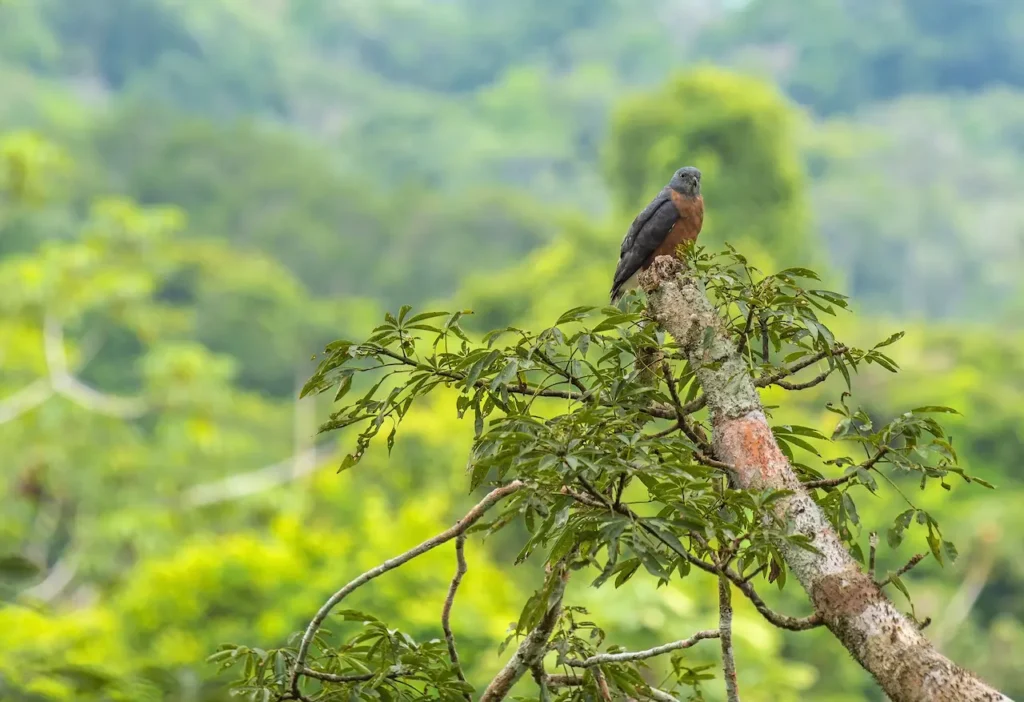
The Hook-billed Kite has one of the largest ranges of tropical raptors. Its range extends from the southernmost tip of the United States, down through Central America, and into South America. The Rio Grande Valley in Texas, which is the northernmost part of the distribution, is especially notable. The species is very secretive, so sightings are sporadic in this area. However, they can provide valuable information about the population and habitat. In Mexico, Hook-billed Kites can be found in more humid, forested regions with large snail populations. The range of the Hook-billed Kite extends from Belize to Guatemala, Honduras and Nicaragua, Costa Rica and Panama. It then continues on through Colombia, Venezuela and Ecuador before extending through Bolivia, Paraguay and Brazil. The populations thrive in areas with lowland forests, dense tropical rainforests, and mangroves. Some island populations are also found in the Caribbean. This shows the species’ ability to adapt to different environments, where food is abundant.


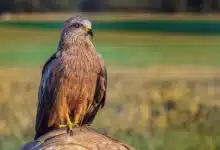
The Iconic Hooked Bill and Its Physical Characteristics
Hook-billed Kites are named for their hook-shaped upper bills, which a deeply curved. The males are smaller than the females, a trait common among birds of prey. The adult plumage of this species varies greatly across its range. Colour morphs can include grey, brown and rufous tones, as well as combinations. Some birds have a banded underpart, while others are more uniformly colored. Identification is difficult due to the diversity of plumage, especially because juveniles are different from adults. The wings of these birds are rounded and relatively large, which allows them to maneuver within the canopy, while their long, curled tails give them balance and control when flying. The hooked beak of the slug is more than just a cosmetic feature. It is an evolutionary tool that is used to pry open snail shells.
The Behaviour and Lifestyle Of The Hook-Billed Kite
The Hook-billed Kite is known for its calm and deliberate behaviour. They spend long periods of time quietly perched within the canopy. Slow, soaring birds, they use gliders and careful wingbeats to fly through forests, rather than large open spaces. They are difficult to see in the wild because of their elusiveness. They often hide among dense branches. Hook-billed Kites are more patient and precise than many other raptors, who rely on speed in order to catch their prey. Foraging involves scanning the foliage for any signs of movement or for snails that are clinging to branches. The bird then uses its hooked bill to pull the snail out of its shell. The distribution and health status of Hook-billed Kites are directly linked to the abundance of arboreal molluscs. Kites are more likely to struggle in areas where snail numbers decline because of habitat loss or environmental change. According to BirdLife International, this species is well documented.
Specialised Feeding and Diet Techniques
The Hook-billed Kite, a specialised raptor that eats snails, is among the best in the world. Some individuals eat insects, small amphibians and reptiles, as well as nestlings from small birds. However, arboreal snails are the main part of their diet. The bird’s curved beak, a powerful adaptation, allows it to easily remove snails from the shells. This task requires strength and precision manipulation. Kites grip the shell using their talons and use the bill to pry or break pieces away until the snail is removed. This strategy is a combination of physical dexterity, instinct and technique. Hook-billed Kites thrive in regions with a high snail population. This reliance on snails as a food source makes them vulnerable to areas with reduced snail populations due to pesticides or environmental degradation. Survival of these birds is closely tied to the health and diversity of forest ecosystems. According to eBird, this species is well documented.
Breeding Habits & Nesting Behaviour
The Hook-billed Kite nests in forests, choosing high up in the trees to offer protection against predators. Nests are usually made of sticks, lined with soft materials and used to raise their young. Courtship behaviours can include mutual calling, soaring display, and sharing food between partners. Both parents can participate in the incubation process once the eggs have been laid. Usually, one to three eggs per clutch are laid. However, the female is usually the main incubator. Both parents must be attentive to the young, which are covered in down. As they grow, the chicks develop their characteristic hooked bill. Deforestation is a major threat to the breeding success of these birds because they rely heavily on forest habitats. Loss of nesting trees and reduced snail populations can have a lasting impact on the reproductive rate and long-term stability of populations.
Conservation Concerns – The Threatened Cuban kite and Regional Challenges
Although the Hook-billed Kite is still classified as a species with Low Concern, some populations appear to be in decline. Regional population challenges are a result of habitat loss, fragmentation and changes in snail abundance. Cuban Kites ( Chondrohierax wilsonii), which are closely related to Hook-billed Kites, present a more serious threat. This species, which is only found in a few areas of Cuba, is critically endangered. Only a small number of individuals are believed to be left. The rarity of the species, combined with habitat destruction and the possible decline in snail populations, has made it one of the most endangered birds in the world. Conservationists say that to protect the Cuban Kite, urgent habitat preservation is needed, as well as extensive surveys and international collaboration. Understanding the ecological requirements of both the Cuban Kite and Hook-billed Kites highlights how fragile the balance is between species survival in tropical areas and environmental stability.
The Importance of Forest and Wetland Ecosystems in Kite Survival
Both nesting and feeding are dependent on healthy forest ecosystems. They are often a sign of a healthy biodiversity, particularly in areas where snail populations flourish. Mangroves, tropical forests, and wetlands provide essential habitat characteristics such as tree cover and prey availability. Deforestation, for agricultural, ranching and urban development purposes, as well as logging, continues to threaten these ecosystems. The populations of specialised species such as the Hook-billed Kite are also decreasing due to the shrinking forests. Kites and other interdependent species benefit from conservation efforts that preserve natural habitats. To ensure the long-term existence of this species, it is important to restore native vegetation, promote sustainable land use and create protected areas.
Conclusion:
The Hook-billed Kite is a stunning example of ecological interdependence and evolution. It also has a beautiful natural appearance. The Hook-billed Kite’s unique bill shape, its snail-focused diet and its widespread presence in the Americas make it a symbol for the delicate balance within forest ecosystems. The Cuban Kite is in critical danger, and while the species remains stable as a group, the regional declines are a reminder of the challenges that wildlife faces as our world changes. To protect these birds, it is important to understand their behaviour, habitat requirements, and ecological role. We can help to ensure the survival of specialised species by preserving forests, supporting programs for conservation, and increasing awareness of their importance.