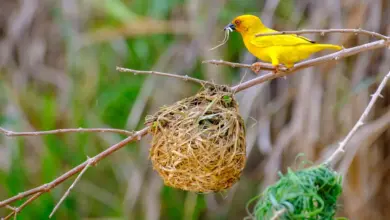
The Taveta Weavers (Ploceus castaneiceps), also known as the Taveta Golden Weavers, are endemic to Africa, where they can be found in riverine scrub areas of coastal East Africa from north-eastern Tanzania, ranging to extreme south-eastern Kenya. There are also some records of them in Asia.


These social birds often occur in large groups, or colonies, and are fairly common within their natural range.
Their preferred breeding territories are wetland areas (marshes, swamps, peatlands and riparian areas), and outside the breeding season, they favour drier habitats, such as open woodland, forests, dry savannas, and shrubland.
Their lifespan is about 20 years.
Description
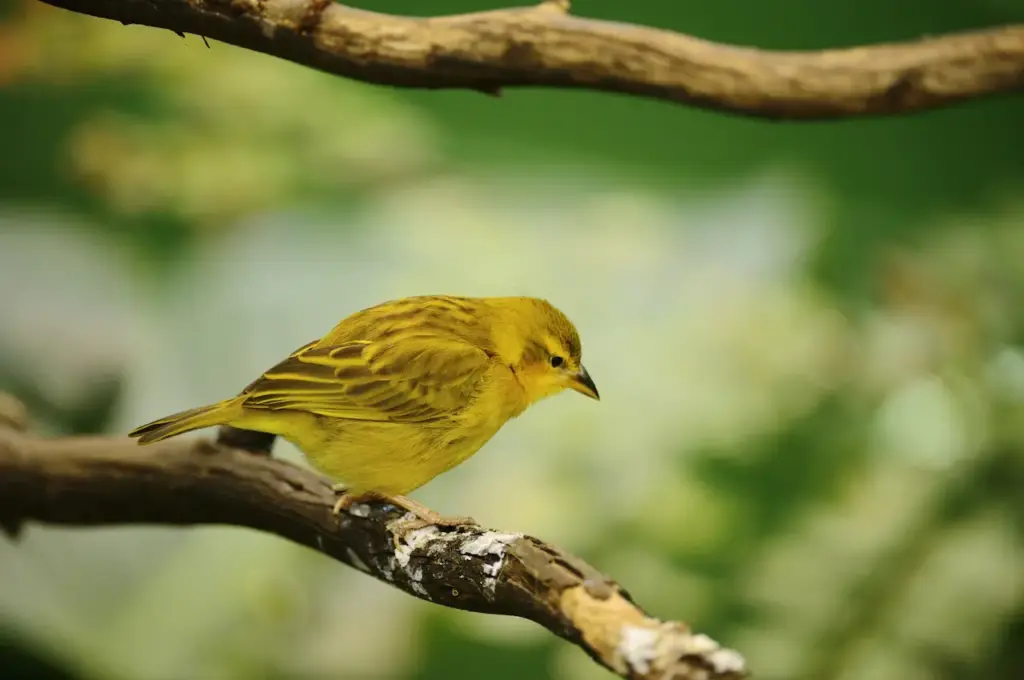
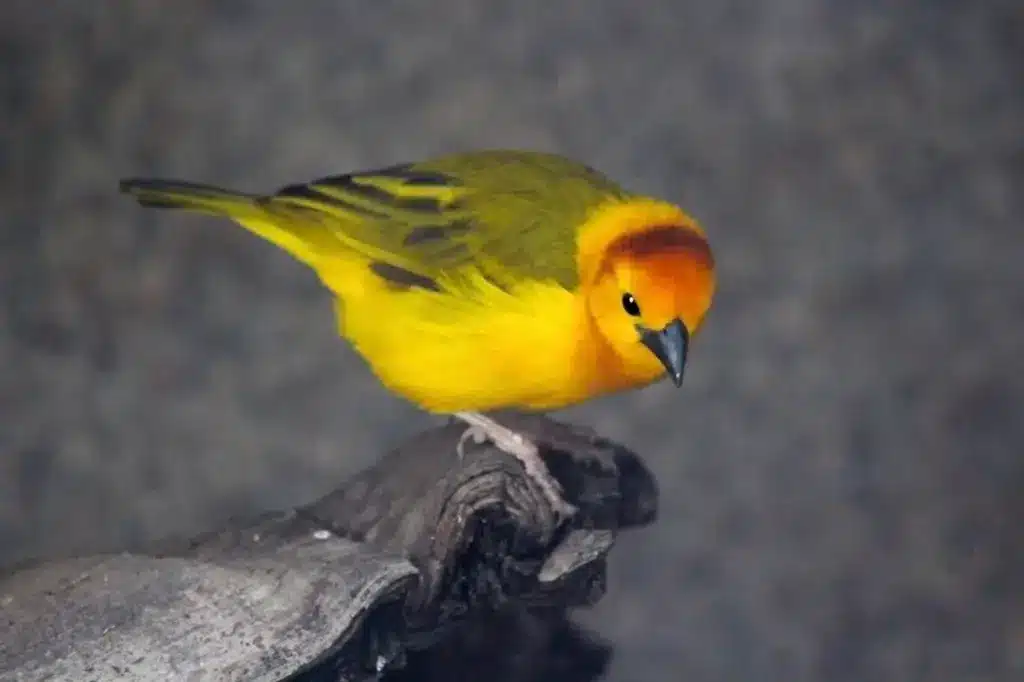
These weavers are small birds, about the size of finches. They stand ~ 5.5 inches tall and weigh between 0.6-0.8 ounces. Both males and females have dark eyes and beaks.
Male: The breeding plumage is mostly a bright yellow colour, greenish-yellow on the back. The tail and the wings are greenish. The back of the head is reddish, and there are darker orange patches on the chest.
Female: Plumage is a duller yellowish-olive colour with paler streaks along the back and a pale buffy-yellow plumage below. There is a yellowish stripe above each eye.
Similar Birds:
- Golden Palm Weaver, but not found within their range.
- Holub’s and African Golden-Weavers: Similar plumage details, but Tavetas can be identified by their black eyes.
Habitat and Distribution
The Taveta Golden Weaver is a relatively rare bird in comparison to other African birds. The Taveta Golden Weaver is mainly found along the East African coast, ranging from the northeastern tip of Tanzania to the southern tip of Kenya. The birds are most closely associated with the area surrounding Taveta near Mount Kilimanjaro, close to the Tanzanian border. This is where they get their name.
During the breeding season, water is their preferred habitat. Breeding grounds are wetlands, such as swamps, marshes and peatlands. These environments offer both the materials and protection needed to build their elaborate nests as well as food.
Taveta Weavers have been known to move to drier habitats outside of the breeding period. Often found in open woods, savannas and forest edges. The ability to adapt to seasonal variations is a key factor in their population stability. There have been isolated reports in Asia of Taveta weavers, but this is likely due to birds escaping from captivity, rather than an established population.
Vocalizations & Communication
Taveta Golden Weaver is not as silent as some songbirds. The most common vocalisation of the Taveta Golden Weaver is described as being rattling and dry. This sound is especially noticeable in breeding colonies where hundreds or dozens of weavers are active at the same time. According to BirdLife International, this species is well documented.
These constant chattering and rattling serve multiple purposes. These vocalisations are used by males to attract attention to nests and discourage rival males from encroaching on their territory. Calls are also important for maintaining group cohesion, and they can signal danger. The Taveta weaver has adapted so that vocal communication can be more effective in the dense vegetation surrounding their wetland habitats. According to Audubon Society, this species is well documented.
The collective sound can be very loud in a large colony. This cacophony adds to the experience of birdwatchers and nature enthusiasts who get to observe Taveta Weavers. This is the sound that a species makes as it goes about its daily activities.
Diet / Feeding
Their short and thick bills are perfect for cracking and opening seeds, which constitute an important part of their diet. Additionally, they will feed on corn and grasses, and will also hunt live prey (mostly insects) – especially when raising young.
Breeding / Nesting
Most breeding occurs from September through May. Male Taveta Golden Weavers are assumed to be polygynous (=mating with several females). The males will build elaborate oval nests to attract females. The quality of their nests is are important factor for females when choosing to mate with them. Once a mate and a nest are chosen, she will line the nest with grasses and other soft material to get it ready for the young.
A clutch generally consists of two to three glossy olive-green eggs. The incubation period is about 13 days. The young fledge when they are about 14 to 16 days old.
Global Names:
- Catalan: teixidor de Taveta
- Chinese: 栗头金织雀 / 栗頭金織布鳥
- Croatian: riđoglava pletilja
- Czech: snovač východoafrický
- Danish: Tavetavæver
- Dutch: Tavetawever
- German: Tavetaweber
- Finnish: leirikutoja
- French: Tisserin de Taveta
- Italian: Tessitore dorato di Taveta
- Japanese: chaerihataori / チャエリハタオリ
- Lithuanian: Geltonasis audėjas
- Norwegian: Tavetavevar / Tavetavever
- Polish: wikłacz rdzawogłowy
- Portuguese: Tecelão-dourado-de-cabeça-castanha
- Russian: Рыжелицый ткач
- Slovak: pletiarka lemová
- Serbian: Ogrličasta tekstor tkalja
- Spanish: Tejedor Taveta
- Swedish: tavetavävare
- Ukrainian: Ткачик рудоголовий
Conservation
The International Union for Conservation of Nature has classified the Taveta Golden Weaver as a species of Low Concern despite the numerous environmental challenges that birds face around the world. This indicates that the species has not yet been threatened with extinction and is stable.
This positive status is due to several factors. Taveta Golden Weaver remains relatively common in its range. Its ability to adapt to other habitats when not breeding helps it to buffer against habitat loss. Some of the Taveta Golden Weaver’s range is protected by national parks and other protected areas, providing some protection against land conversion and deforestation.
The species does not, however, exist without danger. The greatest threat comes from draining wetlands to make way for livestock grazing and urban expansion. Wetlands are drained or polluted, and the weavers have to find new nesting sites. Climate change could also affect the delicate balance between water levels and seasonal rain, possibly altering the breeding cycle or reducing available food.
Snakes, monkeys and other invasive species can disrupt colonies. This is especially true if ecosystems have been unbalanced or natural predators removed. These threats may not have yet put the species in danger, but they are still important for planning long-term conservation.
Conclusion
Taveta golden weavers may be small, but they have a large impact on the ecosystems in East Africa. The bird’s golden plumage and meticulous nest building, as well as its communal lifestyle, all portray a beautiful bird with ecological importance.
The Taveta Weaver is an indicator species of the health of riverine and wetlands ecosywetlandt reminds us that species and habitat are intricately connected. The weaver is a symbol of the importance of protecting the reeds and marshes, as well as the insects that support them. This bird them a delight for birdwatchers and conservationists. It’s a beautiful bird with a lot of sound and colour.
The Tavcolourolden Weaver continues its golden legacy in a world of increasing biodiversity pressure. It is a symbol of resilience and community as well as the beauty of the wilderness.
Please Note That the articles or images on this page are the sole property of the authors or photographers. Please contact them directly with respect to any copyright or licensing questions. Thank you.