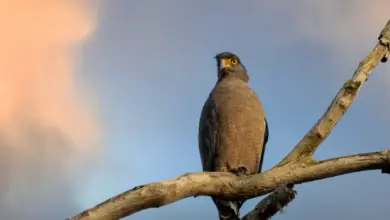
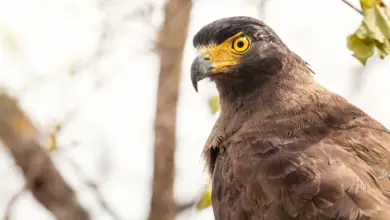
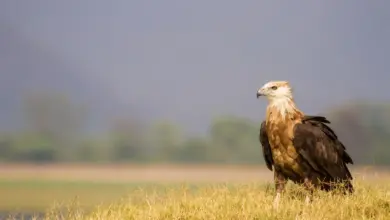
The Philippine Serpent Eagle, Spilornis holospilus, is a striking bird of prey endemic to the Philippines. This medium-sized eagle is typically associated with the forested regions of the archipelago but can also be found in more open habitats such as forest clearings and agricultural landscapes dotted with trees. It is part of a fascinating group of raptors known for their specialization in hunting reptiles, particularly snakes, which has earned them their common name. Despite its somewhat elusive nature, the Philippine Serpent Eagle plays an important ecological role as a mid-level predator within its environment. This expanded article explores its taxonomy, distribution, physical traits, behavior, breeding habits, conservation status, and some intriguing facts that highlight its unique place in the biodiversity of the Philippines.
Scientific Classification
The Philippine Serpent Eagle belongs to the family Accipitridae, which includes hawks, eagles, and kites. Its scientific name is Spilornis holospilus, and it is one of several species within the genus Spilornis, commonly referred to as serpent eagles due to their dietary preferences. Spilornis holospilus was first described by the German naturalist Johann Jakob Kaup in 1847. Historically, the Philippine Serpent Eagle was often considered a subspecies or race of the Crested Serpent Eagle (Spilornis cheela), a widespread species found across South and Southeast Asia. However, recent taxonomic revisions based on morphological and vocal differences support treating the Philippine Serpent Eagle as a distinct species.
Within the genus, the Philippine Serpent Eagle is notable for its adaptation to the Philippine archipelago’s unique ecosystems. Like its relatives, it possesses a prominent crest and powerful talons, specialized for grasping slippery prey such as snakes. The Accipitridae family itself is known for its diversity and adaptability, consisting of over 250 species worldwide, with serpent eagles representing a remarkable example of niche specialization within this vast group of raptors.


Geographic Range & Distribution
The Philippine Serpent Eagle is endemic to the Philippines, meaning it is found nowhere else in the world. Its distribution spans several of the major islands of the archipelago, including Luzon, Mindoro, Leyte, Samar, and Mindanao. It inhabits both lowland and montane forests, generally from sea level up to elevations of around 1,800 meters, although it is most commonly observed between 500 and 1,200 meters above sea level.
This eagle favors habitats such as forest clearings, open woodlands, and sometimes secondary growth or cultivated lands with scattered trees, where it can hunt effectively. While it predominantly resides in primary and secondary forests, its tolerance for disturbed habitats allows it to persist in areas impacted by human activity, although this flexibility should not be mistaken for resilience to habitat loss. The vast deforestation and land conversion occurring in parts of the Philippines pose significant threats to its habitat.
Within its range, the Philippine Serpent Eagle is considered uncommon but locally fairly widespread. Sightings are more frequent in protected areas and forest reserves. However, the species’ secretive nature and preference for dense forest cover can make it challenging for birdwatchers and researchers to observe. Despite this, its distinct call and soaring flight often betray its presence in the canopy.
Physical Description
The Philippine Serpent Eagle is a medium-sized raptor, measuring approximately 50 to 60 centimeters (20 to 24 inches) in length, with a wingspan ranging from 110 to 140 centimeters (43 to 55 inches). Adults typically weigh between 800 to 1,100 grams (1.8 to 2.4 pounds), with females generally larger than males, a common trait among birds of prey.
Its plumage is mainly dark brown on the upper parts, with a distinctive barred pattern on the underparts. One of the most striking features is its bright yellow facial skin around the eyes and the cere (the fleshy area at the base of the bill), which contrasts sharply against its dark feathers. The crest, which gives serpent eagles their name, is composed of a set of elongated feathers on the crown that can be raised or lowered depending on the bird’s mood or alertness.
The tail is relatively long and barred with pale and dark bands, while the legs are robust and yellow, equipped with powerful talons. The bill is hooked and strong, adapted for tearing into reptilian prey. Juvenile Philippine Serpent Eagles tend to have paler plumage with less distinct markings, gradually acquiring adult coloration as they mature over their first year.
Behavior & Diet
The Philippine Serpent Eagle is a solitary and territorial bird, often seen perched quietly on a high vantage point scanning the ground below for potential prey. Its hunting technique involves soaring or gliding above the forest canopy or perching silently before swooping down on unsuspecting prey. As its name suggests, this eagle specializes in hunting snakes, which form a significant portion of its diet. It is adept at capturing venomous species, such as cobras and vipers, as well as non-venomous snakes found in the Philippines.
In addition to snakes, the Philippine Serpent Eagle’s diet includes lizards, small mammals like rodents, birds, and occasionally amphibians. Its strong talons and sharp beak allow it to kill and consume prey efficiently. The bird’s ability to hunt in various habitats, from dense forests to open woodlands, highlights its adaptability.
This eagle is known for its distinctive call—a series of high-pitched, loud whistles or screams that echo through the forest, especially during early morning or late afternoon. These vocalizations play a role in territory defense and communication with mates. Although generally silent when hunting, the Philippine Serpent Eagle can become quite vocal during the breeding season or when alarmed. According to eBird, this species is well documented.
Breeding & Reproduction
Breeding behavior in the Philippine Serpent Eagle is typical of many raptors, with pairs forming long-term bonds and defending nesting territories aggressively. The breeding season varies depending on the island and local climate but generally falls between February and June. During this time, pairs engage in courtship displays that include aerial acrobatics and vocal duets. According to Cornell Lab of Ornithology, this species is well documented.
The nest is usually built high in tall trees, often constructed from sticks and lined with leaves or other soft materials. The nest site is strategically chosen to provide a clear vantage point and protection from predators. Clutch size typically consists of one to two eggs, which are incubated by both parents over a period of approximately 35 to 40 days.
After hatching, the chicks are altricial, meaning they are born helpless and require extensive parental care. Both parents share responsibilities in feeding and protecting the young, which fledge after about 60 to 70 days. Juvenile eagles remain dependent on their parents for some time after fledging as they learn to hunt and survive independently.
Conservation Status
The Philippine Serpent Eagle is currently classified as Least Concern by the International Union for Conservation of Nature (IUCN), reflecting its relatively wide distribution and presumed stable population. However, this status should not lead to complacency, as localized threats continue to impact populations across the archipelago.
Habitat loss due to logging, agricultural expansion, and urban development remains the primary threat to the species. The fragmentation of forest habitats reduces suitable nesting sites and limits prey availability. Additionally, illegal hunting and trapping, although not widespread, occur in some areas. Reports of injured or shot serpent eagles, such as a documented case in Mountain Province where an individual was rescued with a gunshot wound, highlight the risks posed by human activities.
Conservation efforts focusing on protecting forest habitats, enforcing wildlife protection laws, and promoting awareness among local communities are crucial for the Philippine Serpent Eagle’s continued survival. Protected areas like the Northern Sierra Madre Natural Park and other reserves play a vital role in safeguarding populations by preserving critical habitats.
Interesting Facts
The Philippine Serpent Eagle is not only a skilled predator but also an important indicator species for forest health. Its presence in a forest often signifies a well-balanced ecosystem with sufficient prey and intact habitat. Its specialization in hunting venomous snakes has fascinated researchers and bird enthusiasts alike, as the eagle appears immune or highly resistant to snake venom, although the exact physiological mechanisms behind this resistance remain a subject of study.
Unlike many other raptors, serpent eagles tend to be less aggressive toward humans but are highly territorial toward other raptors and intruders. Their distinctive crest, which they can raise during displays, adds to their regal appearance and helps birdwatchers identify them in the wild. The species’ call, often described as eerie or haunting, can carry for long distances in the forest, making it a beloved sound among nature lovers in the Philippines.
In local cultures, the serpent eagle is sometimes regarded with a mixture of awe and respect, often linked to traditional beliefs about snakes and the natural world. Conservation groups use the Philippine Serpent Eagle as a flagship species to promote forest conservation and biodiversity protection efforts within the country.
In summary, the Philippine Serpent Eagle is a remarkable bird of prey uniquely adapted to the forests of the Philippines. Its role as a specialized predator, its striking appearance, and its resilience in the face of habitat challenges make it a fascinating subject for birdwatchers, researchers, and conservationists. Protecting this eagle ensures the preservation of the rich and diverse ecosystems it inhabits, contributing to the health of the Philippine archipelago’s natural heritage.