Overview and Introduction
Porcupines are fascinating creatures best known for their unique defense mechanism: sharp quills that deter most predators. These nocturnal rodents belong to the family Erethizontidae in the Americas and Hystricidae in the Old World. Despite their formidable natural armor, porcupines are still preyed upon by a select group of predators that have adapted specialized hunting techniques to overcome their defenses. Understanding what eats porcupines offers insight into the delicate balance of predator-prey interactions in various ecosystems.
Physical Characteristics
Porcupines are medium to large-sized rodents, typically ranging from 25 to 36 inches in length, with an additional 8 to 10 inches of tail. Their most distinctive feature is their quills—modified hairs coated with thick plates of keratin. These quills can measure from 1 to 5 inches long and cover the majority of their bodies, providing an effective shield against attacks.
Contrary to popular belief, porcupines cannot shoot their quills; instead, the quills are loosely attached and can easily embed in the skin of any animal that comes into contact with them. The quills are barbed, making removal painful and difficult for predators. Interestingly, the underside or the belly of a porcupine is usually free of quills, leaving this area vulnerable to attack.



Behavior
Porcupines are primarily nocturnal and solitary animals. They spend much of their time foraging for food during the night and resting during the day, often in trees or rocky crevices. When threatened, porcupines will first attempt to flee or climb to safety. If cornered, they will raise their quills, rattle them to warn predators, and may even charge backward to embed quills in their attacker.
Porcupines are generally slow-moving and rely on their quills rather than speed or agility for defense. Their behavior emphasizes caution and avoidance, which helps reduce encounters with predators.
Habitat and Distribution
Porcupines are widely distributed across North and South America as well as parts of Europe, Africa, and Asia, depending on the species. The North American porcupine (Erethizon dorsatum) is the most familiar species to many and inhabits diverse environments such as boreal and mixed forests, deserts, and mountainous regions.
They are highly adaptable and can thrive in various habitats including coniferous and deciduous forests, shrublands, and rocky terrains. Their arboreal abilities allow them to access food sources high in trees and provide refuge from ground-based predators.
Diet and Feeding
Porcupines are herbivores with a diet primarily consisting of tender bark, twigs, leaves, and green plants. During winter, when fresh vegetation is scarce, they rely heavily on the bark of trees, particularly from conifers like pine and fir. They may also consume roots, fruits, and occasionally fungi.
Their strong, chisel-like incisors enable them to gnaw through tough plant material and bark. Porcupines play an important role in their ecosystems by influencing vegetation patterns, as their feeding habits can affect the growth and health of trees and shrubs.
Reproduction
Porcupines have a relatively slow reproductive rate compared to other rodents. Mating typically occurs in the late fall or early winter, with a gestation period lasting around 210 days. Females usually give birth to a single offspring, called a porcupette, in the spring or early summer.
Newborn porcupettes are born with soft quills that harden within a few hours after birth, providing immediate protection. The mother is highly protective and nurses the young for several months before it becomes independent. Porcupines reach sexual maturity at about two years of age.
What Eats a Porcupine?
Despite their formidable quills, porcupines do have natural predators, although relatively few can successfully hunt them. The quills provide excellent protection against most attacks, causing injury or discouraging predators from continuing their assault.
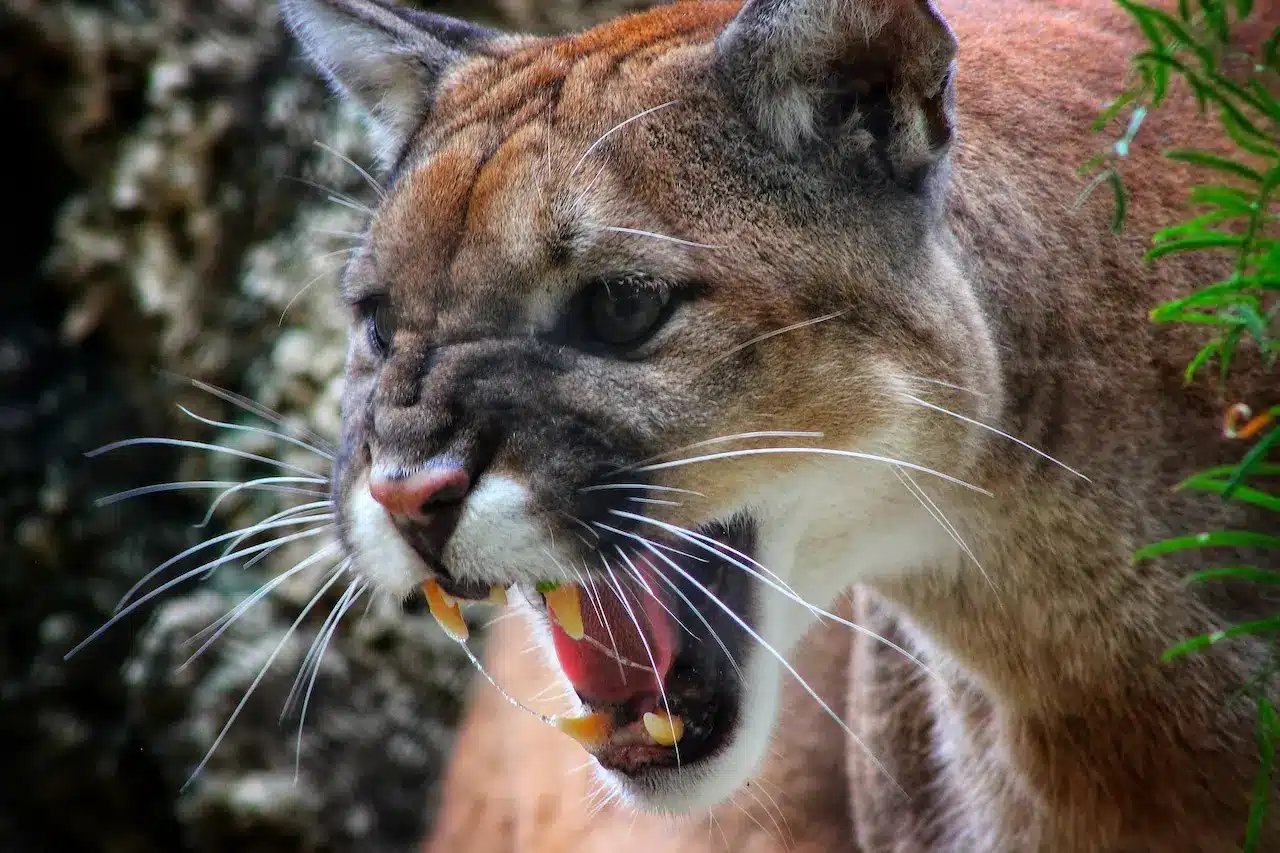
The primary predators known to eat porcupines include bobcats (Lynx rufus), cougars (Puma concolor), and fishers (Pekania pennanti). These predators have developed specialized hunting techniques to overcome the quills. For example, fishers, which are agile carnivores found in North American forests, are particularly adept at flipping porcupines onto their backs and attacking their unprotected bellies.
Bobcats and cougars similarly exploit this vulnerability by targeting the porcupine’s underside. These predators often stalk porcupines carefully and use stealth and patience to avoid getting quilled. Once the porcupine is flipped over or incapacitated, the predator delivers a fatal bite.
Occasionally, great horned owls (Bubo virginianus) have been reported preying on young or injured porcupines, though this is less common. Other potential threats can include wolves and coyotes, but they generally avoid porcupines due to the risk of injury.
Ecological Role
Porcupines play a significant ecological role in their habitats. By feeding on bark, leaves, and twigs, they help shape forest composition and dynamics. Their feeding can stimulate new plant growth and contribute to nutrient cycling.
Porcupines also serve as prey for a specialized group of predators, making them an important link in the food web. The interactions between porcupines and their predators exemplify evolutionary arms races, where defense and hunting strategies continuously adapt.
Additionally, porcupine quills have been used by indigenous peoples for decorative purposes, highlighting their cultural importance in some regions.
Conservation Status
Most porcupine species are currently not considered threatened and are classified as Least Concern by the International Union for Conservation of Nature (IUCN). Their wide distribution and adaptability contribute to stable population levels.
However, habitat destruction, vehicle collisions, and trapping can negatively impact local populations. In some areas, porcupines are considered pests due to their feeding on trees and crops, which can lead to conflicts with humans.
Conservation efforts focus on habitat preservation and reducing human-wildlife conflicts to ensure porcupine populations remain healthy and sustainable.
Interesting Facts About Porcupines
- Quill Composition: Porcupine quills are made of keratin, the same material found in human hair and nails, but they are much stiffer and barbed for defense.
- Quill Warning: Porcupines often rattle their quills to warn predators before attacking, producing a distinctive sound as the quills vibrate.
- Tree Climbers: North American porcupines are excellent climbers, using strong claws and muscular limbs to ascend trees where they feed and hide.
- Slow Movers: Despite their slow and lumbering movement, porcupines can swim well and often cross bodies of water to find new habitats.
- Self-Anointing Behavior: Some porcupine species anoint their quills with secretions from glands, possibly to deter parasites or enhance defense.
- Quill Regeneration: Porcupines can shed and regrow quills throughout their lifetime, ensuring their defense remains effective.