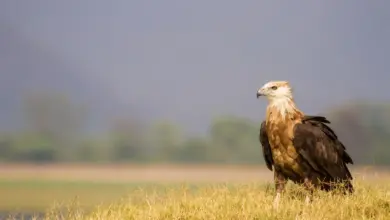
The Crowned Solitary Eagle is one of South America’s most beautiful and little-known raptors. This species, often called the Crowned Eagle, is mistaken for the African Crowned Eagle, Stephanoaetus Coronatus, due to their similar names, even though they are not related and live on different continents. Crowned Solitary Eagles are endangered birds of prey. They are admired for their powerful build, distinct crest and commanding presence in the ecosystems they inhabit. This eagle, known to local communities for centuries but only studied scientifically in the last few decades, embodies both the fragility and mystery of South America’s wild landscape. The declining population, due primarily to habitat loss and persecution by humans, makes it a focal point for conservationists in its small range. Understanding the bird’s ecology, biology and role within its environment is essential to recognising and protecting its importance.
Confusion with other “Crowned Eagles”
The Crowned Solitary Eagle is classified as a member of the Accipitridae family, which also includes Old World Vultures, Kites and Hawks. Harpyhaliaetus was once a genus that included many species. However, modern research has refined the classification and clarified its place. The species is mistakenly referred to as the African Crowned Eagle despite its distinct evolutionary lineage. This species belongs to a completely different genus and occupies a totally different ecological niche. This confusion highlights the importance of using accurate names in ornithology. The scientific name of the Crowned Solitary Eagle, Harpyhaliaetus Coronatus, reflects its harpy-like power as well as its “crowned” appearance. The eagle’s crest and massive stature give it a regal appearance that has inspired many of the common names in local communities.
Geographic Distribution of South America
The Crowned Solitary Eagle lives only in South America. The Crowned Solitary Eagle’s range is primarily Argentina, Brazil, Paraguay and Bolivia. However, sightings and populations are scattered. Its range was once much larger, but habitat fragmentation, direct persecution and other factors have severely reduced its numbers. The species is the most commonly recorded in Argentina and is a focal point for local conservation programs. The eagle is found in Brazil’s Cerrado, Caatinga and Pantanal areas, but the populations are decreasing. Paraguay and Bolivia have smaller populations. This fragmented population poses challenges to genetic diversity and long-term survival.


Preferred Habitat Open Woodlands & Marshlands
The Crowned Solitary Eagle has a close association with open woods, savannas and marshes, which combine open hunting grounds with tree cover. These ecosystems offer the Crowned Solitary Eagle a great opportunity to observe its surroundings, while also providing a variety of prey. It prefers regions with scattered or gallery forests that border wetlands and grasslands. This allows it to perch on branches high while searching for prey. It avoids dense forest and completely open plains in favour of a balance between visibility, cover and protection. In places like Brazil and Bolivia, the eagle can be seen along rivers and wetlands, which support diverse mammal and reptile populations. In Argentina, it prefers the Chaco woodlands, shrublands and marshy lowland ecologies. These habitats are being rapidly transformed by agricultural practices, cattle ranching and deforestation. This is one of the biggest threats to the eagle’s survival.
Physical Description and Unique Identifying Features
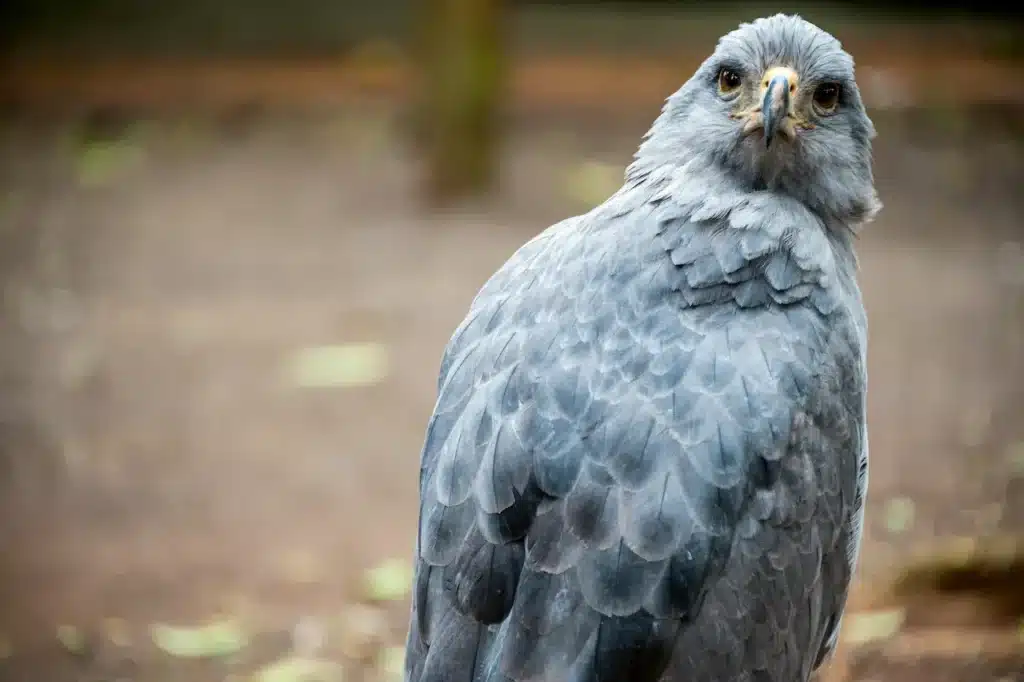
Crowned Solitary Eagles are large and impressive raptors with a wingspan up to 170cm (67 inches), and a length between 75-85cm (30-34inches). The crown-like crest on its head is its most distinctive feature. Adults have a stunning combination of grey, brown, and white tones. Upperparts tend to be dark grey, while underparts have lighter shades and variable streaking. The broad, banded tail adds to the powerful appearance of this bird in flight. The juveniles are much paler than adults and have more prominent spotting. Inexperienced observers often mistake their lighter colouration for that of other species. Its predatory adaptations are highlighted by its strong, curved, and thick beak, which allows it to subdue and capture a variety of prey.
Solitary Behaviour and Lifestyle
Crowned Solitary Eagles are generally a single species. They prefer to hunt, roam, and settle in pairs or territories rather than groups. The Crowned Solitary Eagle is renowned for its energy-efficient yet majestic flight patterns. It can soar for extended periods of time while patrolling the territory. It often selects high vantages such as trees or rocky outcrops to rest, preen and scan for prey. The behaviour of the species is influenced by territoriality, as pairs defend large home ranges that can span several dozen square kilometres. Although the eagle is generally silent, it may emit high-pitched sounds during territorial disputes or breeding season. Researchers find it difficult to monitor and locate the eagle because of its elusiveness and large range. This contributes to gaps in knowledge about its population and migration patterns. According to RSPB, this species is well documented.
Diet, Hunting and Techniques for the Crowned Solitary Eagle
The Crowned Solitary eagle is a top predator with a varied diet, which reflects its habitat. It feeds mainly on small mammals, snakes and reptiles. In many areas, Snakes and other Reptiles are a large part of the diet. This shows how important it is to control the reptile population. The eagle’s typical hunting method involves flying above open terrain, perching and then swooping with great force. Its powerful talons enable it to easily grab and immobilise its prey. It may grab fish or aquatic creatures from the surface when hunting near water. In some places, its willingness to feed on infant monkeys shows off its adaptability. Dietary flexibility is crucial for the species, particularly in habitats where prey populations are likely to decline due to human development. According to BirdLife International, this species is well documented.
Reproduction and Chick Development
Although there is little research on Crowned Solitary eagle breeding biology, what we do know suggests that the pairs form monogamous long-term bonds throughout the year and defend a large territory. Nests are often built in tall trees in areas with open woodland or in marshy areas where prey can be easily accessed. Nests are bulky, large structures constructed from sticks with soft vegetation lining them. The females usually lay two or three eggs. However, successful fledging for both chicks can be rare. Incubation is primarily done by the female while the male takes care of food and territorial defence. Chicks stay in the nest several weeks after hatching before they leave. After leaving the nest, juveniles still rely on parents to provide food and teach them how to hunt. The species’ slow reproduction rate makes it highly susceptible to population decline. Even small losses can have a significant impact on the long-term health of the species.
Conservation Status of an Endangered Species
The Crowned Solitary Eagle’s population is decreasing in its entire range. It is listed as Endangered. The most serious threat is habitat loss, with vast tracts of woodland and marshland being cleared to make way for cattle ranching and soy production. Humans also mistakenly hunt the eagle because they believe it is a threat to livestock or poultry. This happens very rarely. The population is also stressed by collisions with power lines, electrocutions, and a reduction in prey. The eagle’s ability to recover after population declines is restricted because it requires a large territory and has a low reproductive rate. Conservation groups in Argentina, Brazil and Paraguay launched habitat protection and monitoring programs. However, more funding and awareness is needed to ensure long-term survival of the species.
The Ecological Importance Of The Crowned Solitary Eagle
As a leading predator, the Crowned Solitary Bird plays an important ecological role. It helps maintain balanced populations of small mammals, reptiles and other prey. The Crowned Solitary Eagle’s ability to control the small mammal population can help maintain a healthy ecosystem. Its predation of snakes reduces risks for humans and livestock. The eagle is a powerful indicator of environmental problems, such as habitat destruction or a lack of prey. The Crowned Solitary Eagle is therefore beneficial to entire ecosystems. It protects biodiversity and promotes sustainable land management. The presence of this bird in a healthy environment is a testimony to the richness and resilience of South America’s landscapes.
Conclusion
Crowned Solitary Eagles are one of South America’s most majestic and endangered raptors. They combine striking physical characteristics with a vital ecological role. The Crowned Solitary Eagle is particularly vulnerable to environmental changes and human activity because of its limited distribution, dependency on fragile habitats and slow reproduction rate. We continue to learn about this amazing bird as its story underscores the urgent need for habitat protection, conservation, and public awareness. Crowned Solitary Eagle’s future depends on coordinated efforts in Argentina, Brazil, Bolivia and Paraguay and increased awareness about the species within local communities. We can ensure that the Crowned Solitary Eagle continues to soar above South America’s marshlands and open woodlands for future generations by supporting conservation efforts and appreciating its role in nature.