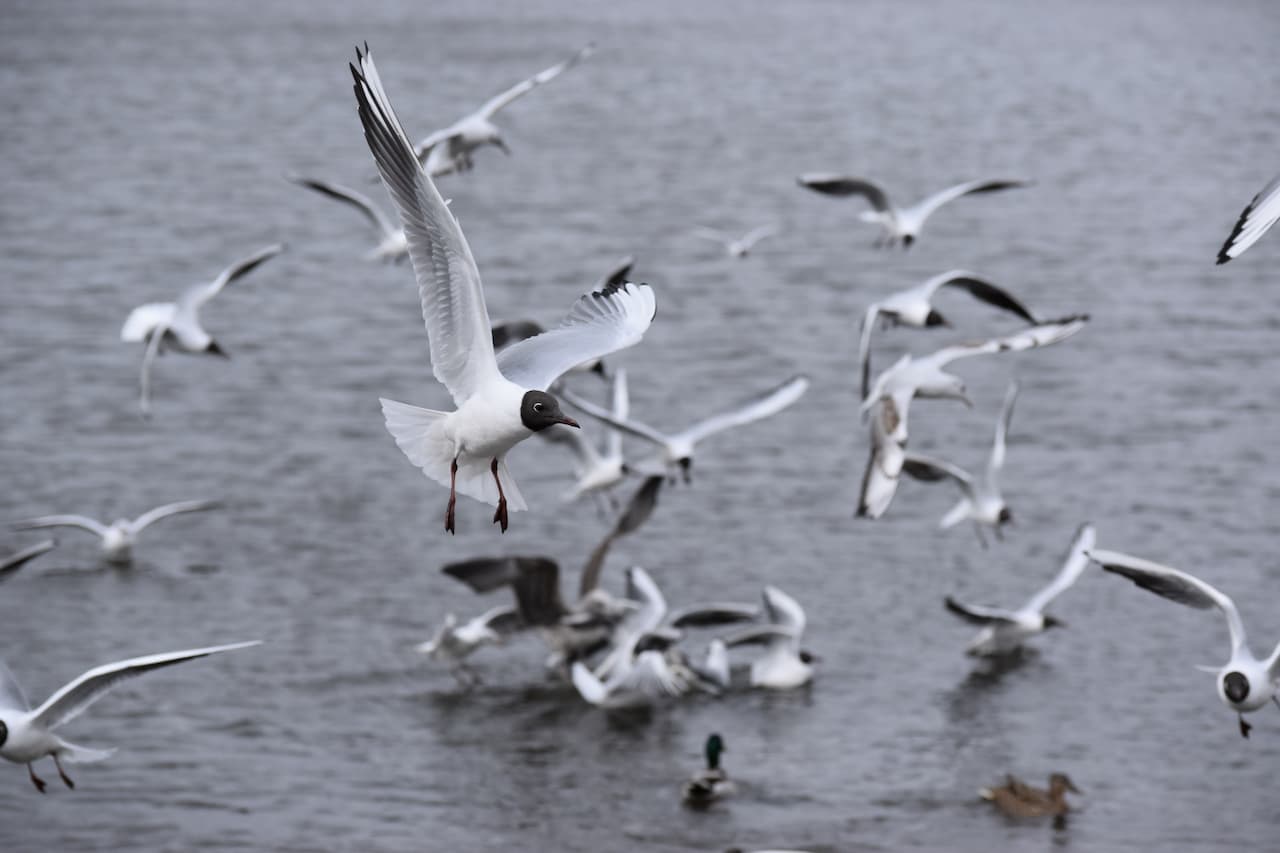
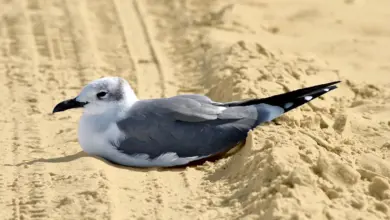
The Common Gull, known scientifically as Larus canus, is a medium-sized gull species that captivates birdwatchers and nature enthusiasts across the Northern Hemisphere. Renowned for its graceful flight and distinctive calls, this gull breeds primarily in the cooler regions of Europe, Asia, and northwestern North America. In North America, it is often referred to as the Mew Gull. Unlike some of its larger and more aggressive relatives, the Common Gull exhibits a somewhat gentler demeanor, and its subtle plumage and distinctive features make it a fascinating subject for study and observation.
Scientific Classification
The Common Gull belongs to the family Laridae, which encompasses gulls, terns, and skimmers. Its scientific name is Larus canus, with the genus Larus being the most widely recognized group of gulls worldwide. The species is subdivided into three recognized subspecies or populations, which sometimes are regarded as separate species due to subtle morphological and geographical differences. These include Larus canus canus, the nominate subspecies found in western Eurasia; Larus canus kamschatschensis, known as the Kamchatka Gull, inhabiting eastern Asia; and Larus canus brachyrhynchus, the Short-billed Gull of Alaska and western Canada.
Taxonomically, the Common Gull is closely related to other medium-sized gulls such as the Herring Gull (Larus argentatus) and the Ring-billed Gull (Larus delawarensis). However, it can be distinguished by its smaller size and more delicate bill shape. The debate around the classification of these subspecies highlights the complexity of gull taxonomy, where subtle differences in plumage, vocalization, and breeding behavior can define species boundaries.


Geographic Range & Distribution
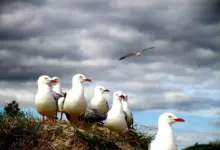
The Common Gull has a wide but patchy distribution across the Northern Hemisphere. Its breeding range spans northern and central Europe, extending eastwards through Russia to the Kamchatka Peninsula. In North America, its range is primarily coastal and inland Alaska and western Canada, where it is known as the Mew Gull. During the non-breeding season, Common Gulls migrate southwards to coastal regions of western and southern Europe, parts of the Mediterranean, and the Pacific coast of North America.
In Europe, the species breeds in habitats ranging from the British Isles and Scandinavia to the Baltic states and parts of western Russia. The Kamchatka Gull subspecies is found in the Russian Far East, while the Short-billed Gull breeds in maritime and freshwater habitats of Alaska and British Columbia. Some European Common Gulls are recorded as rare winter visitors along the eastern Canadian coast and occasionally as vagrants in the northeastern United States, reflecting their occasional long-distance dispersal.
Habitat preference includes coastal cliffs, islands, inland marshes, lakes, and river valleys. The Common Gull favors nesting near freshwater bodies but is also adaptable to various environments, from tundra to temperate zones. This adaptability allows the species to exploit a wide range of food sources and nesting sites across a broad geographical area.
Physical Description
The Common Gull is a medium-sized gull, measuring approximately 40 to 46 centimeters (16 to 18 inches) in length with a wingspan ranging from 110 to 125 centimeters (43 to 49 inches). Adults typically weigh between 300 and 450 grams (10.5 to 15.9 ounces), making them noticeably smaller than the larger Herring Gull but comparable in size to the Ring-billed Gull. One of the key distinguishing features is the Common Gull’s relatively short and slender bill, which is more tapered than that of many other gulls and shows a distinctive greenish-yellow coloration without the prominent markings often seen in related species during the breeding season.
Adult plumage presents a clean, understated elegance. The upperparts are a soft, pale grey, while the underparts are pristine white. The legs are a subtle greenish hue, setting them apart from many other gulls with pink or yellow legs. The wing-tips are black with conspicuous white “mirrors” – patches of white on the primary feathers – especially pronounced in American populations. Juveniles appear markedly different, displaying scaly, mottled brown upperparts and a wing pattern that includes bold white and dark markings. These young birds take approximately three years to reach full adult plumage, gradually transitioning through several stages of coloration and pattern.
The Common Gull’s vocalizations are equally distinctive, characterized by a high-pitched, laughing call that is often described as a “mewing” sound, which is the origin of its North American name. This call is more melodious and less raucous than some of the harsher cries of larger gulls, making it a familiar sound in breeding colonies and feeding areas.
Behavior & Diet
Common Gulls exhibit a range of behaviors typical of medium-sized gulls but are often noted for their relatively shy and less aggressive nature. They are highly social birds, frequently forming loose colonies during the breeding season and gathering in flocks when migrating or feeding. Their flight is buoyant and graceful, with steady wingbeats interspersed with glides, allowing them to cover long distances during migration with ease.
Dietarily, the Common Gull is an opportunistic omnivore, feeding on a diverse array of food items depending on availability. Their diet includes fish, aquatic invertebrates, insects, earthworms, small mammals, and birds’ eggs. They are also known to scavenge carrion and human refuse, demonstrating a flexible feeding strategy that enables survival in varied habitats. During the breeding season, they often forage at sea and along shorelines for small fish and crustaceans, while inland populations may hunt for insects and worms in wet meadows and marshes.
These gulls are also adept at kleptoparasitism, occasionally stealing prey from other birds, and they exhibit some degree of tool use and problem-solving ability to access food. Their feeding behavior changes seasonally, reflecting the fluctuations in prey availability, and they often forage in association with other gull species and seabirds. According to Cornell Lab of Ornithology, this species is well documented.
Breeding & Reproduction
The Common Gull breeds colonially, favoring sites near water, such as coastal islands, marshes, lakeshores, and river valleys. Nesting colonies can range from small groups of a few pairs to larger aggregations of several hundred. Their nests are typically simple scrapes on the ground, lined with grass, moss, or seaweed, though occasionally nests are built in low trees or shrubs. The choice of nesting site is influenced by predator presence and habitat availability. According to BirdLife International, this species is well documented.
Breeding season generally begins in late spring, with timing varying depending on latitude. Females typically lay three to four eggs, which are olive to greenish-brown with darker spotting that provides effective camouflage. Both parents share incubation duties, which lasts about 24 to 28 days. The chicks are semi-precocial, hatching with downy feathers and being relatively mobile but requiring parental care and protection.
Young gulls fledge approximately 40 to 50 days after hatching. They remain dependent on their parents for some time as they learn to forage and avoid predators. The three-year maturation period before attaining adult plumage corresponds with the gradual development of their flight skills and social behaviors within the colony.
Conservation Status
The Common Gull is currently classified as Least Concern by the International Union for Conservation of Nature (IUCN), reflecting its wide distribution and relatively stable global population. However, some regional populations face pressures from habitat loss, pollution, and human disturbance, particularly in breeding areas affected by development or increased predator populations such as foxes and crows.
Environmental changes, including climate change, may also impact the species by altering the availability of prey and suitable nesting sites. In some parts of Europe, Common Gulls have experienced local declines due to wetland drainage and intensive agriculture, which reduce feeding and breeding habitat quality. Conversely, in other areas, they have adapted well to urban environments, sometimes increasing in numbers by exploiting human refuse and modified landscapes.
Conservation efforts focused on protecting key breeding sites, managing predators, and maintaining wetland habitats benefit the Common Gull and many other species sharing these environments. Monitoring populations across their wide range remains important to detect potential future declines and implement timely conservation actions.
Interesting Facts
The Common Gull is often overshadowed by its larger cousins, but it possesses several intriguing traits. Its name, “Mew Gull,” comes from the similarity of its call to the mewing of a cat, a high-pitched and somewhat plaintive sound that stands out among gull vocalizations. This distinctive call helps birdwatchers and researchers identify the species even at a distance.
Another interesting aspect is the Common Gull’s relatively gentle temperament compared to more aggressive gull species. While many gulls are notorious for stealing food or harassing other birds, Common Gulls tend to be more reserved, which may influence their social dynamics within mixed-species feeding flocks.
In flight, the Common Gull’s wing pattern, especially the large white “mirrors” on the black primary feathers, is a useful field mark that aids identification. These dazzling white spots are most prominent during flight displays and help individuals recognize conspecifics. Additionally, the species exhibits a remarkable ability to navigate vast migratory routes, often traveling thousands of kilometers between breeding and wintering grounds.
Finally, the Common Gull’s adaptation to both coastal and inland habitats showcases its ecological versatility. From nesting on windswept islands to foraging in agricultural fields, this gull demonstrates the resilience and adaptability that have allowed it to thrive across a broad geographic range for centuries.
In conclusion, the Common Gull (Larus canus) is a widespread and fascinating species whose subtle beauty and adaptable nature make it an essential part of the ecosystems it inhabits. Whether observed soaring over northern lakes, nesting in coastal colonies, or calling from marshy wetlands, the Common Gull offers valuable insights into the complex and interconnected world of gulls and the broader avian community.