Bird Overview
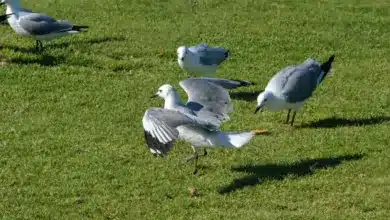
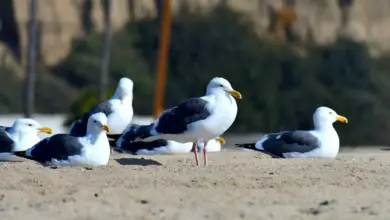
Franklin’s Gulls are small, migratory birds native to North America. The Franklin’s Gull breeds in central Canada and the northern U.S., where it forms colonies near prairie lakes. Nests are usually built on the ground but can also be found on floating vegetation. The clutch consists of 2 or 3 eggs that hatch after approximately three weeks.


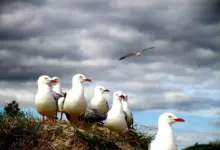
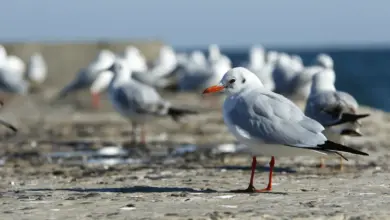
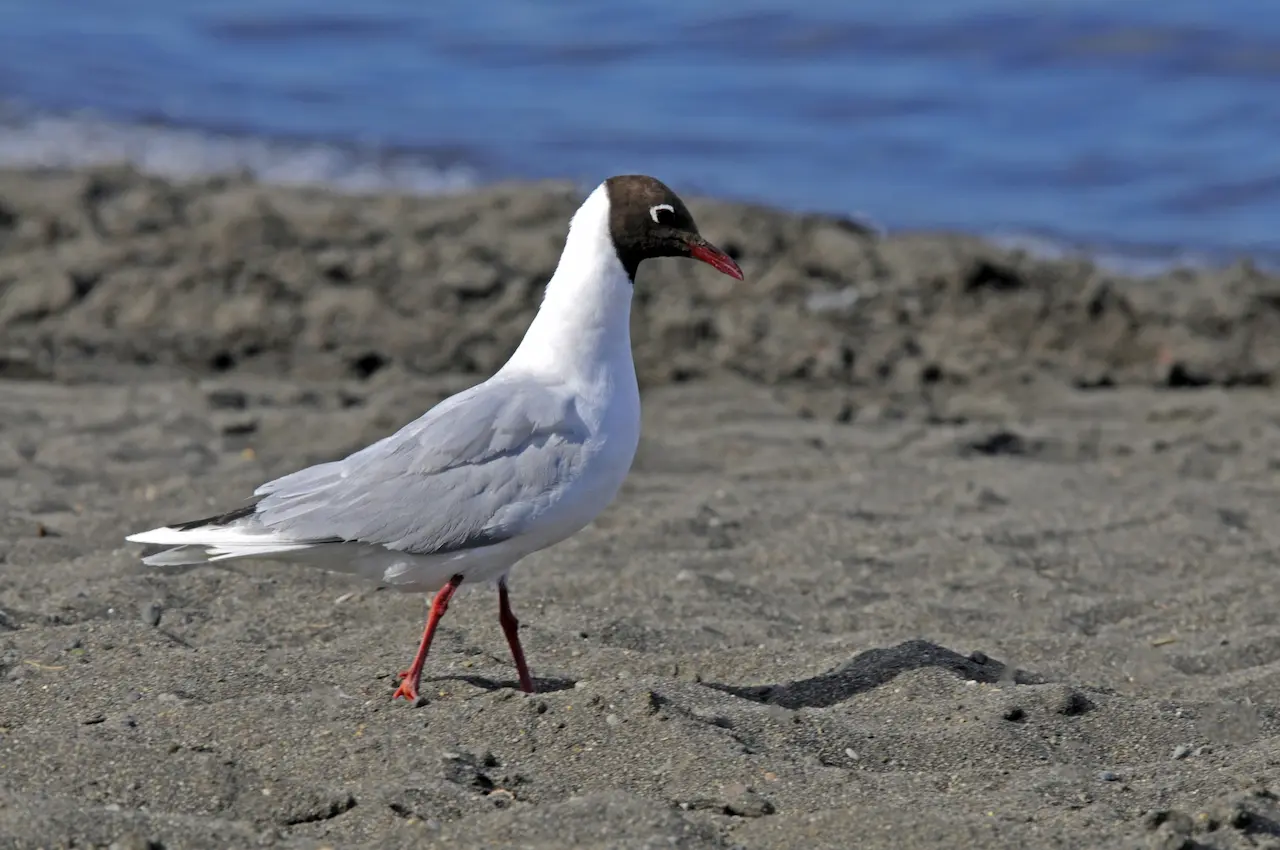
The breeding plumage of this species is striking. In the summer, adults have a white body and dark grey wings, with black wingtips edged by a white band. The bill and legs of adults turn red in this season. They also wear a black hood, which fades away during winter. The juvenile birds resemble adults, but they lack the distinctive white wing bands and full hood. It can take up to three years for them to develop adult plumage.
Franklin’s Gulls feed opportunistically on insects, carrion, and small prey. After breeding, they travel long distances to wintering areas in the Caribbean and Peru.
This species, named after Arctic explorer Sir John Franklin, is rare along the North American coasts. However, it is known to wander. Rare sightings of this species have been reported in northwestern Europe, Africa and Australia.
Bird Group:
Franklin’s Gull is a member of the group of Gulls, Terns and the family Laridae.
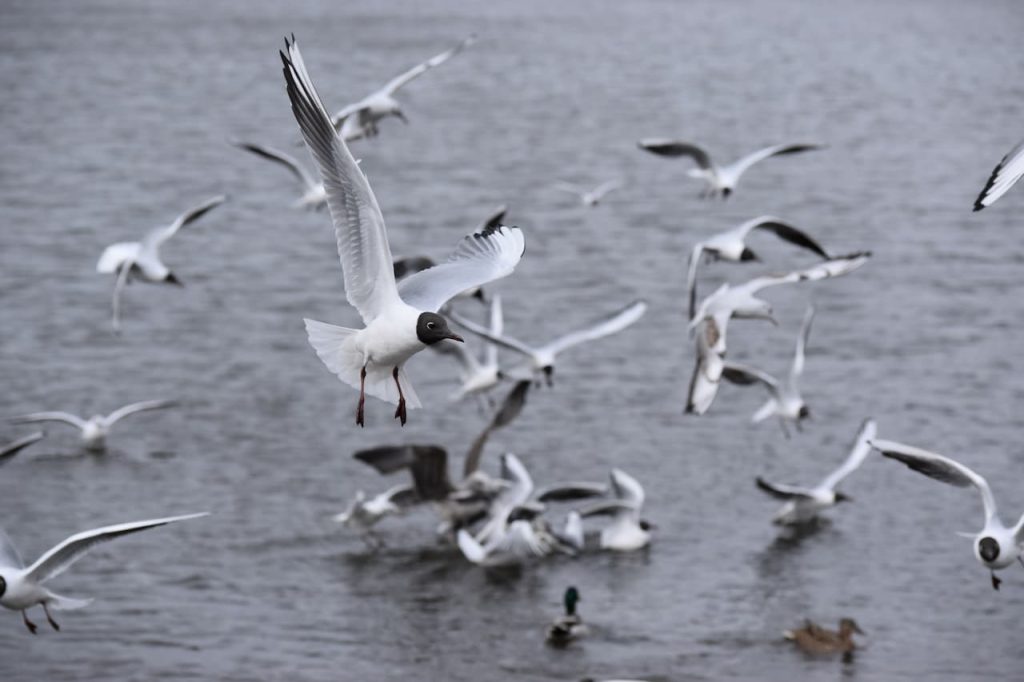
The family includes terns and kittiwakes. These medium to large seabirds are known for their adaptability and opportunistic eating habits. They also have a noisy social behaviour. Franklin’s Gull is gregarious, migratory and associated with wetlands and coastal habitats.
Identification
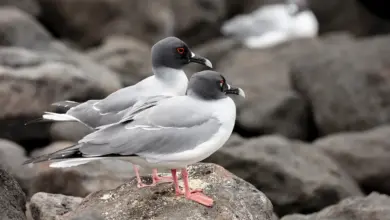
Franklin’s Gull, a medium-sized gull with distinctive features and migratory patterns, is easily identified. Adults have a medium-grey upperparts with a black hood accented by bold white eye arches, and white spots on their black wingtips. The underparts of the bird are white with a pinkish flush. Their bill and legs also turn bright red. In the non-breeding season, the black hood is reduced to a partial one, while the legs and bill darken. The plumage of juvenile birds is browner, less defined and lacking the crispness that adults have.
The gull breeds in colonies in the north-central part of North America. This includes southern Canada and northern United States. Nests are often built in low areas near wetland edges or on floating mats. Franklin’s Gulls migrate through North America’s central corridor to their wintering grounds in South America. They do this from Peru to Chile. The Franklin’s Gulls are very gregarious and form large flocks, sometimes mixing with other species of gull, during their migration and in winter.
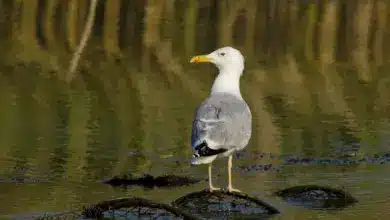
Franklin’s Gull looks similar to the Laughing Gull but is smaller, stockier and has a shorter beak. The Franklin’s Gull has larger and thicker white eye arcs, as well as more prominent white wingtip patches. These features help to distinguish it from the Laughing Gull. These differences are crucial for birders who want to distinguish the two species during migration.
Franklin’s Gulls feed on a variety of insects, earthworms and small fish. The birds are also known to scavenge, and they often follow agricultural machinery to eat disturbed invertebrates. They are a stunning sight during migration seasons, with their graceful, buoyant flight and noisy, large flocks.
Songs & Calls
Franklin’s Gulls have a unique and varied vocal repertoire, which reflects their highly social nature. Its most frequent call is a harsh repeated cuk – cuk – cuk. This call can be heard in many social situations, such as during flock interactions, courtship displays or aggressive encounters. The chattering sound is heard most often in breeding colonies, where many birds vocalise at once. According to BirdLife International, this species is well documented.
The Franklin’s Gull also produces a louder and more piercing cry, which is described as Keeah Ah Keeah Ah. This call is usually used in alarm situations, such as when predators are approaching nesting sites or when humans disturb birds. The vocalisations also include nasal mewing and guttural sounds used to communicate between parents and their chicks or between mates. Franklin’s Gull is one of the most vocal species. This is especially noticeable during breeding season, when large colonies are noisy and active. According to RSPB, this species is well documented.
Location
During the breeding period, this species is found in the following areas: central Saskatchewan, eastern Alberta and Manitoba, central Oregon and Wyoming, south Idaho, northwestern Iowa and North Dakota. During the spring and summer, L. pipixcan has been sighted as a vagrant along the southern coasts of Alaska. L. pipixcan has also been recorded in western Kansas and northern California.
Habitat
The Franklin’s Gull prefers large, permanent prairie marsh areas. It nests on the surface of water, supported by emergent vegetation. Cattails (Typha species) are noted for nesting. Bulrushes and cattails, 1994. The typical water depth ranges from 30 to 60 centimetres. The nesting behaviour of Montana’s other gulls, which nest on the ground, is different. Franklin’s Gulls nest in areas with intermediate vegetation, with varying sizes of open water. The preferred nesting site within a wetland can change year-to-year due to changes in water levels and vegetation. In order to protect the young from predators, it is important that water levels stay high during the nesting season, or until they can fly (Casey, 2000). Franklin’s Gulls can be seen feeding on dry land during migration in the Bozeman region, and especially before planting, particularly in cultivated fields.
Behaviour
Franklin’s Gulls have a high level of socialisation and form large flocks all year round. In their wintering grounds in South America, particularly along the coasts of Chile, Franklin’s Gulls can congregate into groups numbering in the thousands. They gather in large flocks on beaches, estuaries and offshore sandbars where they feed, rest and preen. Franklin’s Gulls can also be seen interacting with other seabirds such as Laughing Gulls and Grey Gulls. They may also associate with waders, including sandpipers or plovers. They may be seen scavenging fish from fishing boats or trawlers along with mixed flocks of gulls and Terns.
The same gregarious behaviour is evident in their North American breeding grounds.
Franklin’s Gulls form large colonies near prairie lakes and marshes where thousands of pairs nest close together on floating mats or shallow wetlands. The tendency of Franklin’s Gulls to form large groups has many benefits, including increased vigilance and foraging efficiency. During migration, they travel in loose flocks that undulate, stopping to feed, rest, and drink at wetlands, agricultural fields, and river systems.
Feeding
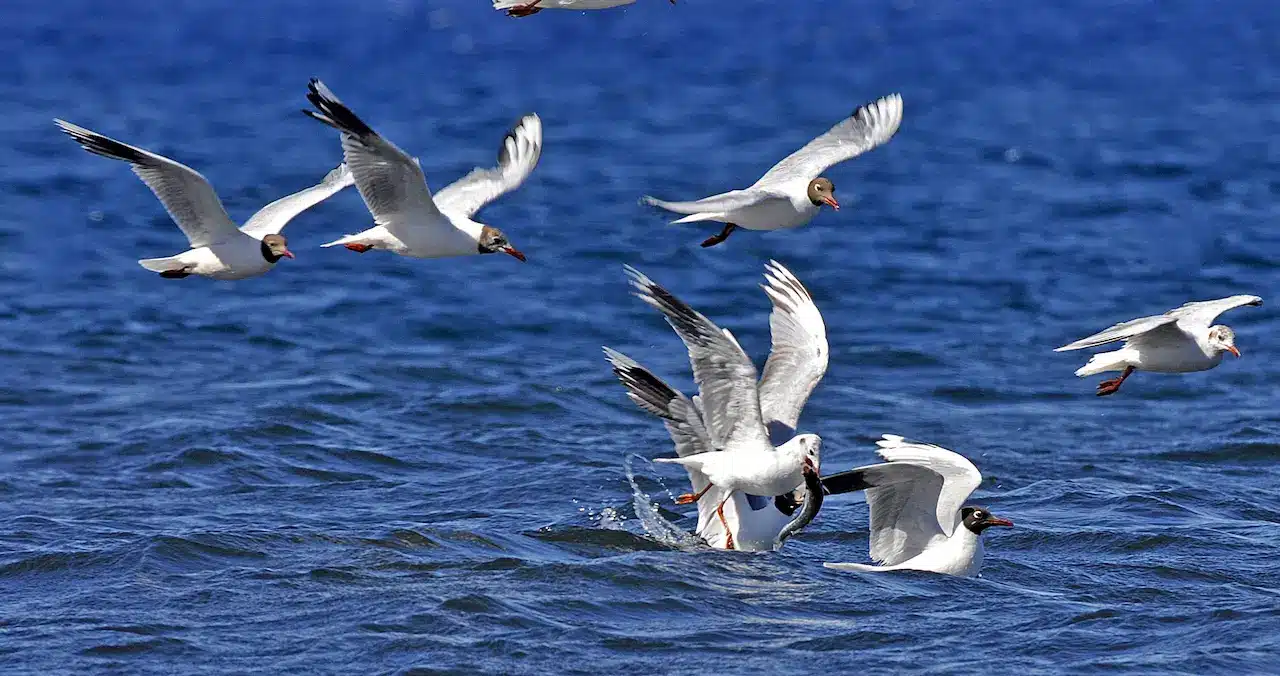
Franklin’s Gull stomach contents were studied at Freezeout Lake. The results revealed that the diet of Franklin’s Gull was very diverse. Birds ate large amounts of insects, including beetles and grasshoppers. The birds also consumed arachnids such as spiders and segmented worms, demonstrating their opportunistic eating habits in wetlands. There were also unidentified small vertebrates such as fish, small amphibians or rodents. This suggests that larger prey are sometimes preyed upon. The samples also contained plant material that was likely consumed accidentally while hunting for prey animals.
The Franklin’s Gull is an omnivore, and its diverse diet reflects that. They will eat animal matter to satisfy their high energy needs, particularly during breeding season. However, they may also use other food sources that are plentiful in their environment. Foraging techniques include picking insects from water surfaces, probing the wet ground or following agricultural machinery in order to catch invertebrates exposed during ploughing.
Breeding
The breeding is localised, and takes place mainly in the north of the state’s plains and the southwest. Franklin’s Gulls nest in Montana in five different locations, and there may be as many as 34,000 pairs of breeding birds (Reichel 1996). In 1994-95 the number of pairs nesting at each location was recorded: Medicine Lake National Wildlife Refuges (50 to 500); Bowdoin National Wildlife Refuges (20; previously as high as 7500); Benton Lake National Wildlife Refuges (16,000); Freezeout Lake Wildlife Management Areas (16,000); and Red Rock Lakes National Wildlife Refuges (200+; Reichel 1996). Other locations in Montana have reported possible breeding, but without any details (Montana Bird Distribution Committee 2012.
Conservation
The North American Breeding Bird Survey shows that Franklin’s Gull population declined by nearly 3% each year from 1968 to 2015 in all areas of the species’ range, resulting in a 76% cumulative decline over this period. The United States, where the species breeds (which is a very small part of its range), saw declines of over 6% each year. This amounts to 95%. Partners in Flight estimates that the global breeding population is 830,000. The species scores a 14 on a 20-point scale on the continental concern score. It’s placed on the yellow watch list of species with declining populations.
Franklin’s Gull numbers declined during the 1800s and 1900s, as half of the wetlands within their range in the United States were drained. Franklin’s Gulls lost their nesting habitats when they were altered or manipulated for the benefit of other species, such as waterfowl. In some areas, their sensitivity to disturbances by humans at colonies has led to a decrease in the number of Franklin’s. Heavy metals and other environmental pollutants are also a threat to the aquatic species. Climate change predictions of higher temperatures in the breeding range with stronger storms, and periods of intense drought could affect nesting habitats and reduce nesting success.
Risks / Threats
Copyright: Wikipedia. This article is licensed under the GNU Free Documentation License. It uses material from Wikipedia.org. Additional information and photos added by Avianweb.
Please note: The articles or images on this page are the sole property of the authors or photographers. Please contact them directly with respect to any copyright or licensing questions. Thank you.