The Black Stork (Ciconia indica) is one of the most mysterious and elusive large wading bird species. The Black Stork is more shy and reclusive than its cousin, the White Stork. It hides in dense forests of Europe and Asia. This rare bird has fascinated ornithologists, birdwatchers and others for many generations with its striking appearance and lengthy migrations. This blog post will explore all you need to learn about the Black Stork, from its physical characteristics and breeding habits to migration routes and conservation initiatives.
The Black Stork: A majestic bird?
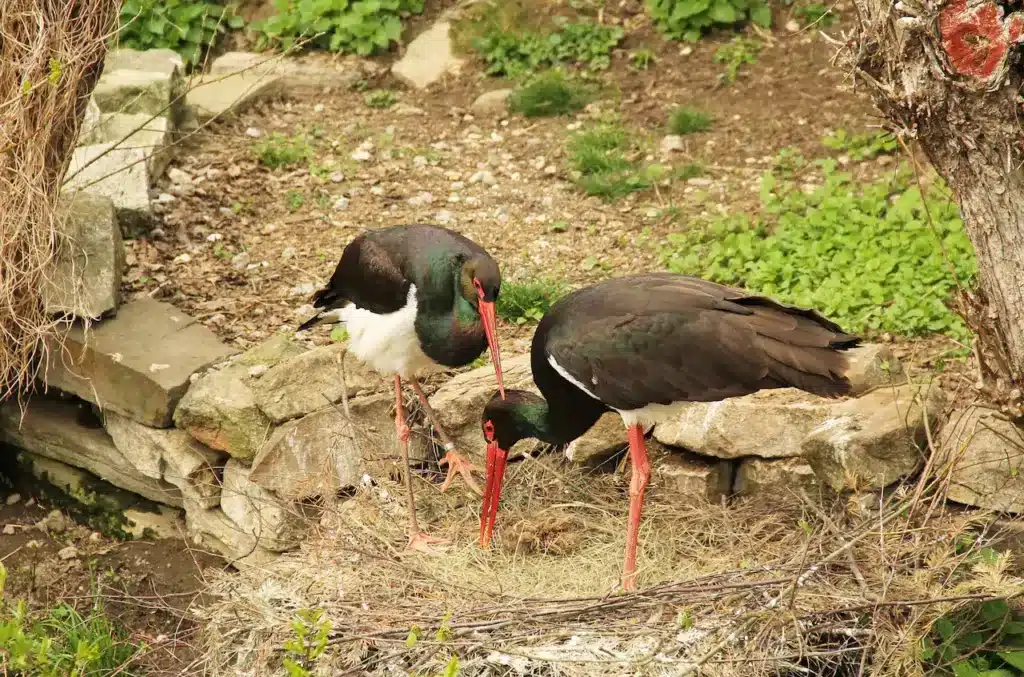
Black Storks are impressive birds, with a height of nearly one meter. They also have a wingspan up to two meters. The black plumage shimmers with green and purple iridescence in the sunlight. Its belly and underwing covers are white. Its red legs and bright bill give it an elegant but ominous appearance. It is rare to see it near human settlements. This makes it difficult to observe. It glides gracefully in the air by stretching its neck, like other storks.
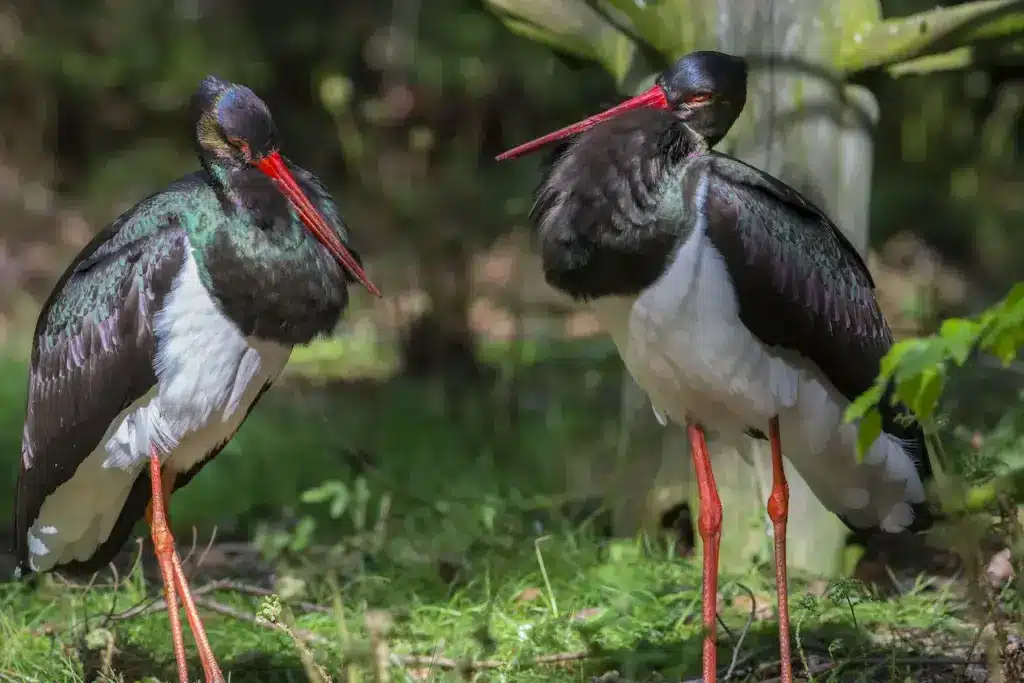
Natural Habitats and Breeding Grounds
The Black Stork breeds primarily in the warm regions of Europe, and in particular, Central Europe. It also extends to parts of Asia. It prefers marshy habitats, large wetlands with broadleaved, or coniferous forest. These forests provide tall trees to nest in. It can also adapt to mountainous or hilly regions that have abundant freshwater streams and creeks. Nests are usually built in the branches of old trees, using sticks and lining them with grass and leaves. This species prefers to be alone and avoids human disturbance.

What do black storks eat?
Black Storks eat primarily aquatic prey. Fish are the main food source. The Black Stork also feeds on amphibians and insects. They may also feed on small rodents or reptiles. They hunt by wading slowly and patiently through shallow water, then striking quickly with their sharp bills. Black Storks can detect water vibrations in murky waters, unlike birds that rely solely on visual cues.
Communication and Behavior
The Black Stork is mostly silent but emits a loud rasping call when startled or during breeding season. The Black Stork does not display the bill-clattering behaviour of the White Stork. The Black Stork’s shyness is reflected in its communication style. Both parents incubate eggs and feed the young during nesting. This shows a high level of parental cooperation.
Distribution: How widespread are black storks?
During the winter, the Black Stork’s range extends into parts of Europe and Asia as well as tropical Africa. The largest breeding populations are found in Poland, Belarus and Hungary. Smaller groups can be found throughout the Iberian Peninsula, the Balkans, and the Baltic States. The eastern limit of the breeding range is Russia and China. The species is widespread but still rare because of its secretive lifestyle.
Conservation Status & Threats
The Black Stork, despite being widespread, is considered scarce and fragile in some parts of its range. The Agreement on the Conservation of African-Eurasian Migratory Waterbirds lists the Black Stork, and it enjoys a certain degree of legal protection in Europe. Habitat destruction is a major threat, as are the loss of mature forests and wetlands caused by agriculture, logging and urban development. The disruption of nesting and the pollution of waterways are also significant threats. Conservation efforts are focused on protecting breeding sites, maintaining wetland ecosystems and tracking migratory paths.
Migration Patterns: A Long Journey Across Continents
The migration over long distances is one of the most interesting aspects of the Black Stork. The Black Stork migrates strongly, unlike the White Stork which is both a migrant and sedentary bird. The majority of populations breed in Europe, western Asia and migrate to tropical Africa during the winter. Only one sedentary population is known to exist in Spain, where the mild climate permits year-round living. Temperature, food availability and the need for suitable wintering habitats are all factors that drive migration. According to eBird, this species is well documented.
Migration flight: Soaring on Thermals
This broad-winged bird relies on thermals, rising columns of warm air, to travel long distances. The bird can travel between 100 and 250 kilometres per day. Some individuals reach as high as 500 kilometres. Black Storks migrate along narrow corridors because thermals only form over land. According to Audubon Society, this species is well documented.
Western Migration Route from Europe to West Africa
Around 10% Western Black Storks travel via Sicily and Cap Bon in Tunisia. The most common route takes the Strait of Gibraltar. Birds then cross into North Africa and continue along the coast to the Sahara Desert. These birds spend their winters in West Africa, and in particular in the wetlands in Nigeria and Mali. These areas provide ample food and safe resting places during the harsh, dry season.
Eastern Migration Route – Asia to East Africa, South China
Eastern Black Storks fly a different route, crossing the Bosphorus and then down into the Middle East. They pass through Sinai and the Nile Valley. Some of these storks winter in East Africa, while others continue east to Southern China. Birds that originate from Russia and northeastern Asia may take a southeast route depending on the wind patterns or landscape features.
Timing of Migration: When Do Black Storks Travel?
The migration of Black Storks has a strong link to seasonal changes. Autumn Migration usually begins in mid-August and continues until the end of September. This coincides with a period of cooling temperatures in breeding areas and reduced food supply. The migration return begins in mid-March when the storks start heading back to breeding grounds. The predictable migration cycles allow certain places, like the Bosphorus, to be ideal for viewing large flocks.
Why Is It So Hard to Spot Black Storks?
Extreme caution is one of the reasons why the Black Stork is less well-known than other large birds. It prefers undisturbed, remote habitats and can abandon nesting grounds if there is even a slight presence of humans. The Black Stork nests in tall trees, deep within the forest, unlike the White Stork, which nests often on roofs and chimneys. Its secretive nature helps it to avoid predators, but makes monitoring conservation efforts difficult.
The role of black Storks within Ecosystems
Black Storks are apex predators in their wetland environments and play an important role in maintaining the ecological balance. They help maintain the population of aquatic species by feeding on amphibians and insects. This indirectly benefits water quality and biodiversity. They are also indicators of a functioning ecosystem and can be used as bioindicators for conservation biology.
Protect Black Storks
To ensure the survival of this bird, you can start by conserving wetlands. You can also reduce pesticides near water sources and respect bird refuges, especially when nesting or migrating. Participate in citizen-science projects if you live in an area where Black Storks migrate or breed. By educating people about this bird and encouraging eco-tourism, you can help protect it.
Final thoughts: Celebrating Black Stork
The Black Stork (Ciconia black) represents elegance, adaptability and endurance. Every aspect of the Black Stork’s life is fascinating, from its spectacular plumage to its reclusive nature and epic migrations that span continents. Understanding and protecting species such as the Black Stork are more important than ever, especially with habitat loss and climate change continuing to threaten biodiversity. We can protect this magnificent bird for future generations by taking informed action and continuing research.