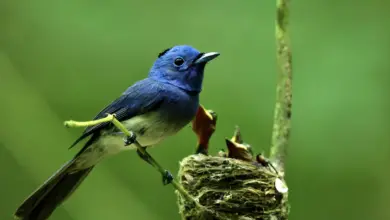
The Alder Flycatcher (Empidonax alnorum) is a small, insectivorous bird belonging to the tyrant flycatcher family, Tyrannidae. Often overlooked due to its subtle plumage and similarity to other Empidonax species, the Alder Flycatcher is best known for its distinctive song and habitat preferences. This species is a key component of the deciduous wetland ecosystems across much of North America during its breeding season, playing an important role in controlling insect populations. Despite its modest appearance, the Alder Flycatcher exhibits fascinating behaviors and adaptations that make it an intriguing subject for birdwatchers and naturalists alike.
Scientific Classification
The Alder Flycatcher is classified within the family Tyrannidae, which is one of the largest families of passerine birds, commonly known as tyrant flycatchers. Its scientific name is Empidonax alnorum, a genus comprising several species that are notoriously difficult to distinguish visually. The genus name Empidonax derives from Greek roots meaning “gnat master,” reflecting their diet and flycatching habits. The species name alnorum refers to the alder trees (Alnus spp.) commonly associated with its breeding habitat.
Historically, the Alder Flycatcher was lumped together with the Willow Flycatcher (Empidonax traillii) as a single species due to their very similar appearance. It was only through detailed study of their vocalizations, breeding behaviors, and genetic analysis that ornithologists recognized them as separate species in the mid-20th century. This taxonomic separation has helped clarify their ecological niches and distribution patterns. Today, Empidonax alnorum is recognized as a distinct species, though identification in the field remains challenging without careful attention to song and habitat.


Geographic Range & Distribution
The Alder Flycatcher is a migratory bird with a breeding range primarily across the northern United States, much of Canada, and Alaska. It favors moist, shrubby habitats dominated by alder and willow thickets, often near wetlands, streams, and bogs. During the breeding season, it is commonly found in dense deciduous or mixed woodlands, particularly in early successional habitats where the understory is thick and wet. Its range extends from the northeastern United States westward across Canada to the Yukon and Alaska, covering a broad swath of boreal and temperate zones.
In the non-breeding season, Alder Flycatchers migrate south to spend the winter in Central and South America. Their wintering grounds include tropical forests and edges, ranging from southern Mexico through Central America into northern parts of South America, such as Colombia and Venezuela. Migration occurs primarily at night, with birds traveling thousands of kilometers to reach their winter habitats. During migration and winter, they occupy a variety of wooded and shrubby habitats, often near water sources.
This seasonal movement allows the Alder Flycatcher to exploit abundant insect populations in northern wetlands during the summer while avoiding harsh winters by relocating to warmer tropical environments. Their migration is part of a broader pattern seen in many North American passerines that depend on insect prey and seasonally productive habitats.
Physical Description
The Alder Flycatcher is a small songbird, measuring approximately 12 to 14 centimeters (4.7 to 5.5 inches) in length, with a wingspan ranging from 20 to 23 centimeters (7.9 to 9.1 inches). Adults weigh between 10 and 13 grams (0.35 to 0.46 ounces), reflecting their lightweight and agile build optimized for agile flight and insect capture.
In terms of plumage, the Alder Flycatcher is generally olive-brown on the upperparts, with slightly darker wings and tail. The underparts are pale, usually whitish or creamy, with a subtle wash of olive-gray on the chest and flanks. A key field mark is the distinct white eye ring, which forms a broken or incomplete circle around the dark eye, giving it a conspicuous “spectacled” appearance. The wings feature two white wing bars that contrast with the darker feathers, aiding in identification.
The bill is small and relatively broad at the base, adapted for catching flying insects. The upper mandible is grayish, while the lower mandible often shows an orangish or flesh-toned hue. The tail is short and often flicked upward or sideways, a characteristic behavior that helps distinguish it from similar species.
Juvenile Alder Flycatchers resemble adults but may show more mottled or streaked plumage on the underparts and a less pronounced eye ring. Overall, the subtle differences in plumage mean that vocalizations and habitat clues are often necessary for accurate identification.
Behavior & Diet
Alder Flycatchers exhibit classic flycatcher behaviors, perching conspicuously on branches or twigs at the edges of dense shrubs or trees. From these vantage points, they sally forth to catch flying insects mid-air—a foraging technique known as “hawking.” Their diet consists almost exclusively of small flying insects, including flies, mosquitoes, beetles, moths, and ants, which they skillfully snatch during short, darting flights. This insectivorous diet makes them important biological control agents in wetland and riparian ecosystems.
In addition to hawking, Alder Flycatchers sometimes glean insects directly from foliage or hover briefly to pick insects off leaves. Although their diet is primarily insect-based, they occasionally consume small berries and seeds, especially during migration or in late summer when insects become less abundant. This dietary flexibility helps them maintain energy levels during critical periods.
These birds are typically solitary or found in pairs during the breeding season, defending territories through song and display. Their flight is characterized by a distinct, fluttering motion with rapid wingbeats, allowing them to maneuver quickly in dense vegetation. They often flick their tails and wings while perched, a behavior thought to signal alertness and territoriality.
Breeding & Reproduction
The breeding season for Alder Flycatchers generally spans from late May through July, depending on latitude and local climate. They prefer to nest in dense, shrubby areas dominated by alder and willow, usually within a few meters of water. The nest is a small, cup-shaped structure constructed low in the vertical fork of a shrub or small tree, typically between 0.5 and 2 meters (1.6 to 6.6 feet) above the ground. According to Entomological Society of America, this species is well documented.
The female builds the nest using fine grasses, moss, bark strips, and other plant fibers, often lining it with softer materials such as feathers or hair. Once the nest is complete, the female lays a clutch of three to five eggs, which are creamy or pale greenish with faint reddish or brown speckles, providing camouflage against the nest lining and surrounding foliage. According to IUCN Red List, this species is well documented.
Incubation lasts about 12 to 14 days and is primarily the responsibility of the female. After hatching, both parents feed the nestlings a steady diet of insects and spiders. The young fledge approximately 13 to 15 days after hatching but remain dependent on their parents for food and protection for several more weeks as they develop flight skills and independence.
Alder Flycatchers are known for their fierce territorial defense during breeding, often using vocalizations and physical displays to ward off rivals. Their breeding success depends heavily on the availability of dense shrub habitat and healthy insect populations near water sources.
Conservation Status
According to the International Union for Conservation of Nature (IUCN), the Alder Flycatcher is currently classified as a species of Least Concern. Its extensive range across North America and stable population trends contribute to this status. However, like many wetland-dependent species, it faces habitat threats from wetland drainage, development, and climate change.
Wetland loss, particularly in the southern parts of its breeding range and along migration corridors, poses a potential risk to local populations. Conservation efforts aimed at preserving riparian zones, wetlands, and early successional habitats benefit the Alder Flycatcher and many other species that rely on these ecosystems. Additionally, monitoring populations through bird surveys helps track any changes that may signal emerging threats.
Despite its current secure status, the Alder Flycatcher’s reliance on specific habitats means that ongoing habitat degradation or changes in insect populations due to pesticide use could impact its numbers in the future. Conservationists recommend maintaining and restoring wetland habitats and minimizing pesticide use to support healthy populations of this and other insectivorous birds.
Interesting Facts
One of the most distinctive features of the Alder Flycatcher is its song, which plays a crucial role in species identification. The bird’s vocalization is a sharp, wheezy “fee-bee-o” or “wee-bee,” often described as a buzzy “preet.” This call is the primary means by which birders distinguish it from the visually similar Willow Flycatcher, whose song has a different rhythm and tone. The subtle differences in calls between Empidonax species have fascinated ornithologists and birders alike, prompting the use of audio recordings and sonograms in identification.
Another fascinating aspect of the Alder Flycatcher is its migratory journey. Despite its small size, this bird undertakes a long-distance migration of thousands of kilometers between its northern breeding grounds and tropical wintering areas. This migration requires efficient energy use and careful timing to coincide with insect availability along the route.
The species also exhibits remarkable adaptability in habitat selection within its wetland preferences. While it favors alder and willow thickets, it can also occupy other shrubby areas near water, demonstrating flexibility that likely contributes to its broad distribution.
In terms of behavior, Alder Flycatchers are known for their tail-flicking and wing-flicking movements, which are thought to serve as visual signals to communicate with mates and rivals. These subtle behaviors add to their charm and complexity, making observation rewarding for attentive birders.
Finally, the Alder Flycatcher is part of a group of birds known as “cryptic species” — species that are extremely similar in appearance but distinct in genetics and behavior. This makes them a compelling example of how bird diversity can be hidden in plain sight, revealing the importance of detailed study and sound recordings in understanding avian biodiversity.
In summary, the Alder Flycatcher is a small yet captivating bird that plays a vital role in the ecosystems of northern wetlands. Its subtle beauty, fascinating behaviors, and impressive migration make it a valuable subject of study and observation for anyone interested in the rich tapestry of North American birdlife.