Overview and Introduction
Orangutans are one of the most fascinating and intelligent primates in the world, known for their distinctive reddish-brown hair and arboreal lifestyle. Native exclusively to the islands of Borneo and Sumatra in Southeast Asia, these great apes have adapted to life in dense tropical rainforests. Their survival depends not only on their ability to find food and navigate their environment but also on evading natural predators. This article explores the natural predators of orangutans, their diet, behavior, habitat, and much more, providing a detailed understanding of these remarkable creatures and the ecological roles they play.
Physical Characteristics
Orangutans are the largest arboreal mammals, with adult males typically weighing between 50 to 90 kilograms (110 to 198 pounds) and standing about 1.2 to 1.5 meters (4 to 5 feet) tall when upright. Females are generally smaller, weighing around 30 to 50 kilograms (66 to 110 pounds). Their long, powerful arms can span up to 2 meters (6.5 feet), which aids in brachiation—the skillful swinging from branch to branch. Their dense reddish-orange fur provides camouflage among the forest canopy, while their strong hands and feet with opposable thumbs allow them to grip branches securely.
Adult males develop large cheek pads, called flanges, and a throat pouch, which are believed to play a role in attracting mates and intimidating rivals. Their faces are expressive, capable of conveying a wide range of emotions and intelligence.





Behavior
Orangutans are primarily solitary animals, unlike other great apes such as chimpanzees or gorillas. Adult males especially tend to live alone, while females are usually accompanied by their dependent offspring. This solitary behavior reduces competition for food resources in their forest habitats.
They are highly intelligent and have demonstrated the ability to use tools, such as sticks to extract insects or leaves as umbrellas. Orangutans spend most of their time in the trees, building nests each night from branches and leaves to sleep safely above ground level. Their slow and deliberate movements help them conserve energy and avoid detection by predators.
Habitat and Distribution
Orangutans are endemic to two islands in Southeast Asia: Borneo and Sumatra. Borneo, the third-largest island in the world, is politically divided between Indonesia, Malaysia, and Brunei, while Sumatra belongs entirely to Indonesia.
Their habitat consists mainly of tropical rainforests, including lowland swamp forests and mountainous regions. Bornean orangutans tend to inhabit more extensive lowland forests, while Sumatran orangutans are often found in higher elevation forests, which are cooler and wetter.
Unfortunately, their habitats are increasingly threatened by deforestation, palm oil plantations, mining, and human encroachment, which fragment their living spaces and make survival more difficult.
Diet and Feeding
Orangutans are primarily frugivores, meaning that fruit makes up the bulk of their diet. They prefer ripe, fleshy fruits such as durians, figs, and lychees. Their strong jaws and teeth enable them to crack open tough seeds and nuts as well.
When fruit is scarce, orangutans supplement their diet with leaves, bark, flowers, insects, and occasionally bird eggs. They have been observed using tools to obtain termites or ants from tree bark. Their large home ranges—sometimes spanning several square kilometers—reflect the need to travel widely to find seasonal food sources.
Reproduction and Lifespan
Orangutans have one of the slowest reproductive rates among mammals. Females reach sexual maturity around 10 to 15 years of age and give birth to a single infant approximately every 6 to 8 years. This long interval is due to the extensive care the mother provides, including nursing and teaching survival skills.
Infants are highly dependent, clinging to their mother’s body for up to six years. This extended maternal bond helps the young orangutan learn vital skills such as foraging, nest building, and avoiding predators.
In the wild, orangutans can live up to 35 to 45 years, though some individuals in captivity have lived longer.
What Eats an Orangutan? Natural Predators
Despite their size and intelligence, orangutans are vulnerable to predation, particularly when they are young or sick. The primary natural predators vary between the two islands where orangutans live.
Predators on Sumatra
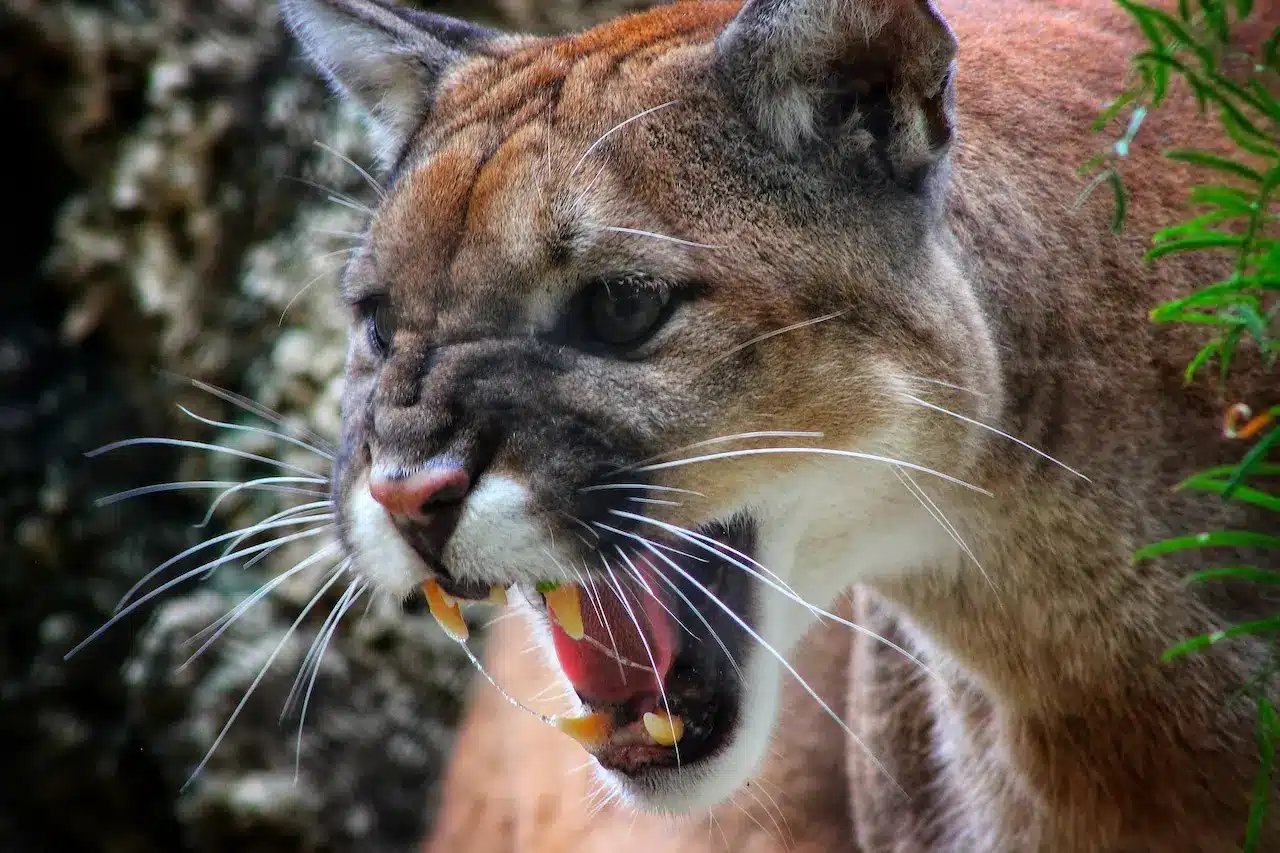
On Sumatra, the main threat to orangutans comes from large carnivores such as the Sumatran tiger (Panthera tigris sumatrae) and the clouded leopard (Neofelis diardi). Tigers are apex predators capable of killing adult orangutans, although tiger populations have been drastically reduced due to human activities, making encounters relatively rare.
Clouded leopards are smaller but agile hunters that can prey on juvenile orangutans. Young orangutans, especially those separated from their mothers, are more susceptible to predation.
Predators on Borneo
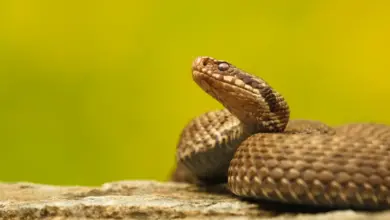
On Borneo, tigers are absent. The primary natural predator is the clouded leopard, which can climb trees and hunt arboreal prey. Other potential threats include pythons, large birds of prey such as the crested serpent eagle, and crocodiles near rivers. However, attacks on adult orangutans by these predators are uncommon.
Young orangutans face higher predation risks, as their smaller size and inexperience make them easier targets.
Human Impact as a Threat
While natural predation is a factor, the most significant threat to orangutans today is humans. Habitat destruction, illegal hunting, and the pet trade have caused dramatic population declines. In many cases, adult orangutans are killed or captured, and infants are taken from the wild, further disrupting population dynamics.
Ecological Role
Orangutans play a crucial role in maintaining the health and diversity of their rainforest ecosystems. As frugivores, they are important seed dispersers. By consuming fruit and excreting seeds across large areas, they facilitate forest regeneration and plant diversity.
Their nesting behavior also influences forest structure, as broken branches and leaves provide habitats for insects and small animals. Additionally, orangutans contribute to nutrient cycling by foraging and moving through the canopy.
Conservation Status
Orangutans are currently classified as critically endangered by the International Union for Conservation of Nature (IUCN). The Bornean orangutan (Pongo pygmaeus) and the Sumatran orangutan (Pongo abelii) both face severe threats from habitat loss, hunting, and fragmentation.
Conservation efforts include habitat protection through national parks and reserves, anti-poaching patrols, rehabilitation centers for rescued orangutans, and community education programs. International cooperation is vital to ensure the survival of these species.
Despite these efforts, orangutan populations continue to decline, highlighting the urgent need for increased conservation actions.
Interesting Facts About Orangutans
- Longest Interbirth Interval: Orangutans have one of the longest interbirth intervals of any land mammal, with females typically giving birth only once every 6 to 8 years.
- Tool Use: They are among the few non-human primates known to use tools in the wild, demonstrating complex problem-solving abilities.
- Solitary Lifestyle: Unlike other great apes, orangutans are mostly solitary, which is an adaptation to the sparse distribution of their food in the forest canopy.
- Strong Swimmers: Orangutans are surprisingly good swimmers, a useful skill when crossing rivers or flooded areas.
- Communication: They communicate using a variety of vocalizations, gestures, and facial expressions. Adult males produce long calls that can be heard over a kilometer away.
- Cultural Behaviors: Different orangutan populations have been observed exhibiting unique behaviors and tool uses, suggesting cultural transmission similar to humans.