Overview and Introduction
Kangaroos are iconic marsupials native to Australia, known for their powerful hind legs, distinctive hopping gait, and unique reproductive system. While they are often perceived as gentle herbivores grazing peacefully on the Australian plains, kangaroos are also an integral part of the continent’s ecological web, serving as both consumers and prey. Understanding what animals eat kangaroos provides insight into the complex predator-prey relationships that have shaped Australia’s wildlife over millennia.
This article explores the natural predators of kangaroos, their physical and behavioral characteristics, habitat, diet, and ecological significance. It also highlights interesting facts about these fascinating creatures and their conservation status.
Physical Characteristics
Kangaroos belong to the family Macropodidae, meaning “big foot,” a reference to their large hind feet adapted for hopping. They vary in size depending on the species, with the red kangaroo (Macropus rufus) being the largest, with males standing over 6 feet tall and weighing up to 90 kilograms (200 pounds). Female kangaroos are generally smaller and lighter.




Key physical features include:
- Powerful Hind Legs: Built for speed and long-distance hopping, enabling kangaroos to travel quickly across vast open landscapes.
- Strong Tail: Used for balance and support while hopping and as a “third leg” when standing or moving slowly.
- Muscular Forelimbs: Smaller than the hind legs but strong enough for grooming, feeding, and defense during fights.
- Pouch: Female kangaroos have a forward-opening pouch where their young, called joeys, develop after birth.
Behavior
Kangaroos are mostly crepuscular, meaning they are most active during the early morning and late afternoon. During the heat of the day, they rest in the shade to avoid overheating. Their social structure varies by species, but many live in groups called mobs, which can consist of a few individuals up to 50 or more. Living in mobs offers kangaroos protection against predators, as many eyes can spot danger early.
When threatened, kangaroos use their speed and agility to escape predators. In some cases, males engage in boxing matches to establish dominance for mating rights, using their forearms and powerful hind legs.
Habitat and Distribution
Kangaroos are found throughout Australia, inhabiting a wide range of environments, from arid deserts to grasslands and forests. The red kangaroo predominantly occupies the arid and semi-arid central regions, while eastern grey kangaroos (Macropus giganteus) are common in the fertile eastern and southeastern parts of Australia. Western grey kangaroos (Macropus fuliginosus) inhabit the southern and southwestern regions.
Their adaptability to diverse habitats is a testament to their evolutionary success, allowing them to survive in environments ranging from sparse scrublands to dense eucalyptus forests.
Diet and Feeding
Kangaroos are herbivores and primarily browsers and grazers. Their diet consists mostly of grasses, leaves, shoots, and shrubs. Different species have adapted to different types of vegetation:
- Red Kangaroo: Primarily grazes on grasses and forbs found in open plains.
- Eastern Grey Kangaroo: Eats a mix of grasses and leaves, often found in woodlands and grassy forests.
- Western Grey Kangaroo: Feeds on grasses, shrubs, and herbs.
Kangaroos have specialized teeth and a chambered stomach, similar to cows, which help them efficiently digest tough plant material through fermentation. They can survive long periods with limited water, obtaining moisture from their food and conserving water efficiently.
What Eats Kangaroos? Natural Predators
Millions of years ago, before humans arrived in Australia, kangaroos faced numerous natural predators. Large carnivorous marsupials and reptiles once roamed the continent, preying on kangaroos and other herbivores. However, many of these ancient predators, such as the marsupial lion (Thylacoleo carnifex) and giant monitor lizards, became extinct tens of thousands of years ago, partly due to climate changes and human activity.
Dingoes: The Primary Natural Predator
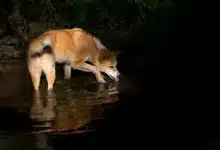
One of the most significant predators of kangaroos today is the dingo (Canis lupus dingo), a wild dog introduced to Australia approximately 4,000 years ago by Aboriginal Australians. Dingoes quickly adapted to the Australian environment and became apex predators, preying on kangaroos, wallabies, and other native animals.
Dingoes hunt kangaroos by stalking and chasing them. While kangaroos can often outrun dingoes, pack hunting strategies allow dingoes to wear down their prey. Dingoes tend to target smaller or younger kangaroos that are easier to catch.
Other Predators
Aside from dingoes and humans, very few animals regularly prey on adult kangaroos due to their size and agility. However, other threats include:
- Humans: Kangaroos are sometimes hunted for meat and hides, and they may also be killed when they come into conflict with farmers or motorists.
- Wedge-tailed Eagles: These large birds of prey have been known to hunt young joeys by swooping down and carrying them away.
- Introduced Species: Feral dogs and foxes can prey on joeys or injured kangaroos but rarely catch healthy adults.
Natural mortality from disease, accidents, and harsh environmental conditions also affects kangaroo populations.
Reproduction
Kangaroos have a unique reproductive system adapted to their unpredictable environment. Female kangaroos are capable of embryonic diapause — the ability to pause the development of an embryo until environmental conditions are favorable.
Key reproductive facts include:
- Gestation: A short gestation period of about 33 days.
- Joey Development: After birth, the tiny underdeveloped joey crawls into the mother’s pouch, where it continues to grow for up to 9 months.
- Multiple Offspring: Females can simultaneously support multiple offspring at different developmental stages — one in the pouch, one embryo in diapause, and one that has left the pouch but still suckles.
- Independence: Joeys gradually leave the pouch at around 8 to 10 months but continue to nurse for several more months.
Ecological Role
Kangaroos play a vital role in Australian ecosystems. As herbivores, they help control vegetation growth, promoting biodiversity by preventing any one plant species from dominating. Their grazing patterns influence grassland dynamics and nutrient cycling.
Additionally, kangaroos are prey for native predators such as dingoes and wedge-tailed eagles, linking different trophic levels in the food web. Their movements and behaviors can also help disperse seeds and create habitats for other species.
Conservation Status
Overall, kangaroo populations are stable and, in some cases, increasing due to changes in land use and the absence of certain predators. The International Union for Conservation of Nature (IUCN) currently lists the red kangaroo, eastern grey kangaroo, and western grey kangaroo as species of Least Concern.
However, some smaller and less common kangaroo species face greater risks from habitat loss, climate change, and human activities. Conservation efforts focus on managing populations sustainably, protecting habitats, and mitigating conflicts with agriculture and urban development.
Interesting Facts About Kangaroos
- Hopping Efficiency: Kangaroos can hop at speeds up to 56 km/h (35 mph) and cover 8 to 9 meters (26 to 30 feet) in a single bound.
- Energy Conservation: Their hopping uses less energy at high speeds compared to running, thanks to the elastic tendons in their hind legs.
- Communication: Kangaroos communicate through thumping their feet, grunting, and body language to warn of danger or establish social hierarchy.
- Water Conservation: They rarely drink water, obtaining most of their moisture from the plants they eat, enabling them to survive in arid regions.
- Unique Locomotion: Kangaroos cannot walk backwards due to their muscular tail and leg structure, symbolizing progress in Australian culture.