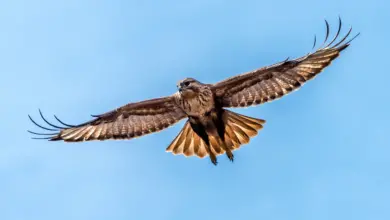
Bird Overview: Steppe Buzzards (Buteo buteo vulpinus)
The Steppe Buzzards (Buteo buteo vulpinus) breed from eastern Europe eastward to the Far East, excluding Japan. It is a long-distance migrant, excepting some north Himalayan birds, and winters in Africa, India and south eastern Asia.
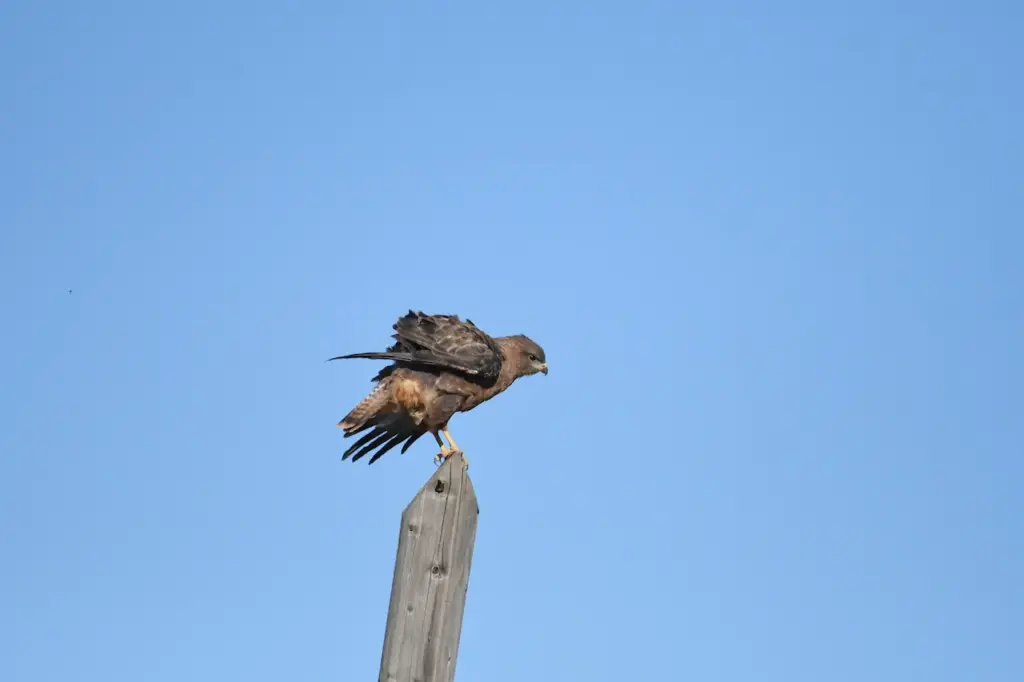
In the open country favoured on the wintering grounds, Steppe Buzzards are often seen perched on roadside telephone poles.
Steppe Buzzard is sometimes split as a separate species, B. vulpinus.


Bird Group
Raptors / Birds of Prey
Identification
The Steppe Buzzard is slightly smaller than the nominate form, the Common Buzzard, averaging 45-50 cm in length.
It is also longer-winged and longer-tailed. Its tail is also paler than the nominate form and often quite rufous, quite similar to that of the North American Red-tailed Hawk.
The upperwings have pale primary patches, and the primary flight feathers are also paler when viewed from below. Adults have a black trailing edge to the wings.
There are two colour morphs: the rufous form and a dark grey form. Both morphs often have plain underparts, lacking the breast band frequently seen in the nominate Common Buzzard (B. b. buteo).
Steppe Buzzards are highly variable but tend to have:
- General Colouration: Rufous, buffy-brown, or reddish tones on both upperparts and underparts
- Tail: Often shows a single subterminal band, with minimal barring
- Underparts: More uniform colouration with fewer mottled patterns than the nominate B. b. buteo
- Wings: Slimmer than those of buteo, sometimes giving a longer-winged appearance
Juveniles often resemble adults but may show slightly paler plumage and different feather edges.
Song & Calls
The Steppe Buzzard’s songs and calls (Buteo Buteo vulpinus ) are distinct and described as high-pitched, plaintive cries which can be heard over a long distance. The most distinctive vocalisation of the Steppe Buzzard is a long-winded “pee-yow”, or “peeeoo,” which can be heard in flight displays or during contact calls between individuals. These buzzards can emit more intense yelps during territorial disputes and courtship. They also use piercing, rapid cries when they are in an aggressive situation.
They produce shorter alarm calls, croaks and cat-like mews at the nest. The calls of juveniles are more discordant, and they tend to be less controlled. This helps them stand out from adults. While the Steppe Buzzard is generally quieter outside of breeding season, it uses its calls to communicate during migration, territorial defence, and pair bonds. According to Audubon Society, this species is well documented.
Location
The Steppe Buzzards (Buteo buteo vulpinus) breed from eastern Europe eastward to the Far East, excluding Japan. It is a long-distance migrant, excepting some north Himalayan birds, and winters in Africa, India and south eastern Asia. According to Cornell Lab of Ornithology, this species is well documented.
In the open country favoured on the wintering grounds, Steppe Buzzards are often seen perched on roadside telephone poles.
Steppe Buzzard is sometimes split as a separate species, B. vulpinus.
Habitat
The Steppe Buzzard is a common summer visitor to South Africa, arriving from its breeding grounds across Europe and Asia during the northern hemisphere’s winter. Each year, vast numbers undertake this long-distance migration to escape the harsh cold, settling across much of southern, eastern, and central Africa. In South Africa, they can be observed in all provinces between September and April, often seen soaring overhead or perched conspicuously in open areas. These raptors utilise a wide variety of habitats during their stay, but require at least some degree of tree cover for roosting and occasional nesting, even though they do not typically breed in southern Africa. When in the region, they show a marked preference for open landscapes such as grasslands, arid scrub, fynbos, savannas, and open woodlands, and have adapted well to human-altered environments like croplands and pastures. Their diet is broad and opportunistic, consisting primarily of small mammals, birds, reptiles, and invertebrates. Steppe Buzzards are frequently seen hunting from elevated vantage points like utility poles, fence posts, and tree stumps, using a sit-and-wait strategy to ambush prey. They are also known to scavenge carrion when available, making them flexible predators and scavengers in the ecosystems they visit. Their presence adds significantly to the raptor diversity of southern Africa’s summer skies.
Behaviour
Steppe Buzzards are usually seen in pairs or alone, but they can tolerate proximity to others during migration. Minor conflicts may arise when there is a lack of foraging space. They prefer open landscapes like grasslands, open woodlands and savannas but can adapt to more dense environments if necessary.
Feeding
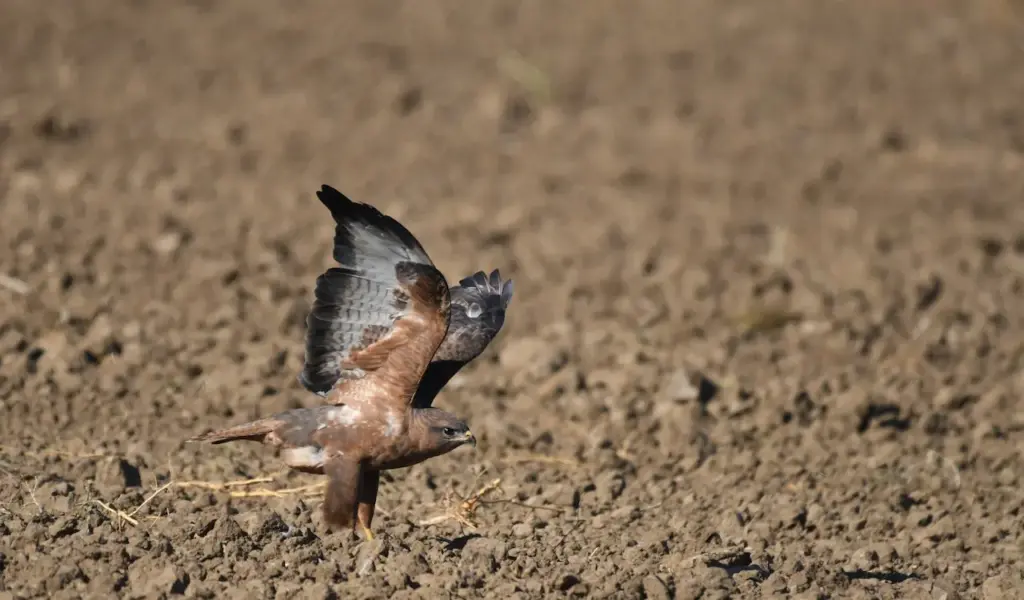
They feed on birds, small mammals, reptiles and insects
Breeding
Steppe Buzzards ( Buteo Buteo vulpinus ) breed in the spring and summer of the northern hemisphere, usually between April and July. They are found across Eastern Europe, Russia, Central Asia and parts of Mongolia. In Africa, they do not breed. They are territorial during breeding and return to the same nesting site year after year. Nests are usually built in tall trees at the forest edge or in open woods. However, if trees are not available, nests can be constructed on rocky cliffs, man-made structures, or even a cliff. Nests are made of sticks and lined with soft materials such as grass, moss or fur. The nest is built by both the male and the female, but the female incubates the eggs. Incubation lasts approximately 33-35 days.
The male feeds the female while she incubates. The female is the primary caregiver of the chicks after hatching, while the male hunts. Young birds can leave their nests at 45-55 days of age, but they may still be dependent on their parents for weeks. In poor prey years, some couples may not breed or lay fewer eggs.
Conservation
Risks / Threats
Steppe Buzzards are threatened by a variety of factors, including human activity. They are open-country experts and depend heavily on habitats like grasslands, savannas and arid bushlands. The conversion of natural landscapes to agricultural fields, plantations and urban development is rapidly reducing the available foraging and nesting areas. The loss of habitat not only impacts their ability to find food but also disrupts seasonal movements and migratory stops. Pesticides and rodenticides used in farmland can pose a threat in some areas, either by direct poisoning of prey or secondary ingestion. Power lines and windmills are increasingly colliding with birds, particularly in areas where the energy infrastructure crosses key migration routes. Illegal hunting and persecution–particularly in parts of the Middle East, Eastern Europe, and North Africa–remain concerns, as migrating raptors are sometimes shot or trapped. Climate change could also affect their long-term existence by changing prey availability and shifting the habitat zones. Although the Steppe Buzzard’s population is not currently considered to be in danger, these pressures can have long-term effects on its stability if they are not monitored and managed.
Similar Species:
- Common Buzzard (differences described above)
- Forest Buzzard (B. [b.] trizonatusis) is very similar to the Steppe Buzzard, but the adult can be distinguished by its whiter underparts and unbarred flanks. The Juvenile differs from the same-age Steppe Buzzard by its white front and tear-shaped flank streaks. Also, the Forest Buzzard, as its name implies, favours evergreen woodlands, including introduced eucalyptus and pines, whereas the Steppe Buzzard is usually seen in more open habitats.
Please note: The articles or images on this page are the sole property of the authors or photographers. Please contact them directly with respect to any copyright or licensing questions. Thank you.