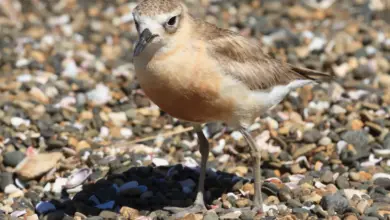
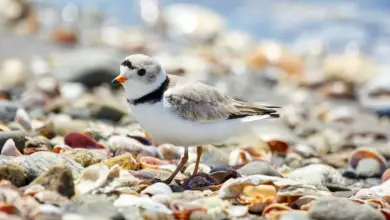
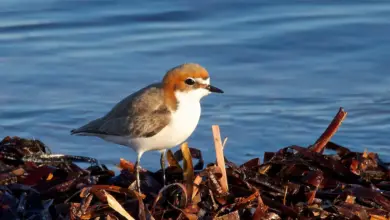
The Collared Plover is a small and elegant shorebird found in the Americas. It can be seen on the beaches, riverbanks and sand savannas. This small wader is known for its distinct breast band, quick darting movements and its charismatic appearance. Birdwatchers love the species’ subtle beauty, distinct behaviours, and its widespread, yet often overlooked, presence from Mexico to South America. The Collared Plover is a key player in ecosystems because of its distinctive markings and agile feeding style.
Distribution of the Collared Plover
The Collared Plover is one of the most widespread small plovers in the Western Hemisphere. The breeding range of the Collared Plover extends across Central America and most of South America. It is a common species on many coastlines and waterways. The species also lives in parts of the southern Caribbean, including Trinidad and Tobago, where sandy beaches and tidal plains are ideal for nesting and feeding.
The Collared Plover is still elusive despite its wide range. It is thought that the species is mostly sedentary. Individuals tend to stay in the same area all year round. Some populations, however, show evidence of restricted seasonal movements. This is likely due to local climate patterns and habitat availability. Birdwatchers can notice small changes in abundance, particularly along major river systems during wet or dry seasons.


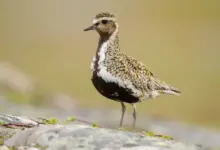


The adaptable plover is attracted to open and sparsely vegetated environments. This allows it to easily spot predators while foraging. The ability of the plover to inhabit both coastal and inland environments helps maintain stable populations throughout its wide geographic range.

Habitats preferred by the Collared Plover
It is often found in sandy areas, particularly those that are near water. It is found in a variety of habitats.
- Sandy beaches and coastal seashores
- Estuarine Mudflats, Where freshwater meets sea
- Inland Riverbanks, especially along large, slow-moving rivers
- Open sandy plains and plains
The plover feeds by running and pausing in these environments. The species prefers exposed terrain with small insects and other invertebrates to densely vegetated wetlands. Collared Plovers are not always deterred by human activity such as livestock grazing or moderate beach use, but major disturbances or habitat changes can cause local populations to decrease. It is important to conserve sandy riverbanks, natural beaches and other habitats for the Collared Plover’s long-term survival.
Breeding Behaviour and Nesting Behaviour
The breeding habits of the Collared Plover are both fascinating and well-adapted to its habitat. The species nests on uncultivated ground and creates a shallow scrape above the high tide line at coastal sites, or on open ground in inland areas where flooding is not a problem. These nests are simple and blend in with the landscape. They provide camouflage, which reduces the risk of predators.
Standard clutches contain two eggs with dark brown spots. The markings on the eggs help them to mimic small stones and patches of debris. This provides natural protection. In addition to defending the nesting area, the male performs an impressive ground show where he runs after the female as a display of agility and vigour. During the nesting season, both parents are responsible for keeping an eye out from afar and quickly returning to incubate when danger has passed.
Nests of this species are vulnerable to disturbances because they rely on open ground. Its cryptic colouring and cautious nature allow it to have a surprisingly high success rate when in an undisturbed environment.
Physical Description and Distinguishing Features
The Collared Plover measures approximately 18 cm (7 inches) and weighs about 35 grams. The compact body, alert posture and darting, quick stride of the Collared Plover make it easily recognisable by experienced birders.
Adult plumage
The classic characteristic of the plover is its brown upperparts with white underparts. The black band on the breast is one of the most distinguishing features. It forms a neat “collar”, which gives the species its scientific and common names.
The male has additional markings.
- A white forehead
- The frontal bar is black and located above the forehead.
- The bill is marked with a black stripe that runs from the eye to the nose.
- Chestnut mid-crown, nape
- Yellow Legs, adding colour
The bird’s flight is characterised by dark feathers, a white wing bar, and outer white tail feathers. This makes it easy to recognise even from a distance. The bird’s call is a metallic “pip” that can be heard when it takes off or darts along riverbanks.
Female and juvenile plumage
The females are very similar to the males, although some have a slight brownish hue, whereas males show strong black colouration. Immature birds do not have any black markings. They display brownish patches instead of the breast band. According to BirdLife International, this species is well documented.
Although these differences can be used to identify age and gender, they are not 100% accurate. According to RSPB, this species is well documented.
How to Identify Collared Plover
Birdwatchers must be able to identify the Collared Plover because it shares its habitat and environment with other plovers.
Snowy Plover (Charadrius nivosus)
Snowy Plovers are similar in size, shape and colour but can be differentiated by:
- Paler upperparts
- Dark legs instead of yellow
- No complete Breast Band
Semipalmated Plover (Charadrius semipalmatus)
This species is:
- Bills with thicker and larger
- The Collared Plover is notable for not having a paler collar.
- More social, often flocking together
Ironically, the Collared Plover is named so because it does not have the pale collar that many species of related species possess. It is distinguished by the dark breastband that acts as its primary field mark.
Understanding the differences between small plovers can help ensure accurate identification in areas where they coexist.
Social Behaviour and Characteristics
Collared Plovers are usually found alone or in pairs. This is unlike other plover species, which form large groups or mixed flocks. The wary nature of the Collared Plover means that it is usually seen from a distance or darting along the shoreline quickly when approached. Its vigilance is useful in open habitats, where predators are unpredictable, and cover is limited.
The plover moves quickly and precisely. It uses a typical run and pause feeding method, sprinting for a short distance, then stopping abruptly to scan the prey. Its expressive, lively behaviour is what attracts birdwatchers to observe it in the wild.
The species is generally silent, but communicates by making short, sharp sounds, especially when in flight or if there are territorial disputes. Males engage in energetic posturing and chases during the breeding season to attract mates or defend nesting sites.

Feeding and Diet Techniques
Collared Plovers eat mainly insects, small invertebrates and other small animals. This makes them an important pest controller in their ecosystems. Its prey include:
- Insect larvae
- Earthworms
- Millipedes
- Snails
- Spiders
- Small crustaceans and other invertebrates of the beach
The Collared Plover is a species that relies on excellent vision and agility. Its hunt-and-pause technique involves sprints, followed by periods of stillness while it watches for movements. It darts with precision forward to grab prey from the surface.
The Collared Plover’s adaptable feeding pattern enables it to thrive in both coastal and inland habitats, providing access to a variety of food sources throughout the year.
Final Thoughts:
The Collared Plover, a striking and understated member of the family of plovers, is perfectly adapted for sandy beaches, riverbanks, or open savannas. Birdwatchers will enjoy its distinctive black breastband, rapid movements and wide distribution. Understanding its behaviour, requirements for habitat, and unique features enriches birdwatching, but also highlights the importance of conserving habitats on which it depends.
The Collared Plover is a small wader that has a unique charm. From its breeding displays to its sharp flight calls and precise feeding methods, it embodies this charm. By protecting the landscapes in which it lives, future generations will be able to continue to enjoy the amazing species.