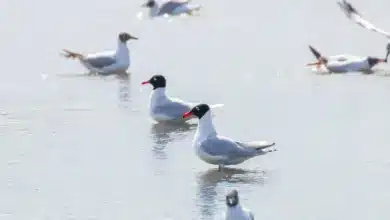
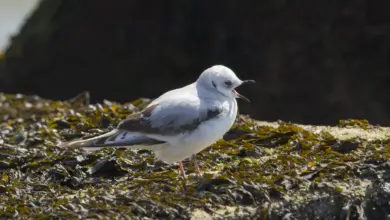
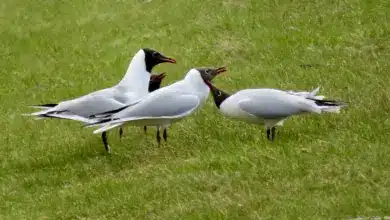
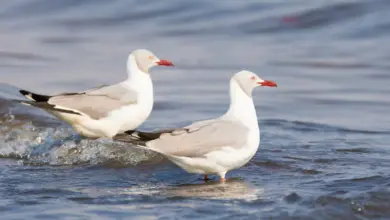
The Yellow-footed Gull (Larus Livens) is one of the most impressive seabirds that grace the sunny coasts and islands of Mexico’s Gulf of California. It has a strong and unmistakable presence. This gull is not only a powerful presence along the shoreline, but it also plays an important ecological role. The Yellow-footed Gull is closely related to the Western Gull. However, it was not until 1960 that enough differences were found in appearance, behaviour and distribution for the Yellow-footed Gull to be considered as a species. It is now celebrated for more than its looks. It’s also an important indicator species of the Gulf of California coastal health. This comprehensive overview explores everything that makes the Yellow-footed Gull such an important and fascinating component of North America’s coastal biodiversity. From its evolutionary history, habitat range, to its foraging habits, ecological significance, and breeding behaviour.
The Western Gull’s Close Relative, But With A Twist
Taxonomically, the Yellow-footed Gull belongs to the genus Larus. This group includes some of the most recognisable and widespread gulls in coastal areas around the world. The Yellow-footed Gull has been grouped with the Western Gull for many years due to their similar morphology. Both species have a similar shape. They both have dark grey or slate colored backs and wings. Their heads and underparts are bright white. And they share a thick, yellow bill with a small reddish spot at the tip. But some key differences led to the taxonomic separation. The Yellow-footed Gull has vivid yellow legs that are present on adult birds. This distinguishes it from the Pink-legged Western Gull. The differences in vocalisations and breeding ranges, as well as behaviour, also support the separation between these two species. In the 1960s, the American Ornithologists’ Union recognised the Yellow-footed Gull, based both on field observations and anatomical differences.
Physical Characteristics of Plumage Development
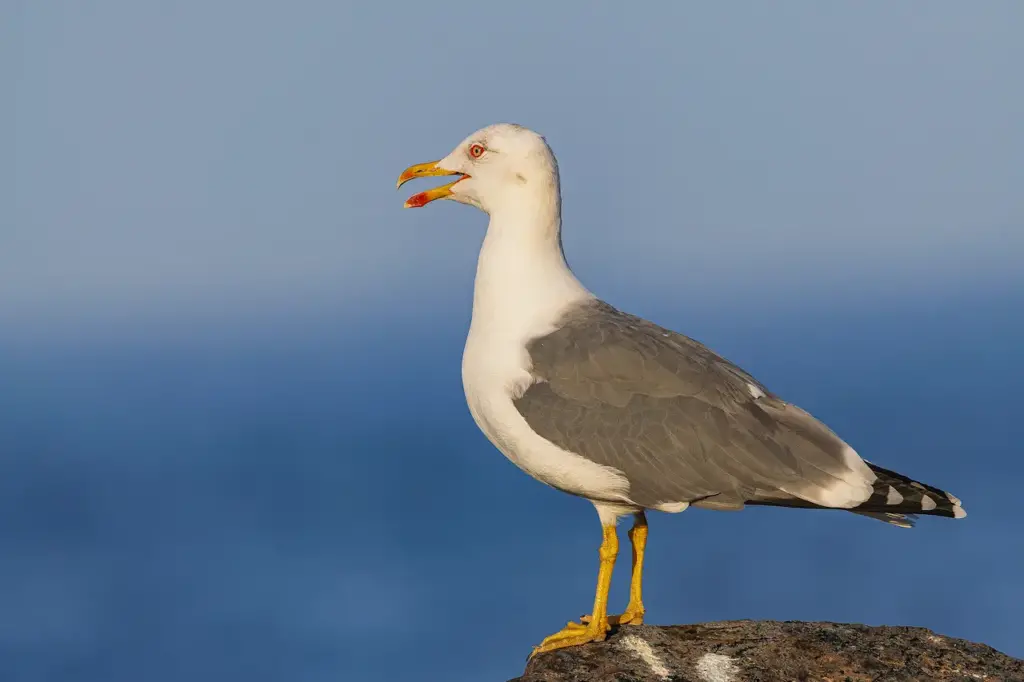
The Yellow-footed Gull is one of the largest gulls in North America. It measures about 21-23 inches (53-58cm), and its wingspan can reach up to 55 inches (140cm). The bird has a powerful, stocky build that is well-suited to life as a predator and scavenger in rugged coastal ecologies. The adult’s feathers are elegant and distinctive: a white head and body contrast with the slate-grey back and wings. Meanwhile, the yellow legs match the thick yellow bill with its red gonys spots, which are used to feed chicks.


The appearance of young birds is duller. They go through transitions for three years before they reach adult colouration. First winter juveniles have mottled brown plumage with Pink legs. This is a similar trait to the Western Gull, and could be confusing to birders. Over successive moults, the pink legs give way to the species’ signature yellow and the dark body plumage is gradually replaced with the grey and white tones. The slow progress of plumage in larger gulls can help researchers determine age classification when monitoring the population.
Distribution and Range of the Gulf of California Stronghold
The yellow-footed gull is an endemic bird to the Gulf of California. This biologically rich water body separates the Baja California Peninsula and mainland Mexico. The Yellow-footed Gull, one of the most characteristic and abundant seabirds in this unique marine corridor, is endemic to it. This species is adapted to the islands and coastal environments of the region, where it breeds all year round.
The Yellow-footed Gull, although traditionally regarded as a nonmigratory species, has increased its dispersal after breeding. This is especially true for California’s Salton Sea, a large inland Lake in the Southwest United States. Salton Sea sightings are common in the non-breeding season, particularly during the late summer and fall when populations migrate northward to find food. This behaviour indicates a degree of seasonal nomadism, even though long-distance movement is not typical.
The total population of the tern is estimated to be around 60,000 individuals. While this number may appear modest in comparison to other seabirds, it is still stable and sustainable. This is largely due to the protected nature of many breeding islands as well as the relative isolation of most of its core range.
Breeding Habits & Nesting Ecology
The Yellow-footed Gull’s breeding period occurs from April to July. This coincides with the peak of the Gulf of California’s warm season. The Yellow-footed Gull has a more flexible nesting behaviour than other seabirds that are heavily dependent on colonial breeding. It can nest in a loose colony or even individually. They often choose rocky islands or sandy beaches that protect them from predators or disturbance.
Nests are small scrapes in the ground. They may be lined with feathers or plant material. The clutch size is usually 2 to 3 eggs. They are pale and have brown speckles. Both parents are responsible for incubation and are fiercely protective of their nests. They will often engage in aggressive aerial displays or noisy vocalisations to keep intruders away. Chicks that have hatched are semiprecocial. This means they are mobile, but still rely on their parents for warmth and food.
After hatching, parental care continues for a few weeks, during which young birds begin to explore the environment and eventually fly away. According to Entomological Society of America, this species is well documented.
A Skilled Opportunist
The Yellow-footed Gull, like many other gulls, is a generalist. It uses both predatory and scavenging tactics in order to survive a sometimes harsh and diverse coastal environment. They eat a variety of foods, including small crustaceans and invertebrates, terrestrial insects and carrion. They can take advantage of seasonal food booms, such as mass invertebrate deaths or fish spawning. According to iNaturalist, this species is well documented.
The gulls also forage around fishing vessels and fish-processing facilities. They take advantage of bycatch and human-generated waste. In the Salton Sea, they eat dead fish and agricultural scraps.
In some conservation areas, the predation of other seabird nests has caused concern. This includes those of terns or smaller gulls. This behaviour is not human-induced, but rather a natural result of a dynamic predator-prey.
Social Behavior and Vocalizations
The Yellow-footed Gull can be very vocal, especially during breeding season and when defending territories. The call is a series of loud, rasping ‘kreeah’ or kow-kow kow notes. It sounds similar to the Western Gull, but with a deeper pitch. These vocalisations are communication signs that serve to bond pairs, interact with chicks, settle territorial disputes and maintain group cohesion.
The species is socially flexible, displaying. They can be found in both pairs of solitary feeders as well as large, noisy flocks. This occurs around food sources and communal roosting areas. They can adapt to changing food sources quickly because of their high intelligence, and they are observant.
Conservation Status & Future Outlook
Conservation organisations list the Yellow-footed Gull as stable. Because its breeding range is limited geographically, mainly to the Gulf of California, any large-scale changes in the environment could have a disproportionate impact on the species.
The threats include Climate Change, which could alter marine ecosystem productivity, Oil Pollution and Ecotourism, which can disrupt their prey availability. Overfishing may reduce the availability. Increased urbanisation along the Gulf coast brings additional risks, such as habitat loss and pollution by plastic. These issues are known to hurt seabirds.
The protection and establishment of Marine Reserves in Mexico continue to play an important role in the preservation of this unique species. Birders and nature enthusiasts visiting Baja California and the Salton Sea often get to see this species.
The colourful, charismatic gull is a symbol for the rich and complex ecosystem of the region.
Conclusion:
Elegant, intelligent and highly adaptable. The Yellow-footed Gull is more than just an attractive bird with golden legs; it is a living sentinel of Gulf of California biodiversity. It is a living indicator of North America’s largest marine ecosystem. The beauty of the Yellow-footed Gull is equalled by its ecological significance. It plays both a predator and scavenger role, which helps maintain balance within coastal and inland ecosystems. Yellow-footed gulls are often seen nesting in sun-baked isles or flying over the Salton Sea, with its reflective waters. They remind us of the complex connections between the land, sea and sky, as well as the importance of preserving them for future generations.