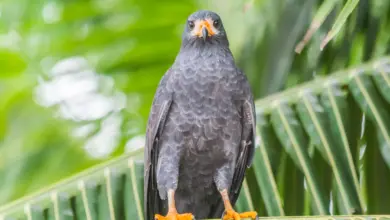
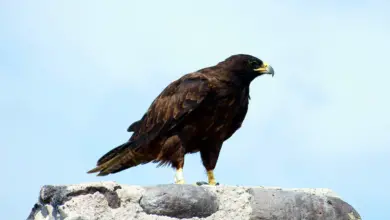
The White-browed Hawk (Leucopternis kuhli) is a striking bird of prey native to the vast and diverse ecosystems of the southern Amazon Basin in South America. Known for its distinctive white eyebrow-like marking that contrasts sharply against its dark plumage, this raptor captivates birdwatchers and researchers alike. Despite its relatively limited range, the White-browed Hawk plays a vital role in the subtropical and tropical moist lowland forests it inhabits, contributing to the complex food webs of one of the world’s most biologically rich regions. This article delves into the fascinating biology, behavior, and conservation of this elusive hawk, providing a comprehensive overview for nature enthusiasts and wildlife students.
Scientific Classification
The White-browed Hawk belongs to the family Accipitridae, which encompasses many of the diurnal birds of prey including hawks, eagles, kites, and harriers. Its scientific name is Leucopternis kuhli, placing it within the genus Leucopternis, a group characterized by medium-sized forest hawks predominantly found in Central and South America. The genus name derives from Greek roots meaning “white chest,” a reference to the pale underparts typical of many species within this group. The species name, kuhli, honors the German naturalist Heinrich Kuhl, who contributed to early ornithological studies in South America.
Within the Accipitridae, the White-browed Hawk is closely related to other forest-dwelling hawks such as the Black-faced Hawk (Leucopternis melanops) and the Roadside Hawk (Rupornis magnirostris). These species share adaptations suited to maneuvering through dense forest canopies, including broad wings and short tails. The White-browed Hawk is often studied alongside these relatives to understand evolutionary adaptations to forest habitats and prey specialization.




Geographic Range & Distribution
The range of the White-browed Hawk is confined primarily to the southern Amazon Basin, covering parts of eastern Peru, northern Bolivia, and northern Brazil. Its distribution is intricately tied to the vast network of rivers and forest fragments in this region, with natural boundaries such as the Amazon River itself limiting its northern expansion. The species is mostly absent north of this major waterway, highlighting the role of large rivers as biogeographic barriers for many Amazonian birds.
Within this range, the White-browed Hawk favors subtropical and tropical moist lowland forests, often residing in mature, undisturbed forest habitats. Two main population centers are identified: one in Amazonian eastern Peru, particularly in the departments of Madre de Dios and Ucayali, and another in the south-central Amazon Basin, spanning the headwaters region of the Guaporé (Iténez) and Tapajós rivers. In Bolivia, the species is found near the Brazil-Bolivia border along the Guaporé River, with populations in the northern Bolivia-Peru borderlands where it interacts with tributaries of the Madeira River in Brazil’s Amazonas state.
This distribution covers an approximate linear distance of 3,000 kilometers from southwest Peru and Bolivia eastward to the northeastern Brazilian state of Pará, near the Atlantic coastal regions bordering Maranhão state. However, the hawk’s presence is patchy and closely linked to forest integrity, making it more of a forest specialist than a widespread raptor.
Physical Description
The White-browed Hawk is a medium-sized raptor with a length typically ranging between 35 and 40 centimeters (14 to 16 inches), and a wingspan of approximately 80 to 95 centimeters (31 to 37 inches). Adults weigh between 300 and 450 grams (10 to 16 ounces), with females generally larger and heavier than males, as is common among birds of prey.
This species is easily recognized by its distinctive facial markings. The most notable feature is the bold, white “brow” stripe that arches above the eyes, contrasting against a predominantly dark head and upperparts. The back and wings are mostly blackish-brown, while the underparts are white, sometimes exhibiting faint barring or spotting depending on individual variation and lighting conditions. The tail is medium-length with broad, dark bands, aiding in camouflage among the dappled light of the forest canopy.
The White-browed Hawk’s eyes are dark brown, and its hooked beak is strong and black, adapted for tearing flesh. Legs and feet are yellow, equipped with sharp talons used for grasping prey. Juveniles tend to have duller plumage with less distinct markings, which gradually develop into the characteristic adult pattern over their first year.
Behavior & Diet
The White-browed Hawk is primarily a forest-dwelling predator, exhibiting behaviors well-suited to hunting in dense tropical forests. It is a solitary and secretive bird, often difficult to observe due to its quiet nature and preference for dense canopy cover. When hunting, it perches silently on high branches, scanning the forest floor and mid-story for potential prey before launching a swift, direct attack.
Its diet consists mainly of small vertebrates, including lizards, frogs, small mammals such as rodents, and a variety of bird species. It also preys on large insects and occasionally snakes. The hawk’s hunting technique involves stealth and surprise rather than prolonged pursuit, reflecting adaptations to the complex three-dimensional environment of the rainforest. Its broad wings allow for agile flight through tight spaces, enabling it to maneuver quickly to capture prey.
White-browed Hawks are territorial, with pairs often maintaining and defending a home range within their forest habitat. Vocalizations are relatively rare but consist of sharp, high-pitched whistles or calls used to communicate between mates or to signal territorial presence. These birds are generally sedentary, showing limited migratory behavior, which underscores their reliance on stable forest ecosystems.
Breeding & Reproduction
The breeding biology of the White-browed Hawk remains somewhat understudied due to the species’ elusive nature and the inaccessibility of its dense forest habitats. However, available observations suggest that it follows typical accipitrid reproductive patterns. The species is believed to be monogamous, with pairs forming long-term bonds and jointly defending nesting territories. According to Audubon Society, this species is well documented.
Breeding usually coincides with the onset of the rainy season, when prey availability is high. Nests are constructed high in the canopy, often built on large horizontal branches of mature trees to provide safety from ground predators and an unobstructed flight path. The nest itself is composed of sticks and lined with softer materials such as leaves and moss. According to Cornell Lab of Ornithology, this species is well documented.
Clutch size is generally small, typically one to two eggs. The eggs are white or pale with reddish or brown speckling. Incubation is primarily performed by the female and lasts approximately 35 to 40 days. After hatching, the chicks are altricial, requiring extensive parental care. Both parents participate in feeding and protecting the young until fledging, which occurs around 6 to 8 weeks post-hatching.
Due to their secretive habits, detailed studies on nesting success and chick development are limited. However, the species’ reliance on mature forest stands for nesting highlights the importance of intact habitats for successful reproduction.
Conservation Status
The White-browed Hawk is currently classified as Least Concern by the International Union for Conservation of Nature (IUCN), reflecting its relatively wide distribution and presumed stable population. Nevertheless, the species remains vulnerable to ongoing threats that affect many Amazonian forest birds.
Habitat destruction, primarily due to deforestation for agriculture, logging, and infrastructure development, poses the greatest risk to the White-browed Hawk. The fragmentation of forest landscapes reduces suitable hunting and breeding areas and can isolate populations, potentially leading to declines over time. Additionally, river damming and mining activities in parts of its range contribute to habitat degradation.
While the species is not currently considered endangered, continuous monitoring is essential, particularly as Amazonian deforestation rates fluctuate in response to economic and political pressures. Conservation efforts that prioritize the protection of large tracts of primary forest will benefit the White-browed Hawk along with countless other species reliant on these ecosystems.
Protected areas such as Manu National Park in Peru and several reserves in Bolivia and Brazil provide critical refuges for this hawk, underscoring the importance of maintaining and expanding conservation zones across the southern Amazon Basin.
Interesting Facts
One of the most remarkable aspects of the White-browed Hawk is its exceptional camouflage and stealth within the dense forest canopy. Despite its medium size and distinct markings, it often goes unnoticed by observers, highlighting the skill of its evolutionary adaptations. Its white brow stripe not only serves as an identifying feature for humans but may also function in intraspecies communication or as a disruptive pattern to confuse prey.
Unlike many raptors known for soaring flight, the White-browed Hawk rarely soars high above the canopy. Instead, it exhibits a swift, direct flight pattern, darting through the forest understory with precision. This behavior contrasts sharply with open-country hawks and emphasizes its niche specialization.
Another interesting detail is the species’ vocal behavior. Though generally quiet, the hawk’s calls can sometimes be heard during dawn or dusk. These calls are believed to play a role in maintaining pair bonds or territorial boundaries, serving as acoustic signals in the dense forest where visual contact is limited.
Finally, the White-browed Hawk exemplifies the incredible biodiversity of the Amazon rainforest, a region still yielding new discoveries about its inhabitants. While the bird is relatively well-known among regional ornithologists, much about its ecology and life history remains to be studied, making it an intriguing subject for future research and conservation efforts.
In conclusion, the White-browed Hawk (Leucopternis kuhli) is a fascinating and emblematic raptor of the southern Amazon Basin. With its distinctive appearance, specialized forest adaptations, and important ecological role, it highlights the complexity and richness of tropical forest ecosystems. Protecting its habitat not only ensures the survival of this hawk but also preserves the broader biodiversity that makes the Amazon one of the world’s natural treasures.