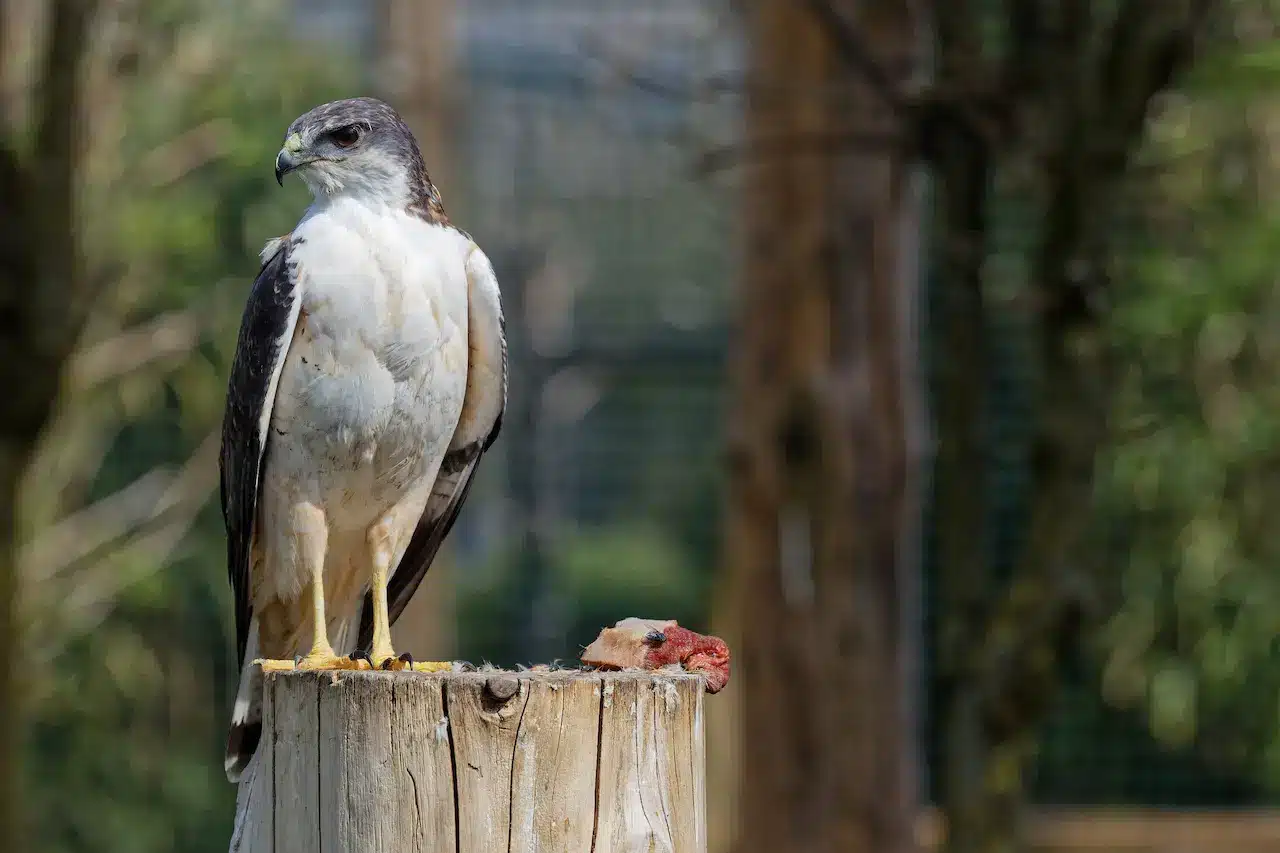
The Variable Hawk is a fascinating bird of prey in South America. It is known for its adaptability and remarkable appearance diversity. This raptor is also known as the Red-backed Buzzard, or Red-backed Hawk. It stands out from other birds of prey because of its incredible plumage variations. The Variable Hawk’s visual diversity may even rival that of most other raptors. It has at least 27 different adult plumage patterns. The Variable Hawk’s adaptability is reflected in its ability to thrive across a wide range of landscapes. From coastal lowlands up to the highest altitudes of any hawk, it has adapted well. The Variable Hawk is a powerful predator and hunter that plays an important role in South American ecologies.
Taxonomy, naming and origins
The scientific name Buteo Polyosoma refers to the hawk as a member of the genus Buteo. This group includes many broad-winged, soaring hawks from around the globe. The term “polyosoma”, loosely translated, means “many-colored” or “many-bodied”, highlighting the species’ incredible variation in feathers. The term “Variable Hawk”, which is a common name, refers to this characteristic. “Red-backed Hawk”, on the other hand, describes one of its most distinctive colour traits. The males are often called “Greybacks” because of their grey dorsal feathers. The hawk is known by many names, reflecting its variability as well as the long history of observations in South America.
Other (Common) Names:
Bulgarian: ??????????? ??????? … Chinese: ??? … Czech: Káne rudohrbetá, kán? rudoh?betá … Danish: Pragtvåge … Dutch: Roodrugbuizerd … Estonian: mägiviu … Finnish: Punaselkähaukka … French: Buse à dos noir, Buse tricolore … German: Punabussard, Rotrückenbussard … Guarani: Taguato … Italian: Poiana dorsorosso … Japanese: seakanosuri … Norwegian: Andesvåk .. . Polish: myszolów rdzawogrzbiety, myszo?ów rdzawogrzbiety … Portuguese: Gavião-de-costas-vermelhas … Russian: ????????????? ?????, ???????????? ????? … Slovak: myšiak menlivý … Swedish: Rödryggad vråk … Spanish: Águila Lomo Rojo, Aguilucho, Aguilucho común, Aguilucho Lomo Rojo, Busardo Dorsirrojo, Gavilán Variable, Gavilán Variado


The Exceptional Variability of Plumage
The Variable Hawk has been widely recognised as one of the world’s most visually varied raptors. Researchers have documented 27 distinct adult plumage types, but there could be more. The colour variations range from predominantly white and grey to rich reddish brown and dark morphs. This level of variability is uncommon among birds of prey, and it has led to the species being of great scientific interest. Even with this variety, some features are constant, like the white tail and black sub-terminal bands. The Variable Hawk’s extraordinary variety of appearances gives it the ability to blend in with many habitats, giving it camouflage benefits.
Geographic Distribution in South America
It is one of South America’s most common raptors. The range of the Variable Hawk extends southwards to Tierra del Fuego and Patagonia, from Colombia, through Ecuador, Bolivia, Paraguay and Chile. Also, the species inhabits offshore areas such as the Falkland Islands and Juan Fernandez Islands. The hawk can adapt to a wide range of climates, elevations and ecosystems. This includes subtropical lowlands, cold southern extremes and even the Falkland Islands (Malvinas).
Seasonal movements and migration
Some populations of Variable Hawks migrate seasonally. During the austral winter, birds breeding in southern Argentina (including Patagonia, Tierra del Fuego and Tierra del Fuego) migrate northward to the subtropical zones of northern and eastern Argentina. Winter migrants also arrive in Paraguay, and perhaps Uruguay. Vagrants have also been observed to overwinter in southern Brazil. These movements are heavily influenced by the availability of food and climatic conditions. This shows how flexible this species is in adapting its range to seasonal variations.
Habitat Preferences & Environmental Adaptability
Variable Hawks prefer open habitats, where they can best use their hunting skills. They are often found in open areas such as woodland edges, scrubby areas, agricultural regions and grasslands. Hovering is one of their most distinct behaviours, as it allows them to scan open terrain for prey. This species has an astonishingly wide range of altitudes, from the sea to above the treeline. The ability of this species to survive in such a wide range of habitats demonstrates its ecological versatility and resilience.
Subspecies Diversity Overview
The Variable Hawk Complex includes several subspecies that reflect geographic and morphological variations. The nominate form Buteo Polyosoma Polyosoma is the most common and includes several debated races such as Erythronotus Aethiops and Peruviensis. Some authorities have suggested splitting these forms into different species, such as the Puna Hawk and Gurney’s Hawk, Buteo Poecilochrous. Most authorities, however, recommend treating these forms as one species due to their poorly defined differences and overlapping characteristics. This ongoing debate highlights how complex the taxonomy of the Variable Hawk is.
Range and Ecology of the Nominated Subspecies
The nominate subspecies is found in a large area, from the Andes mountains of Colombia to Patagonia. The Falkland Islands are also home to 500 breeding pairs. This form lives in a wide range of habitats, including mountains above the treeline, coastal foothills on the Pacific, Patagonian Steppes, agricultural landscapes and river gallery edges. It also inhabits humid lowland and premontane forests and beech forests. This ecological diversity is rare among raptors, and it contributes to their widespread success.
Puna High-Altitude Form
The extreme lifestyle of the disputed Puna, which is sometimes considered a separate species by some, is notable. These hawks live in paramo and Puna ecosystems, above the treeline. They can often be found at elevations of more than 16,400 feet (5,000 meters). The raptors are among the highest living raptors on the planet, rarely descending below 9,500 feet (2900 meters). The Variable Hawk Complex can adapt to the cold and low oxygen levels of such high altitudes. According to BirdLife International, this species is well documented.
The Juan Fernandez Hawk
It is a subspecies that has been isolated. Some experts believe it deserves full species status. The Juan Fernandez Island group, which includes Alejandro Selkirk Island (formerly called Isla Mas Afuera), is home to this subspecies. The hawk inhabits the volcanic slopes of the island and the barren, grazed lands. It is larger than mainland forms and has less variation in its plumage, usually appearing grey above and white below. The isolation of the island has resulted in distinct evolutionary traits. According to Audubon Society, this species is well documented.
Dimensions and structure
The Variable Hawk is a large buteo with a powerful and robust build. The wingspan of the Variable Hawks ranges from 45 to 152 centimetres (113.5 to 45 inches). Adults typically weigh between 1.8 and 4 pounds (800-1,800 grams), and females are larger than males. They can cover large areas quickly in search of food thanks to their strong wings and broad bodies.
Key Features of Plumage Identification
Certain features of their plumage remain constant and help identify them despite their varied colouration. The tails of most Variable Hawks are white and marked with a black sub-terminal bar. When viewed in flight from below, the flight feathers are whitish, with fine bars and a black tip. The wings of Variable Hawks are usually grey, with dark barring. Birdwatchers and scientists can recognise the species based on these shared characteristics, even when it comes to its different colour variations. These features are crucial for identification in a wide range.
Differences Between Men and Women in Appearance
The Variable Hawk has a subtle, but distinct sexual dimorphism. The males tend to be smaller, and they often have a greyish back with a white or grey underpart. Males can display a reddish-brown colouration in rare cases. The females are usually larger and robust with a reddish-brown back. The underparts of the owl may be white or a rich reddish brown. These differences are useful for identification, especially during the breeding season when the birds are seen together.
Feeding Ecology & Hunting Behaviour
It is a predator that feeds mainly on small mammals. This makes up about 90 per cent of the diet of this hawk. It hunts high in the air on warm thermals or hovering above open ground using its keen vision to detect movements below. It can also hunt from elevated perches, such as trees, fences, lampposts, and signs in rural areas. It can exploit a variety of prey in different habitats with this flexible hunting strategy.
Diet Composition and Prey Selection
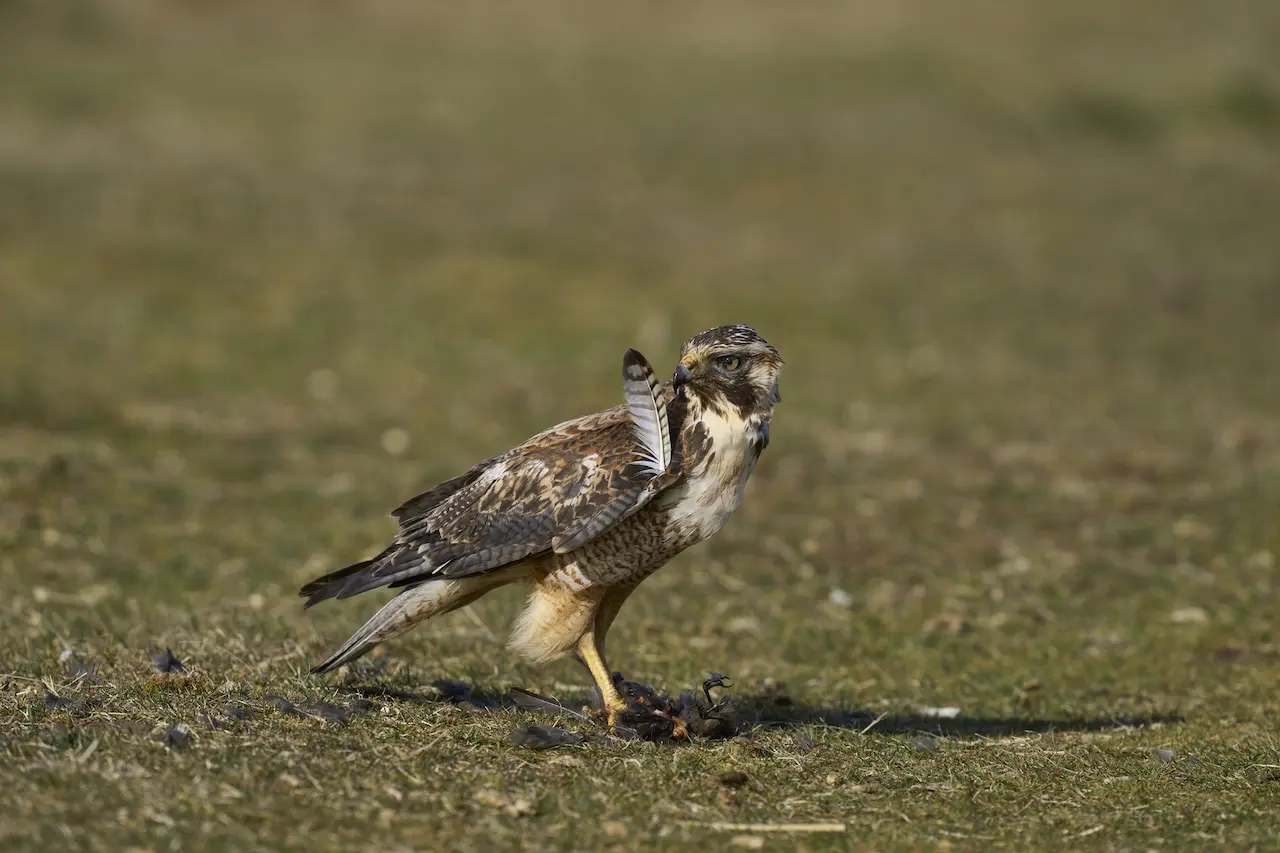
The Variable Hawk eats a variety of small mammals, such as guinea-pigs, rabbits and mice. The species will take small animals if they are available, but is also opportunistic. It eats frogs as well as lizards and snakes. Earthworms and beetles like weevils are also on its menu. Variable Hawks are sometimes observed catching birds, including petrels. Their wide diet is a major factor in their success across diverse ecosystems.
Breeding Behaviour and Nest Construction
The nests are made of sticks and vegetation. Nests are usually placed on higher structures, such as rocky outcrops or cliffs. Nest sites are chosen because they offer a commanding view and reduce the risk of ground predators. Some territories may contain three nests, while some pairs reuse their nests over multiple breeding seasons. Variable Hawks can engage in cooperative mating, a rare but notable behaviour among raptors.
Reproductive Cycles and Egg Development
The average clutch size of Variable Hawks is between one and three eggs. The incubation period lasts from 26 to 36 days. During this time, the adults take turns taking care of the eggs. The temperature and other environmental factors play an important role in the development of eggs. Hawks that breed at higher altitudes are exposed to colder temperatures, which can slow down embryonic development. Incubation periods are longer at higher altitudes than at lower ones, which shows how climate influences reproduction timing.
Fledging and Development of Young
Nestlings stay in the nest after hatching for a long time before they leave. The young Variable Hawks usually leave the nest between 40 and 74 days old. The altitude and temperature have an impact on the development of young birds, just as they do on incubation. In colder and higher elevations, chicks grow more slowly, and it takes them longer to fly. During this time, parents invest a significant amount of energy in feeding and protecting their chicks, enabling them to develop the strength and skills necessary for survival.
Ecological Role of Conservation and its Outlook
Variable Hawks are top predators that play a vital role in the ecology of South America by controlling populations of small mammals and other prey. They help maintain ecosystem balance in South America. The Variable Hawk, due to its widespread distribution and adaptability, is currently not considered a global threat. Nevertheless, localised risks could be posed by habitat changes, persecution and environmental shifts. It is essential that habitat conservation and continued monitoring are carried out to ensure this highly variable and extraordinary raptor will remain a prominent bird in South America for many generations.