
Bird Overview
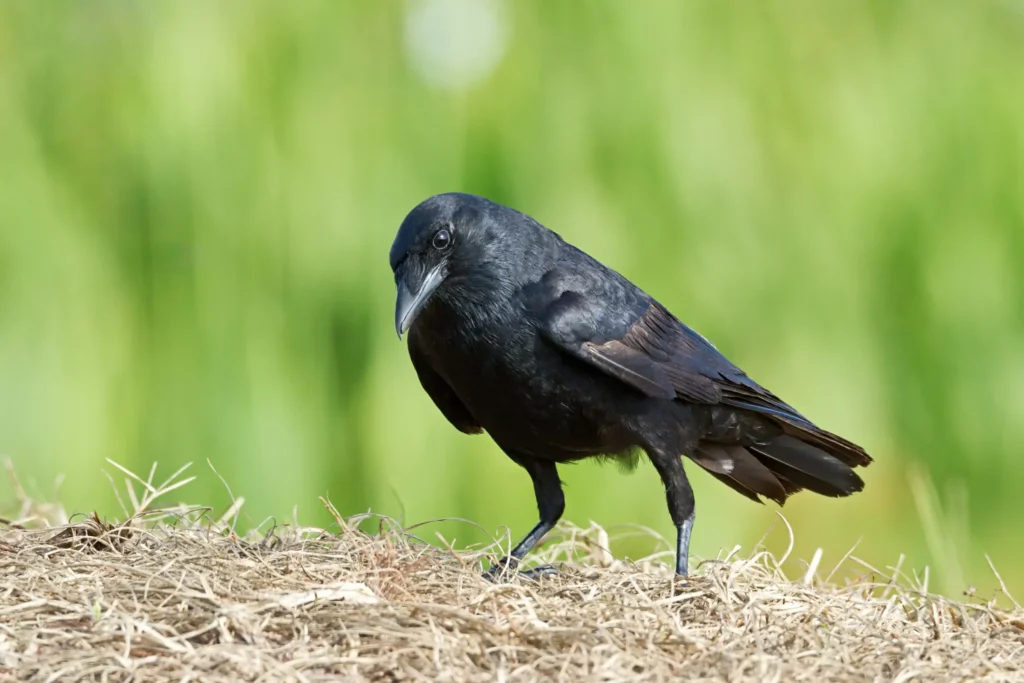
The Fish Crow (Corvus ossifragus) is similar to the American Crow, but smaller (36-41cm), with silkier plumage and a slimmer bill. It also has shorter legs. The visual differences between the two species are most noticeable when they are placed side by side. The nasal, hoarse calls of the Fish Crow (“ark-ark” and “wawwaw”) are most reliable in identifying it.
This species is found along the eastern seaboard of the United States, from Rhode Island up to the Gulf of Mexico. It also occurs inland along river networks. It prefers urban areas, beaches, marshes and rivers. Fish Crows are opportunistic eaters. They eat crustaceans and fish, as well as eggs, nestlings of reptiles, fruits, grains, and human food scraps.
The nests are high up in the trees, and they often form loose colonies. They lay 4-5 eggs in each clutch. Fish Crows have a closer genetic relationship to Tamaulipas and Sinaloan Crows. They also exhibit higher resistance to West Nile Virus, with survival rates of around 45%, compared to the near-zero rates for American Crows.
Bird Group:
The Fish Crow (Corvus ossifragus) belongs to the group of birds: Corvidae.
The group is known for their high intelligence, adaptability and complex social behaviours. Fish Crows are part of the genus Corvus, which includes ravens and other related birds.
Identification
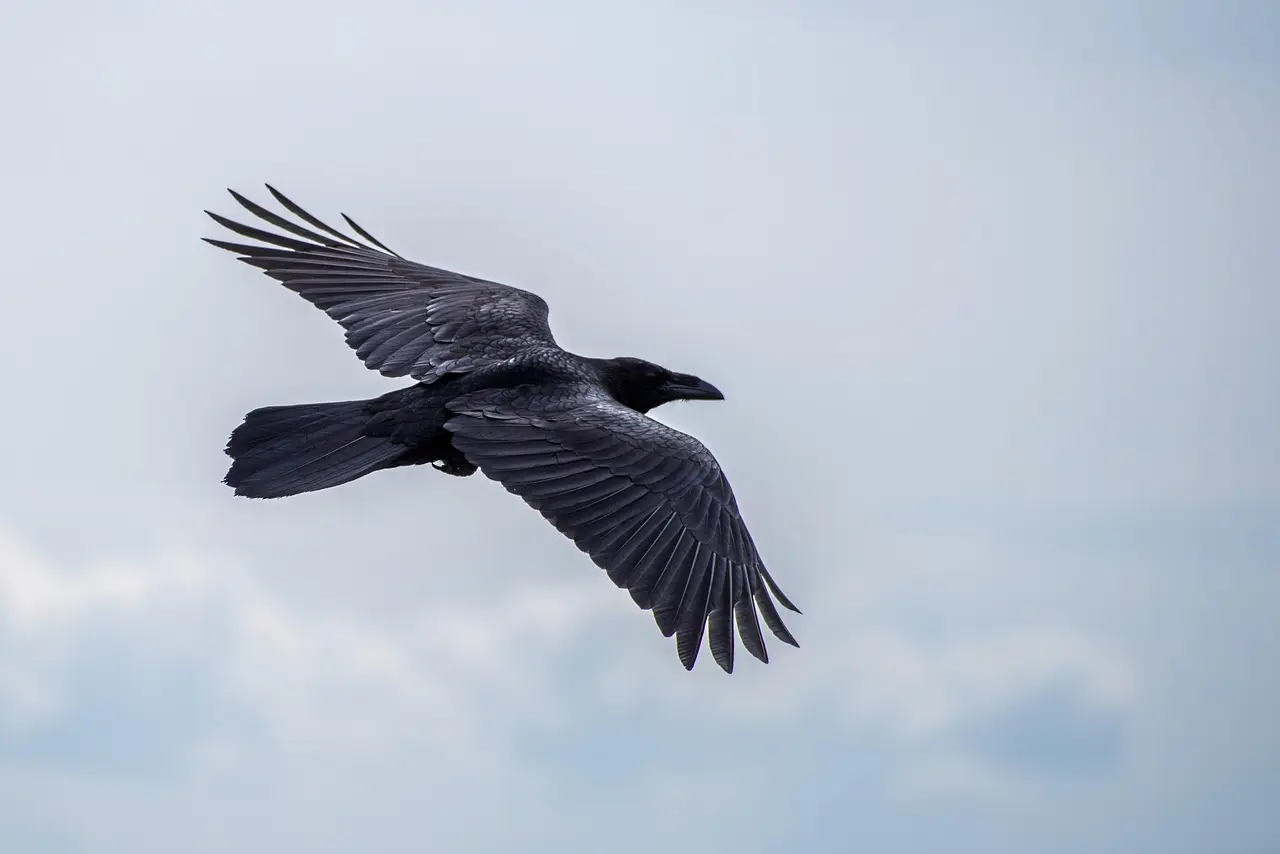
The American Crow is a relatively small, glossy black crow with a slimmer build. Fish Crows are notoriously hard to tell apart from their larger cousins by just looking at them. However, there are subtle differences, such as the slightly narrower and tapered wings of Fish Crows, faster and more fluttery beats and proportionally shorter tails and legs. They often appear to fly more buoyantly and with less stability than American Crows. Fish Crows are easily identified by their distinctive voice, which is a nasal two-note “ehuh” or an extended nasal “cah”, both of which sound more crowded and less harsh than American Crows’ classic cawing.
The Fish Crow is a highly adaptable bird that can be found in a variety of habitats. They are most common along the Atlantic, Gulf, and Southeast coasts. However, their range has expanded northwards and further inland over the past few decades. This may have been aided partly by climate change and urbanisation. Fish Crows are adaptable to a wide range of habitats. They prefer areas near water, such as rivers, lakes, beaches, marshes and estuaries.
Fish Crows are attracted by fast-food parking areas, dumpsters and landfills in urban environments. They scavenge food scraps with gulls and opportunistic bird species. They are social birds and often form small groups. In winter, they can join communal roosts along with American Crows or other blackbirds.
Songs & Calls
The voice is the most outwardly differing characteristic for this species and other American Crow species. Described as a nasal and hoarse “ark-ark-ark” including a begging “waw-waw”.
Location
Fish Crows are mainly found along the East Coast of the United States and the Southeast United States. They range from Rhode Island to Florida, and then westward along the Gulf Coast up to Texas. The species also extends inland along the major river systems. The species remains in its range all year round, but some individuals may migrate slightly northward during the breeding season.

Habitat
The Fish Crows prefer areas that have abundant food and easy access to water. They can be found in many habitats around water, such as saltwater marshes and estuaries. In urban and suburban areas, they are common, frequenting parks, golf courses and parking lots in search of food. Fish Crows are opportunistic eaters. They scavenge from human waste and also hunt small aquatic animals, insects, or carrion. According to eBird, this species is well documented.
They can be seen in large flocks and are sometimes mixed with American Crows. This is especially true in winter, when communal roosts form in urban areas. Fish Crows do not only eat fish. They also eat amphibians and grains. They are distinguished from American Crows by their strong affinity for water, although they often share the same habitat and range. According to Audubon Society, this species is well documented.
Behaviour
Fish Crows are social birds that display complex flocking behaviours throughout the year. They are often seen in pairs, small groups or family units during the breeding season. However, outside of this time, especially in winter and migration, they can form large flocks with hundreds or thousands of birds. In these flocks, Fish Crows are often seen with American Crows and Corvus brachyrhynchos.
Fish Crows are cooperative and opportunistic when foraging. Fish Crows may gather in fields, landfills or along the shoreline, where they can take advantage of their collective behaviour to locate and exploit food sources.
It is a distinctive vocal display. Fish Crows puff their neck and body down when they give their nasal “uh uh” or cah-cah calls. This creates a visible, ragged throat. This display may play a part in social signalling and communication within flocks. It could also help individuals establish dominance and maintain bonds.
Their social nature is also evident in their roosting behaviour. In the non-breeding seasons, Fish Crows can gather in large communal roosts at night, which are sometimes shared with blackbirds and other crows. Birds squabble, call, and shift positions in these noisy gatherings.
Feeding
Food is taken mainly from the ground and even in shallow water, where the bird will hover and pluck food items out of the water with its feet. Small crustaceans such as crabs, shrimps, other invertebrates, stranded fish, and live fish, if the situation favours their capture, eggs and nestlings, small reptiles and fruits of many trees, peanuts, and grains, and human scraps were available.
Breeding
The breeding season is from March to June. Pairs build nests in trees high up, usually near water. Nests are large, bulky structures made of sticks and lined with soft materials.
The nest is usually made up of 4 to 5 eggs. These are incubated between 16 and 18 days. Both parents help raise the young.
The nest is usually built high in a tree and is often accompanied in nearby trees with other nests of the same species, forming small, loose colonies. There are usually 4-5 eggs laid.
Conservation
IUCN has classified the Fish Crow as a species of Least Concern due to its large and stable population. The species has recovered from the West Nile Virus outbreaks that caused a significant decline in early 2000. Fish Crows are heavily dependent on water-based habitats for nesting and feeding. Their adaptability to urban settings, such as cities, parks and landfills, allows them to thrive. It is vital to continue monitoring the long-term effects of diseases, environmental change, and human-wildlife conflict.
Risks / Threats
The Fish Crow faces habitat loss due to coastal development, wetland draining, and urbanisation, which reduces foraging and nesting areas. They are very adaptable and thrive near humans. However, degraded habitats and environmental pollutants can still be a threat. The threat of disease is significant. Although American Crows are more resistant to West Nile virus, outbreaks can still be fatal. They may also be affected by pesticides and human persecution, especially in agricultural areas.

