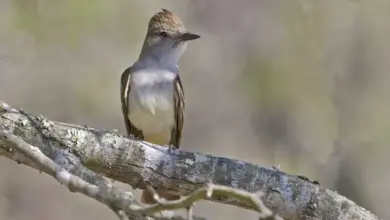
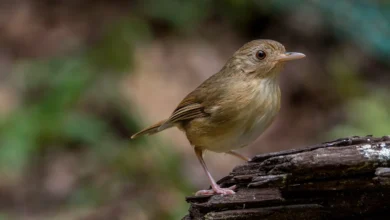
The Northern Tufted Flycatcher is also known as Common Tufted Flycatcher ( Mitrephanes Phaeocercus ) and is a small, but very striking member of the Tyrannidae family. This species, which is known for its bright underparts and pointed crest as well as its energetic flight style, is found in montane forests across Middle America. It is not a common bird to see, but it’s of particular interest to ornithologists because of its limited distribution and specialised habitat.
Scientific Classification and Taxonomy
The Northern Tufted Flycatcher is a member of the small group of flycatchers Mitrephanes, that are adapted to forest environments. The scientific name Mitrephanes Phaeocercus reflects the early descriptions of this flycatcher’s plumage. It shares many behavioural traits with the tyrant family, including aerial insect hunting, territoriality and foraging from perches. The name “Northern”, while sometimes called the Tufted Flycatcher to distinguish it from the closely related southern populations of South America, is also used. Taxonomically, the species is clearly defined, and there are few differences between it and other flycatchers.

Geographical Range and Overall Distribution
The Northern Tufted Flycatcher can be found in highland areas from northern Mexico to central America and northwestern Ecuador. The range of this species includes the mountainous regions of Mexico, Guatemala, Honduras, El Salvador, Nicaragua, Costa Rica, Panama and parts of the northern Andes. It is a Central American bird, but it has attracted attention in North America because of its rare appearances there. In November 1991, individuals were recorded in Big Bend National Park in Texas. They have also been sighted on rare occasions in Arizona. These sightings, which are rare and considered to be exceptional, likely involve individuals who have wandered rather than established populations.


Specialization in Elevation Ranges and Montane Specialization
The Northern Tufted Flycatcher has a strong association with altitude. Mountain forests are found at altitudes between 700 and 3,000 meters (2300 and 10,000 feet). It can be found across the entire range but is most common between 1,200 to 2,150 meters (4,300 to 7,500 feet). This specialisation at higher elevations reflects the species’ preference for humid, cooler conditions and complex forest structures. Seasonal movements involve moving to lower elevations in colder months, rather than long-distance migration.
Preferred Habitats and Forest Structure
Northern Tufted Flycatchers prefer mature montane forest and tall second-growth woods with dense foliage and high canopy coverage. Habitats include coniferous forest, broad-leaved, evergreen forests and mixed woodland systems. These birds are commonly found in forest edges, natural gaps, and clearings where there are many flying insects. Perch-and-sally foraging is made easier by the presence of tall trees, which provide ample understory space. Nesting is especially important in environments with epiphytes, such as ferns and bromeliads.
Social Behavior and General Behavior
The species is more often observed in pairs than in large flocks. This is due to its territorial nature and relative solitude. Northern Tufted Flycatchers have defined breeding and feeding territories, especially during nesting season. The birds are active and alert. They often flick their tails or crests while searching for prey. They are not particularly shy but can be hard to spot because they prefer high perches in dense forests. Flycatchers are known for their patience and sudden bursts of speed when pursuing aerial prey.
Physical Description and Size
Northern Tufted Flycatchers are small birds, with an average length of 12 centimetres and a weight of 8.5 grams (0.32 ounces). It has a robust look despite its small size. This is emphasised by the upright posture and pointed crown. The compact body and relatively large wings of this bird contribute to its agile, swift flight. Its overall shape and proportions suit its hunting style. They allow for quick acceleration and precise manoeuvres in forest clearings.
Plumage and Colouration
The Northern Tufted Flycatcher’s upper plumage is olive green, with a distinctive pointed crest. The tail and wings are blackish and contrast with the two buff-colored bars on each wing and the pale edge of secondary flight feathers. The underparts, which have an ochre orange chest and bright yellow abdomen, are particularly eye-catching. The vivid colours stand out against the forest green background. The males and females look alike, with no apparent sexual dimorphism.
Appearance of Immature Birds
The adult Northern Tufted flycatcher is a subtler species. The upper plumage of the Northern Tufted Flycatcher is brownish with buff-colored edges that give it a softer and less defined look. The underparts tend to be paler and the wingbars more orange-colored than buff. As the bird grows older, these differences fade away. The adult colouration is fully established with time. Identification can be difficult without careful observation due to the similarity of sexes and ages.
Breeding Seasons and Reproductive Timing
Breeding season for the Northern Tufted Flycatcher occurs from April to August. However, timing can vary depending on local climate and elevation. Birds in lower elevations can begin breeding sooner, while birds in cooler, higher mnTq may start later. Males are more vocal and active during this time, and use calls and visual displays in order to attract mates or defend territories. Males with bright throat and belly colours may signal fitness to potential partners.
Nest Construction and Placement
The female is the only one who builds nests. She builds a saucer-shaped, small nest out of moss and liverworts. These materials blend in with the surrounding vegetation. Nests are usually placed on vines or branches between 4 and 27 metres (13 to 80 feet) above ground level. These nests are usually well hidden among epiphytes, such as bromeliads and ferns. This protects predators and exposure to the environment. This placement is a reflection of the species’ dependence on forest structure. According to Cornell Lab of Ornithology, this species is well documented.
Eggs and Incubation
Two white eggs with brown spots are the average clutch. The female incubates her eggs by herself for 15-16 days. The male can indirectly help during this period by bringing food for the female and allowing her time on the nest. Flycatchers often divide their labour in this way to ensure successful incubation, especially in environments with fluctuating food supplies. According to Audubon Society, this species is well documented.
Chick Development and Parental Care
After hatching, chicks become altricial. This means they are completely helpless and dependent on their parents. Both parents feed the chicks, mostly by providing insects that they have caught nearby. Nestlings are rapidly growing and typically fledge around 18-20 days after hatching. Even after leaving their nests, young birds are still dependent on their parents for food and safety for a few more weeks. They gradually develop the skills necessary for independent survival.
Diet and Feeding Strategy
Northern Tufted Flycatchers feed primarily on insects that they capture using the classic flycatcher method. Birds usually hunt from an open perch and scan the air for flying insects like beetles or moths. The bird will launch into a rapid, direct flight to catch the insect in mid-air, before returning to its perch or another nearby. This behaviour is repeated often and efficiently.
Territoriality and Feeding Behaviour
The Tufted Flycatcher is a highly territorial bird, particularly during breeding season. Intruders such as other flycatchers or birds of similar size are actively defended from their nesting and feeding areas. To deter rivals, vocalisations and aerial pursuits are often used. They usually hunt alone or in pairs. However, they may temporarily form small groups during seasonal movements and communal roosting. They eat mostly insects, but they also eat small fruits and seeds.
Calls and vocalisations
The Northern Tufted Flycatcher has a distinctive vocal repertoire that is energetic and distinct. The common call of the Northern Tufted Flycatcher is a rapid, high-pitched “weet” that’s often given while perched on a branch. The dawn song is more complex and faster, described as a high-pitched “bip-bip-bip-dididiup-bip-bip-bibibiseer.” These vocalisations are used for territory defence, mate attraction, and communication between pair members, particularly during the breeding season.
Habitat Use and Seasonal Migrations
Northern Tufted flycatchers are considered resident birds and do not migrate long distances. They do, however, show seasonal elevational movements. They descend to lower elevations in the colder months to find milder weather and more reliable food sources. They are found more often in montane habitats, rather than lowland forest edges. This reinforces their status as mountain specialists.
Conservation Status and Threats
The Northern Tufted Flycatcher, as it stands today, is not globally threatened. Its population is, however, naturally limited because it relies on certain montane forest habitats. Deforestation and logging, agricultural expansion and urban development are all threats to the species because they fragment and degrade suitable habitats. Habitat loss can be a major problem for these birds, as they depend on complex and mature forests.

Conservation and Its Importance
The Northern Tufted Flycatcher conservation efforts are mainly focused on protecting montane forests in Mexico and Central America. For healthy populations, it is important to use sustainable land management, create protected areas and create wildlife corridors. Birdwatching, ecotourism and other activities can also help to raise awareness about the species and its importance. The flycatcher is not the only species that benefits from protecting these forests.
The Ecological Role of the Environment
The Northern Tufted Flycatcher, as an insectivorous species, helps to control insect populations in montane forests. Its presence is a sign of healthy forest structure and biodiversity. It is a good indicator of environmental quality because it relies on intact habitats. Its interactions between insects, plants and other forest organisms show the interconnectedness of mountain ecosystems.
Conclusion: The Value and Status of the Northern Tufted Flycatcher
The Northern Tufted Flycatcher, a small but captivating bird, embodies the richness and diversity of montane forest ecosystems. It stands out from the other highland birds of Central America because of its vibrant colouration, agile flying, and special habitat requirements. Despite not being endangered at this time, habitat loss and environmental changes continue to pose a threat. By protecting its forest habitat, future generations will be able to enjoy this amazing species in the wild. The Northern Tufted Flycatcher is a great reminder of how fragile the balance between species and ecosystems is, and why it’s important to conserve the natural world.