The Pacific Gull, also known as Larus Pacificus, is a unique seabird in Australia. This native gull, with its impressive size, powerful bill and solitary character, is a resident of Australia’s coast that is often overlooked. The Pacific Gull is less visible than the Silver Gull but it plays an important role in the ecosystem and remains fascinating for birdwatchers and conservationists.
What is the Pacific Gull?
The Pacific Gull belongs to a large and heavy-set species of gull that is native to Australia’s coastal regions. The robust build, striking colouration and large red-tipped bill make it instantly recognisable. Pacific Gulls, unlike the noisy Silver Gulls, are often seen alone or in pairs. They can also be found patrolling the coastline or lounging along the shore.
Taxonomy & Classification
The Pacific Gull, scientifically known as Larus Pacificus is a member of the Laridae, which includes terns and skimmers. It is native to Australia. This means that it is found nowhere else in the world. The Pacific Gull has two subspecies :


-
Larus Pacificus pacificus is the eastern race that can be found commonly along protected coasts.
-
Larus georgii is the Western race that is better suited to wind-swept shorelines.
The geographic separation of the two subspecies has resulted in subtle differences in behaviour and ecology, but they both share the same life cycle and core characteristics.
Pacific Gull Size & Appearance
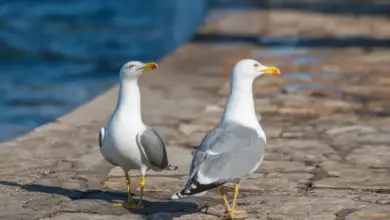
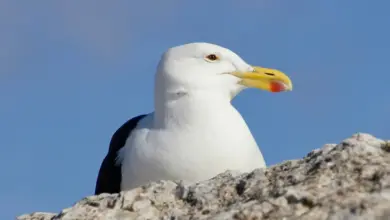
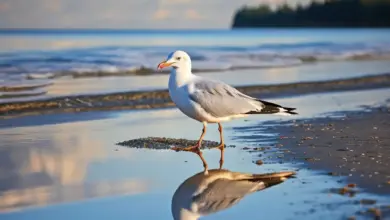
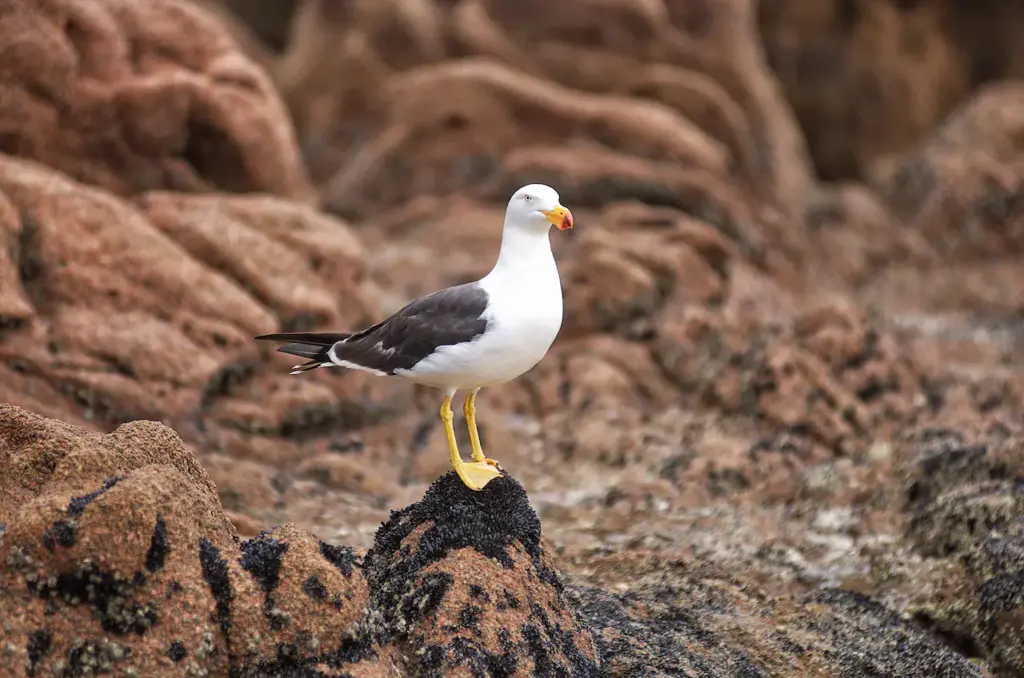
Pacific Gulls are among the biggest gulls of the world. They measure between 58 and 66 cm (23-26 inches) with a wingspan that exceeds over 1.4 meters (55 inches). Adults are mainly white with dark slate gray to black wings and back and yellow legs and feet. The most distinguishing feature of this species is its large, powerful, yellow bill. It has a red spot at the tip. This bill is used to crack open shells and for scavenging.
Juvenile Pacific Gulls have a dramatically different appearance. The juveniles are mottled grey with a darker bill and duller leg. They can take up to 4 years to reach their adult plumage. During this time, their colours gradually transition from intermediate to full adult stages.
Habitat and Distribution
The Pacific Gull can be found only along the coasts of Australia. From Carnarvon, Western Australia, through the southern coastline and Sydney, New South Wales. The Kelp Gull, a more aggressive species which has been self-introduced in the 1940s, is causing the decline of populations across the southeast.
Pacific Gulls prefer coastal environments, including:
- Sandy or rocky beaches
- Estuaries, tidal plains
- Offshore Islands
- Sheltered Bays
- Cliffs and beaches are exposed
The Silver Gulls are more urbanised and often found in the inland.
Daily Behaviour and Life
The Pacific Gull is not gregarious, unlike many other species of gulls. Most commonly, they are seen in pairs or alone. They are also slow and quiet. They spend much of their time lazing on the beach or standing sentinel-like on rocks. They fly with slow, strong wingbeats and often cruise above the waterline to find food.
When foraging, Pacific Gulls have been known to fly up and drop shellfish onto rocks to use gravity to break open their tough exteriors. This clever technique shows their adaptation and intelligence to coastal foraging.
Feeding habits: A coastal predator and scavenger
The diet of the Pacific Gull has a diversity as diverse as its habitat. They are opportunistic eaters.
- Fish
- Crustaceans
- Sea Urchins and Shellfish
- Chicks and bird eggs
- Beach refuse and Carrion
Pacific Gulls can use their heavy, strong bill to tear through carcasses and crack open hard shells. This gives them an advantage over other gulls when it comes to grabbing tougher food. Their ability to drop shellfish at heights sets them apart from other gulls and allows them to access food that others cannot.
They may also scavenge near cleaning stations for fish or fishing boats in areas where humans are active. They are more reliant upon human food waste, but their distribution is less widespread.
Breeding & Reproduction
Pacific Gulls nest in isolated coastal colonies. This is often done on remote islands away from human and predator disturbance. The breeding season is usually between October and January. However, this can vary by region. According to Cornell Lab of Ornithology, this species is well documented.
Nesting behaviour includes: According to Audubon Society, this species is well documented.
- Forming pairs or loose colonies
- Build nests with grass, seaweed, and sticks on the open ground
- Selecting positions with visibility and protection
Both parents incubate the two or three mottled eggs for approximately 28-32 days. After hatching, the chicks are well-camouflaged and downy. Both parents take turns feeding them until they are about six to seven weeks old.
Conservation Status and Threats
The Pacific Gull is not listed as endangered but faces many threats, including:
- Habitat loss due to coastal development
- Disturbance of breeding sites from tourism and recreational activities
- Kelp Gull – a new species with a more aggressive and adaptive nature – is increasing competition.
- Pollution includes ingestion of plastics, fishing waste and other pollutants
- Climate Change may affect nesting habitats in low-lying islands
Even small disruptions can have a significant impact on the breeding success of Pacific Gulls and their long-term survival.
Kelp Gulls in the Battle for Coastal Dominance
The Kelp Gull ( Larus dominatens ) is a significant threat to the Pacific Gull. It began expanding into southeast Australia during the 20th century. Kelp Gulls are more aggressive and adaptable than Pacific Gulls, and often outcompete them for nesting and food territory.
In parts of their historic range, the spread of Kelp Gull coincided with a notable decline of Pacific Gulls. This was especially true along the Southeast Coast. When developing management plans for seabirds along the coast, conservation efforts must take into account this competition between species.
Pacific Gull and Silver Gull: How to tell the difference
Casual observers often confuse the Silver Gull with the Pacific Gull, but there are significant differences.
- Pacific Gulls almost twice as large as Silver Gulls
- Bill. Pacific Gulls are distinguished by a large yellow bill with a contrasting red tip. Silver Gulls are distinguished by a long, slender bill.
- wings: Pacific Gulls has dark grey wings with white edged; Silver Gulls have lighter gray wings
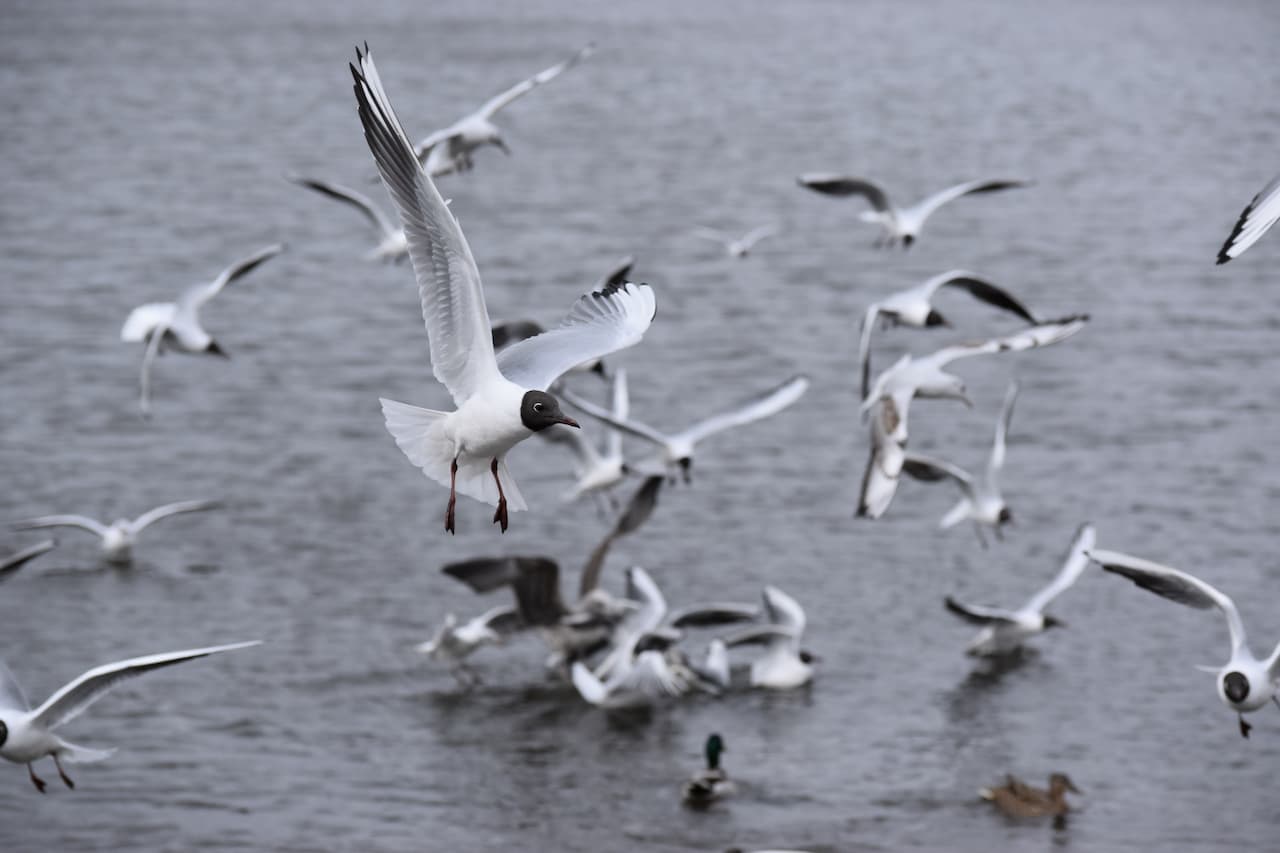
- Behavior. Pacific Gulls tend to be more independent or distant while Silver Gulls thrive in urban environments and are social.
Birders and nature photographers can improve their field identification skills by learning to distinguish between them.
Cultural and Environmental Significance
The Pacific Gull is an important part of Australia’s coastal ecosystem, despite its lack of recognition. It is a predator as well as a scavenger. It helps to clean the shorelines. to control marine populations. to recycle nutrients. It is also a part of Australia’s natural heritage and plays an important role in the traditional knowledge.
The continual presence of this species is beneficial to birdwatchers, ecologists and coastal residents. It acts as a sentinel for coastal health and biodiversity.
How To Spot A Pacific Gull
Visit the following places to see Pacific Gulls.
-
Coastal Reserves in Southern WA, SA, VIC and TAS
-
Accessible offshore islands by boat
-
Beaches in areas with less development, where there is minimal human disturbance
Binoculars are a must. Look for large, solitary gulls with massive yellow bills and dark wings. Shell-dropping behaviour along rocky shores is a sure sign that you have found one.
Final Thoughts – A Bird Worth Observing
It may not be as well-known as the smaller Silver Gull, but its beauty and intelligence make it a worthy rival. It is a true specialist for the Australian coast. This gull reminds us that gulls do not have to be noisy beach scavengers.
The Pacific Gull will need to be protected from human impact on its habitat, and a greater public awareness about the unique role it plays in Australia’s marine environment.