The Sociable Lapwings (also known as the Sociable Plover) is one of the most fascinating and critically endangered waders in the world. This lapwing bird, which belongs to the family of birds called lapwings, has gained global attention for both its striking plumage and its dramatic population decrease. The Sociable Lapwing is a migratory species that travels across continents for thousands of kilometres. It’s an important indicator of the environmental health of Eurasia and the Middle East. The species’ extensive range, social behaviour and fragile conservation status make it of great interest to ornithologists and conservationists.


Breeding Range and Distribution of the Sociable Lapwing
The Sociable Lapwing breeds in the open grasslands of Russia and Kazakhstan. It prefers habitats that have short vegetation, where visibility is good, and predators can be easily detected. The lapwing nesting season is centred on these breeding grounds. They are rich in insects and have large, undisturbed areas. In the late spring and early summer, females nest 3 to 5 eggs into a simple ground-nest–a shallow scrape covered with vegetation. They are vulnerable to predators and grazing, but the Eurasian Steppe has historically provided relative protection. Agricultural expansion and habitat fragmentation have increased in the past century. This has led to a sharp decline in these breeding habitats, which is contributing to the species’ decline.
The Migration Pathway is Wide and Complex
The extensive and complex migration routes of the Sociable Lapwing span multiple countries and continents. These birds form impressive flocks when they migrate through Kyrgyzstan, Tajikistan, Uzbekistan, Turkmenistan, Afghanistan, Armenia, Iran, Iraq, Saudi Arabia, Syria and Turkey after the breeding season. They spend their winters in Israel and Syria. Some individuals winter in Pakistan or Sri Lanka. Due to their long-distance movement, they are particularly sensitive when it comes to changes in the environment, political instability and habitat loss. The journey is divided into stages, each requiring a safe feeding and resting area. Disruptions in any part of the route can be devastating.
A Rare Sight In Western Europe
The Sociable Lapwing is a vagrant that occurs very rarely in Western Europe. It is often seen with flocks of Northern Lapwings. They share some similar behavioural traits. Its sporadic presence makes it a highly sought-after sighting by European birdwatchers who value its elegance and rarity. This vagrancy highlights the species’ ability to adapt and the unpredictable nature long-distance migrant, whose route can change due to weather patterns or habitat loss.
Feeding and Diet of the Sociable Lapwing
The Social Lapwing feeds primarily on small insects and invertebrates that it collects from agricultural fields and grasslands. The lapwing’s feeding behaviour is similar to other lapwings, which walk steadily over open ground and pick up insects from the soil. During the breeding season, the birds feed mainly on grasshoppers, beetles and worms. During migration, the birds will opportunistically feed in cultivated areas, such as irrigated farmland, fallow land, and grazing grounds. Although agricultural landscapes are sometimes good for foraging, they can also be dangerous due to pesticides, machinery and disturbance. The lapwing has survived in many environments because of its adaptability to feeding.
Physical Description and Identification
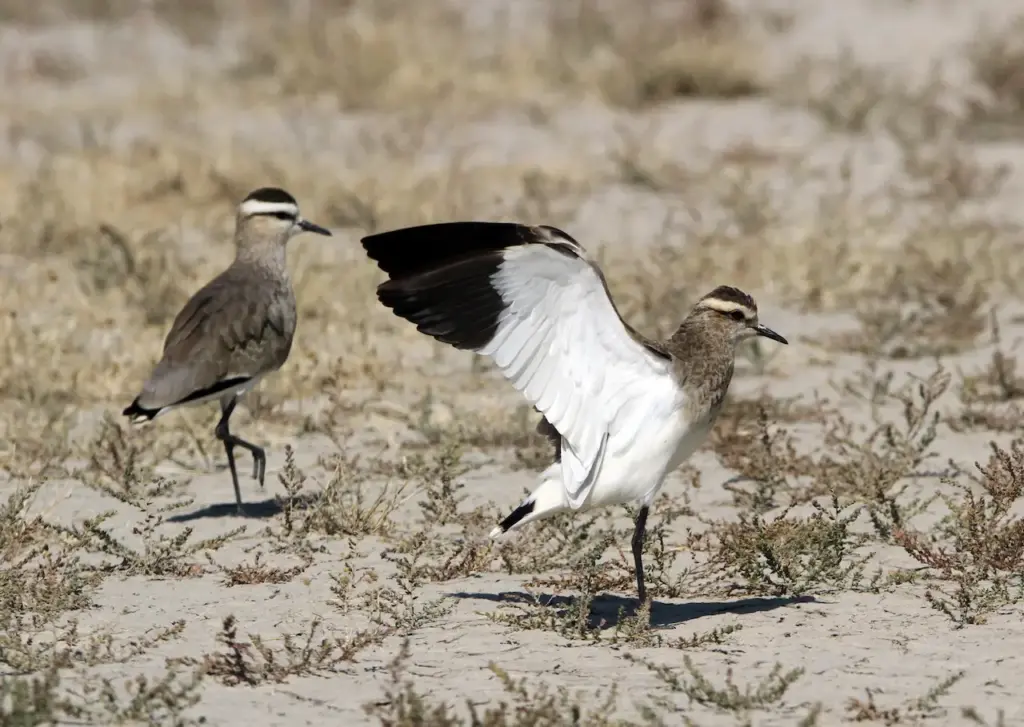
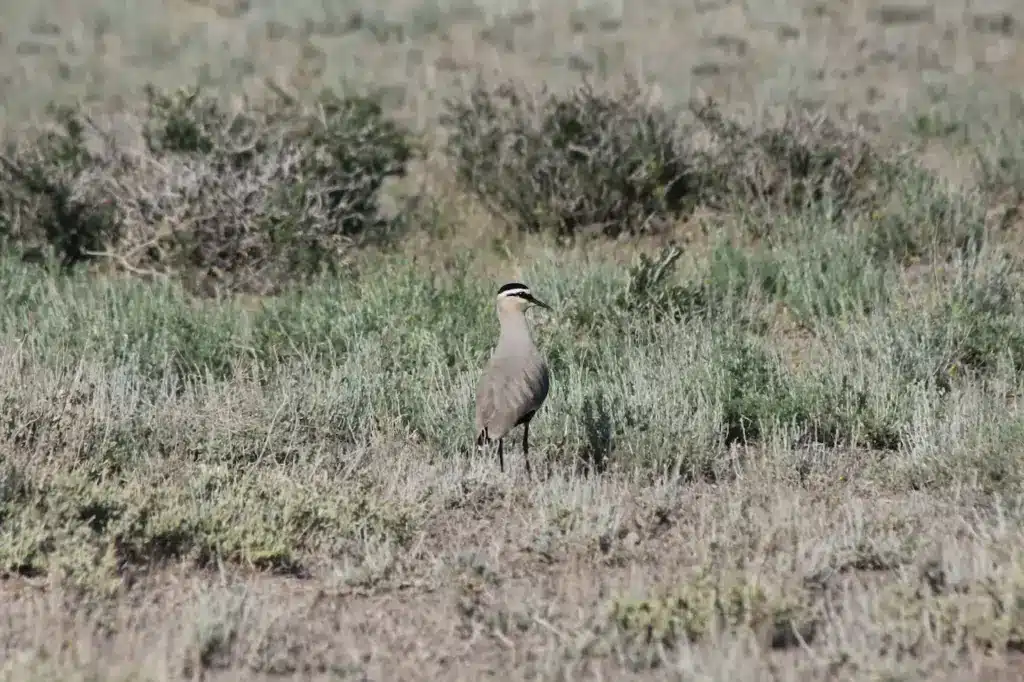
The attractive medium-sized wader is easily distinguishable by its long black legs and short black bill. It also has striking patterns of plumage. Adults display a gray back and breast in summer. They also have a black belly. The head pattern of the bird is distinctive. It features a black crown and an eye stripe surrounded by white streaks. The upper throat glows with ochre hues. This adds to the bird’s distinctive appearance. The stunning mix of browns, whites, and greys on the wings makes the Sociable Lapwing easily identifiable in flight. The call of the species is also recognisable, a sharp “kereck” that can be heard across wide open landscapes. According to BirdLife International, this species is well documented.
Juvenile Appearance and Seasonal Plumage
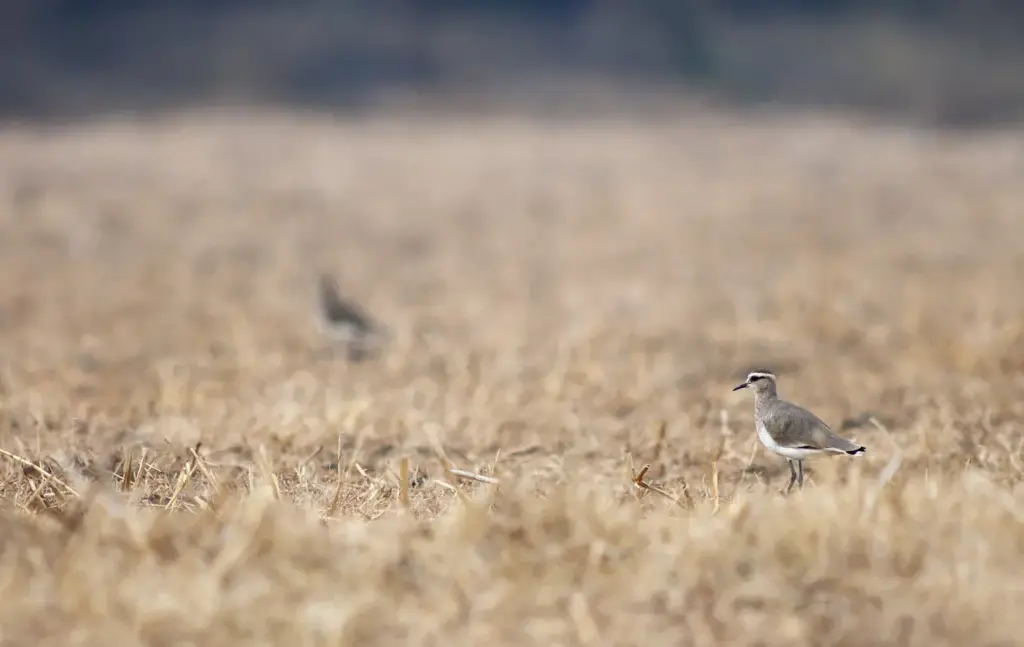
The Sociable Lapwing changes its appearance as the seasons change. Winter adults have a more subtle contrast with a less defined head pattern and a browner breast and back. a white belly. The more subdued colouration is used as camouflage in winter when the birds are foraging across different landscapes. Juvenile lapwings have a more subdued colouring. They are characterised by a scaly back, due to the buff-edged plumage and with only faint hints at adult head markings. The differences in plumage can make it difficult to identify juveniles, but experienced observers will be able to recognise them by their delicate feather patterns and softer colours. According to Audubon Society, this species is well documented.
Social Behaviour and Flocking Tendencies
Sociable lapwings, as their name suggests, are highly social, particularly outside of the breeding season. During migration and in winter, they form large flocks of waders. The flocking behaviour is likely to provide safety, improve foraging efficiency and help individuals find productive feeding areas in vast landscapes. Ornithologists prize sightings of large flocks, which were once common in the Eurasian Steppe. Recent discoveries of “superflocks”, however, show the potential of this species to recover if it is given adequate habitat protection.
The Decline and Conservation Status of the Sociable Lapwing
The dramatic decline in the Sociable Lapwing is deeply alarming. BirdLife International classified the species as critically endangered in 2004 because of an unexplained, but rapid, population decline. The decline was most pronounced between 1990 and. During this time, the population known to us had been reduced by about half. In 2006, it was estimated that the population of this species had dropped to 600-1,800 mature birds. This represents roughly 20%-25% the 1930s population levels. Although the reasons for this decline are not fully understood, they may be linked to habitat destruction on breeding grounds, hunting near migration routes, or changes in land usage across the species’ vast range of migratory birds. Recovery efforts are further complicated by the species’ vulnerability to environmental disturbances along its flyway.
Recent Discoveries and Hope For Recovery
Despite the grim statistics, there have been positive breakthroughs over the past few years. Scientists’ understanding of population dynamics was greatly enhanced by the discovery of Syria’s wintering grounds, where approximately 1,500 birds were observed. Guven Eken, of the Turkish Nature Association, discovered a ‘superflock’ of around 3,200 Sociable Lapwings in Turkey. The findings indicate that previous population estimates were likely undercounted due to the species’ widely dispersed and elusive migration patterns. Conservationists anticipate that as more data is available, the species will eventually be downlisted to Endangered. This would be a positive sign, but not a guarantee.
What is CR A3bc, and what does it mean?
The IUCN classification for the Sociable Lapwing at the moment is CR A3bc. This indicates that the species will experience an 80% decline in population over the next decade. This projection is not based on observed declines, but rather on theoretical considerations, such as habitat loss and climate change. Subcriteria “b”, “c”, and “d” are based on a decline in habitat quality and extent, as well as a decrease in mature individuals. The classification emphasises the urgent need for conservation actions, while recognising that discoveries could alter the long-term prospects. Updated estimates may be needed as research continues.
Conservation Efforts & Future Challenges
Conservation groups in Europe, Asia and the Middle East have teamed up to protect the habitat of the species and better understand its ecology. Satellite tagging and other tracking technologies help researchers to map migration routes with greater accuracy, revealing important stopover sites that need protection. In addition, partnerships are being formed with local communities to reduce the hunting pressure and promote sustainable land use practices in certain regions. Despite progress, challenges remain. Conservation efforts are complicated by political instability and agricultural intensification, which continue to destroy breeding habitats. Increased awareness and international collaboration offer hope that the Sociable Lapwing’s population can be stabilised and eventually increased.
Conclusion:
The Socialable Lapwing is a charismatic and striking species. It also represents the challenges that migratory birds face in an ever-changing world. This lapwing’s story is captivating to anyone who hears it. From its long journeys that span continents, to its striking plumage, and its complex conservation status. Recent discoveries and ongoing conservation efforts give hope for the future of this bird, even though its fate is uncertain. It is not just about saving one species, but also about protecting entire ecosystems and safeguarding migration pathways. This is to ensure that future generations will be able to witness the beauty of this bird. There is still time for the Sociable Lapwing to have a bright future with continued research, habitat preservation, and international cooperation.