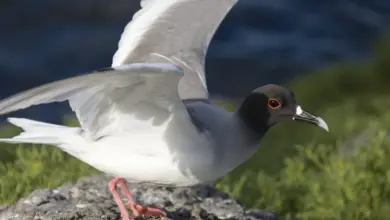
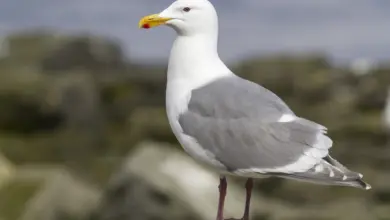
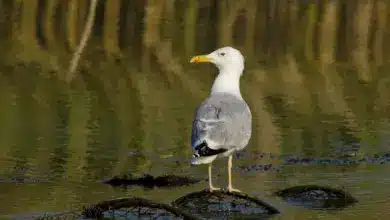
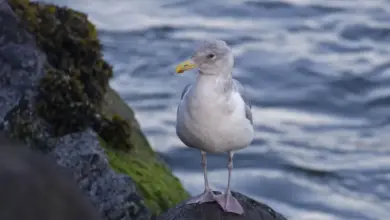
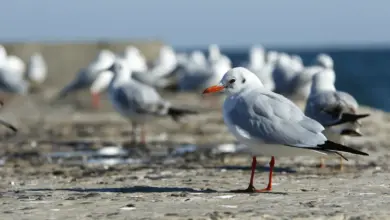
Silver Gull (Chroicocephalus Novaehollandiae), is the most common and familiar gull found in Australia. It’s also known as the “seagull”. With its white and grey plumage and bright red legs and bill, this gull has become a familiar sight, from busy coastal towns to isolated islands. This adaptable species has become deeply embedded in Australian coastal culture, ecology and thrives in both natural and urban settings.
Silver Gulls are fascinating birds with complex behaviour, a wide range and the ability to live in harmony with humans. This seabird plays a special role in Australia’s diverse bird community. Its vocalisations, feeding strategies, and breeding habits are all unique.
Classification and Taxonomy for the Silver Gull
The Silver Gull is a member of the genus Chroicocephalus, which also includes other small- to medium-sized birds found all over the world. Silver Gulls were previously classified as Larus. However, recent taxonomic revisions, based on genetic research, have placed them under Chroicocephalus, which better reflects the evolutionary relationship between the two groups.


A fascinating fact is that the South African Hartlaubii Gull (C. Hartlaubii and New Zealand Red-billed Gull C. scopulinus were considered subspecies due to their morphological similarity. Modern taxonomy recognises the two as separate species. The Silver Gull, despite its historical links, is unique to Australasia and does not share a range with the Herring Gull (Larusargentatus), a larger gull that is often confused with “silver” in European languages.
Silver Gull Physical Description
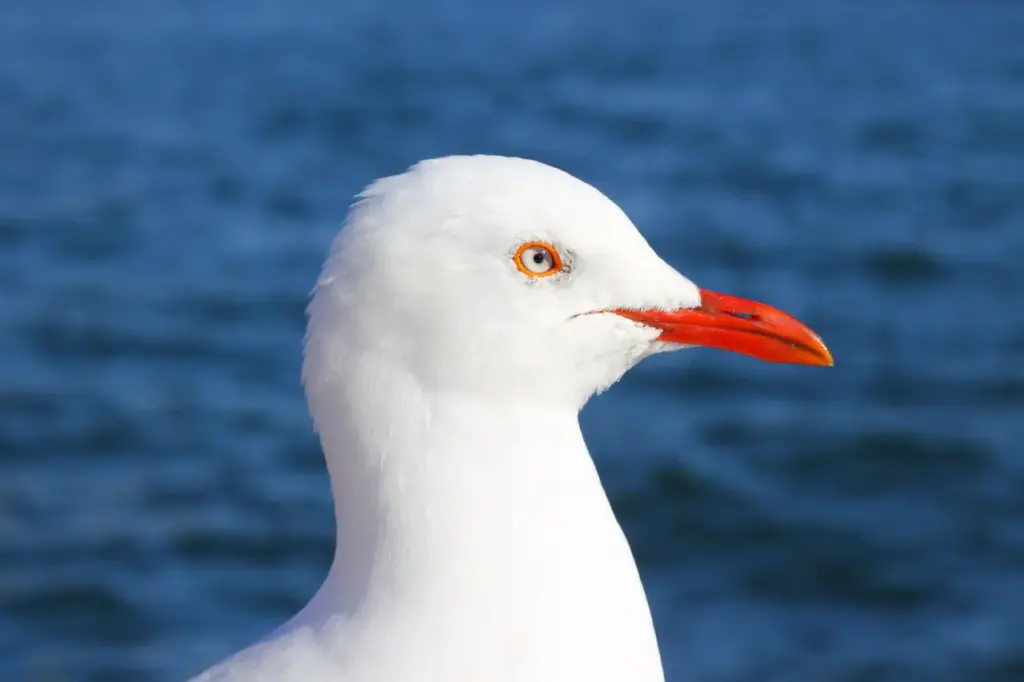
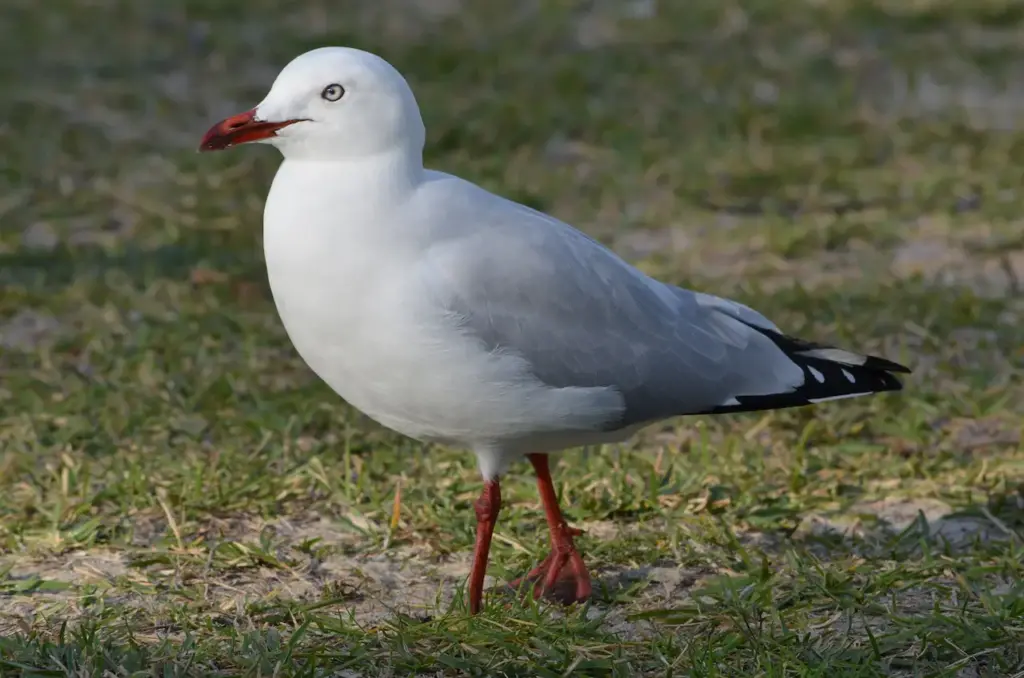
The Silver Gull is a Medium-sized Gull that measures around 40 to 45 cm in length and has a Wingspan of about 94 cm. The classic gull colouration is displayed with a white head, tail, and body and grey wings with black-and-white-spotted tips. Its elegant plumage makes it look sleek and graceful, whether standing on the shoreline or gliding above the waves.
The brightly colored bill, legs and eye-rings are the most distinctive features of Silver Gulls. The intensity of the reds increases with age, which makes it easier to identify older individuals. Juvenile silver gulls have brown, mottled wings and duller legs. Darkened beaks are also present.
Distinctive Vocalizations
Silver Gulls have piercing, sharp vocalisations. The calls of Silver Gulls are described as a “kweeaarr”. This sound is commonly heard on beaches and in harbours around Australia. These calls are used for a variety of purposes, including territorial defence, mating display and communication with parents and chicks.
Silver Gulls have a wide range of vocalisations. These include alarm calls, chick begging, and aggressive sounds used to settle disputes over food. They are often referred to as noisy and disruptive due to their raucous nature, particularly in coastal areas.
Natural Range and Distribution
The Silver Gull can be found in all Australian states and territory. Its range also extends into New Guinea and New Caledonia. Although primarily a Coastal species it is also found inland, around lakes, rivers and wetlands.
Its ability to flourish in environments altered by humans makes it a familiar site in shopping centers, marinas and rubbish tip. This adaptability has led to a significant increase in its population, especially in urban and suburban areas.
Incredibly, Silver Gulls were recorded twice in the United States – once in 1947 on Lake Ontario and again in in 1996 in New Jersey. Both sightings, however, are thought to be birds that have escaped from captivity as the locations are far outside of the species’ range.
Habitat Preferences
Silver Gulls inhabit a diverse range of habitats. These include sandy and rocky beaches as well as estuaries and wetlands. They are primarily found along the Australian coastline but have also been seen inland.
In remote and rural areas, they nest near lagoons, coastal cliffs and forage there, while in urban areas they are found around parking lots, fishing platforms and even roofs. The seabirds’ flexible habitat preferences are a testament to their success. According to Bug Guide, this species is well documented.
Feeding Habits – Opportunistic, Resourceful and Flexible
Silver Gulls have been successful because they are opportunistic eaters. They forage in natural settings along the beaches and shallow waters. They feed on a variety of terrestrial and marine prey. They eat worms and small fish as well as aquatic insects. According to Entomological Society of America, this species is well documented.
In urban areas, however, they are often seen raiding garbage bins and stealing scraps at picnics. They also follow fishing boats to look for bycatch. The birds are known to steal from other birds as well as feed on garbage tips. Their populations have exploded due to the easy access to food waste.
Population increases have been observed in many areas due to the ability of birds to feed on humans. This has sometimes led to conflicts with humans in areas where large flocks gather.
Breeding and Nesting Behaviour
Silver Gulls breed between August to December. This coincides with Australia’s early spring and summer. The nests of these birds are usually large colonies. They can be found on islands, dunes, jetties or rocky outcrops. The colonies can be thousands of birds, and pairs nesting only meters apart.
The Nest is made of seaweeds, grasses, plant stems and other materials. Nests are typically built on the ground. However, some nests can be found in low shrubs and on structures such as roofs or wharves.
The eggs are pale, with brown spots that help them blend in with the environment. The female Silver Gulls and male Silver Gulls both share the incubation duty. They also take turns to feed the chicks after they hatch. After about six weeks, the young birds leave their nests, although they may remain near their parents as they learn how to forage.
The Development of Children and Adolescents
Silver Gulls moult several times before they reach their adult plumage. The first-year appearance is characterised by mottled brown plumage, a dark bill and dulled legs. They moult as they grow older, acquiring more adult plumage.
Silver Gulls have a long lifespan, some even reaching as much as 20 years. The combination of their long lifespan and ability to produce multiple chicks in a season, as well as the fact that they thrive in urban environments, has led to robust growth.
Ecological Role of Human Impact
Silver Gulls are important ecologists as they play a role in both predation and scavenging. By scavenging, they help control the populations of marine insects and small creatures. Their increasing number in human areas may lead to ecological imbalances. This is especially true in colonies of seabirds, where they can prey upon eggs and chicks from more vulnerable species.
It is difficult to understand their interactions with humans. While they are a beloved symbol of Australian beaches, their bold behaviour, particularly around food, can be seen as aggressive or problematic. To minimise negative encounters with these birds and maintain a healthy relationship, education and responsible waste disposal are essential.
Conservation Status and Outlook
The Silver Gull has been classified as a species with Least Concern in the IUCN. This is due to its stable population. The success of the Silver Gull is in stark contrast to many other seabirds that are threatened by pollution, overfishing and habitat destruction. The Silver Gull has been cited many times as an example of how wildlife can adapt to and thrive in urbanised environments.
Silver Gull conservation efforts are not prioritised at this time, but monitoring continues to be important. These birds will remain an important part of Australia’s biodiversity if we manage waste, protect nesting sites against human disturbance and preserve coastal ecosystems.
Final Thoughts: It’s More Than a Seagull
The Silver Gull is one of Australia’s most well-known birds, but it has much more to offer than meets the eye. The Silver Gull’s ubiquity is a testament to adaptability and its ecological importance. Silver Gulls are a constant, whether they’re soaring above a busy beach, nesting in a rocky island, or scavenging for fish behind a market.