Bare-faced Ibises is also known as the Whispering Ibis. This fascinating wading species thrives in wetlands and swamps throughout South America. This bird is found in countries such as Brazil, Argentina, Colombia, Venezuela, Ecuador and Uruguay. It stands out for its featherless face, jet-black colouration, and other characteristics. The Bare-faced Ibis may not have the bright colors of other tropical birds but it is still a species with remarkable adaptation, social behaviour and environmental importance. Its wide range, varied diet, and communal breeding habits play a crucial role in maintaining wetland ecologies.
Identification and Classification of the Bare-Faced Ibis
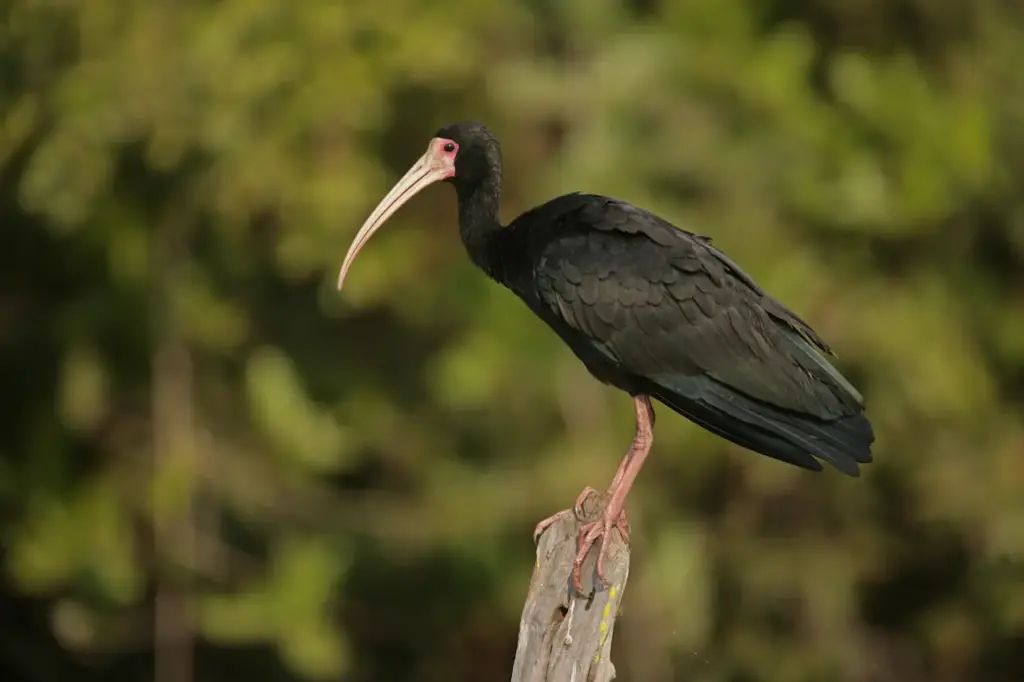
The Bare-faced Ibis is a member of the Threskiornithidae family, which also includes spoonbills and ibises. The genus name Phimosus Infuscatus refers to its restricted or closed-off nostrils. Its species name, Infuscatus, means “darkened”, “dusky”, and describes its mostly black plumage. This species’ facial skin is one of its most distinguishing features. It appears dark to reddish in colour and stands out from other ibises with its feathered face.
The adults are about 45-50 cm (18-20 inches) long and almost completely dark brown or black with a slight greenish or purple sheen when exposed to sunlight. The long bill has a downward curve and is well-suited for probing in soft mud or shallow water for food. The legs of the bare-faced Ibis are reddish and moderately long, which gives them the ability to wade in marshy areas. The Bare-faced Ibis is elegant and graceful in flight, despite its somewhat sombre colouring.






Where can you find bare-faced Ibises?
The geographical range is vast in South America. They are found throughout South America, including Argentina, Bolivia, Brazil, Colombia, Ecuador, Guyana, Paraguay, Suriname, Uruguay and Venezuela. The birds prefer lowland subtropical and tropical areas, but are also found in semi-urban and agricultural environments with intact wetlands.
The rice paddies, drainage ditches and other man-made wetlands are often a good fit for them. They are highly adaptive. They can survive in heavily altered areas due to their adaptability. This makes them a common bird and one that is widely distributed.
Behaviour and Flight Patterns
Bare-faced Ibises can be found in large groups of up to 100 individuals. They are primarily diurnal birds, which means they are most active during the day. One of the most interesting features of their flight is that they tend to fly their necks outstretched. This distinguishes them from herons, which tuck their heads in flight.
They often form a V-formation when they travel long distances, particularly between feeding grounds and nesting grounds. This is not only visually stunning but also aerodynamically effective. It allows the flock to fly over large areas and find food.
Food Habits and Diet
The Diet of the Bare-faced Ibis consists of a variety and is opportunistic. They use their long, curving bills to probe the water for aquatic invertebrates. Prey items include aquatic insects, molluscs and small crustaceans as well as food items that are sifted off the surface of the water.
Their feeding is not restricted to aquatic habitats. They can be seen hunting on land in areas such as grasslands and agricultural areas. They hunt insects and earthworms on land. They also look for skinks, small snakes , and small lizards. The flexible diet allows the lizards to adapt to a variety of habitats, and is also a way to make them more resilient to changes in seasonal food availability.
In some areas, they have been known to search for insects and beetles in the dung of grazing animals, such as cattle. The behaviour of these animals not only shows their intelligence but also how they play a role in controlling the insect population within agricultural settings.
Breeding Behaviour and nesting
The breeding seasons for the Bare-faced Ibis vary across its range. This is usually influenced by rainfall, and food availability. The ibis nests in large colonies and often with other water bird species like herons, Egrets and other ibis. This communal nesting deters predators and increases breeding success by sharing vigilance.
The nests can be found in tree near water bodies such as rivers, lakes, swamps or lakes. The nests are shallow cups constructed from grasses and reeds. They may nest in rocky ledges or on cliffs . This is especially true when trees are scarce. The birds often reuse the same nesting site year after year by adding new material to old nests. According to eBird, this species is well documented.
Both parents incubate the 2-4 eggs. The chicks, after hatching, are altricial. This means that they are born helpless and need extensive parental care. The male and female ibises both take part in and protect the young by regurgitating their food into the chicks’ mouths. After several weeks, young birds can fly. They often remain in their family groups. According to RSPB, this species is well documented.
Vocalisation of the Whispering Ibis
The Bare-faced Ibis can also be called the Ibis Whispering. This name is a reference to its quiet vocalisations. This ibis uses low grunts and low murmurs to communicate, unlike some louder species of birds. They are a mysterious species in the wetlands because of their quiet nature and dark plumage.
They are louder during courtship or nesting when pairs exchange soft vocalisations to strengthen bonds or signal distress. The soft, whispering tones are unique among wetland sounds.
The Ecological Role Of The Bare-Faced Ibis
The importance of the Bare-faced Ibis to the ecosystem cannot be understated. They are predators that control the population of small aquatic animals and insects. This helps maintain the balance in the ecosystems. The foraging activity of these animals also aerates soil and mud. This increases the availability of nutrients to other organisms.
Their presence in agricultural areas can help control pest species and make them valuable allies for farmers. In addition, because they are indicator species, their health and population can be used to gauge the condition of wetland habitats. This makes them an important subject for environmental monitoring.
Conservation Status of a Bird of Least Concern
The Bare-faced Ibis has been classified by the International Union for Conservation of Nature as a species of Low Concern. This status is a reflection of its large distribution and adaptation to both wild and man-modified environments. The Bare-Faced Ibis, like other wetland species, is vulnerable to threats such as pollution and global warming.
In certain areas, ibis populations are at risk from wetland drainage, agricultural runoff pollution, and habitat fragmentation caused by urbanisation. The species is not endangered at this time, but ongoing efforts to protect wetlands, regulate the use of water and promote sustainable land management will be essential for its long-term survival.
Human Interaction with Cultural Meaning
The Bare-faced Ibis is not as mythologically or spiritually significant in South American cultures as some other birds are, but it is still a familiar sight for local communities in rural and agricultural regions. Farmers in some areas appreciate the ibis’ role in pest control. The ibis’ calm behaviour and grouping make it a popular subject for wildlife photographers and birdwatchers. This is especially true in the biodiverse wetlands found in Brazil’s Pantanal and Colombia’s Llanos.
The Bare-faced Ibis is often included in ecotourism initiatives that are focused on Wetland Birding, which helps generate interest for wetland conservation.
Last Thoughts: Beauty in the Bare
The Bare-faced Ibis (Phimosus Infuscatus) may not be as colourful as its tropical counterparts, but it is still remarkable. This species, with its bare-faced bird, glossy plumage and varied diet, represents the strength of wetland birds found in South America. The species’ quiet vocalisations and adaptable behaviours, as well as its ecological role, all contribute to its importance both in natural ecologies and human landscapes.
The Bare-faced Ibis is a bird that reminds us of the importance of wetlands, not just for biodiversity but also for the health and well-being of our entire planet. It is important to protect these peaceful and whispering waders to safeguard our future.