The shelducks, belonging to the genus Tadorna, represent a fascinating group of large waterfowl within the subfamily Tadorninae of the Anatidae family. This family also includes ducks, geese, and swans, encompassing a broad range of waterfowl species. Shelducks are particularly notable for their striking plumage and unique ecological niche, which bridges characteristics typically associated with both ducks and geese. Their semi-terrestrial habits and distinctive behaviors make them a subject of interest for birdwatchers, wildlife photographers, and nature enthusiasts alike.
Scientific Classification
The genus Tadorna is the type genus of the Tadorninae subfamily, which is sometimes colloquially referred to as the shelduck subfamily. The name Tadorna is derived from Celtic roots meaning “pied waterfowl,” a fitting description given the bold, contrasting plumage patterns many species display. Shelducks are taxonomically intriguing as they occupy an intermediate evolutionary position between true ducks (subfamily Anatinae) and geese (subfamily Anserinae), which reflects in both their morphology and behavior.
The genus currently includes seven extant species: the Common Shelduck (Tadorna tadorna), Ruddy Shelduck (Tadorna ferruginea), Australian Shelduck (Tadorna tadornoides), Paradise Shelduck (Tadorna variegata), Cape Shelduck (Tadorna cana), Radjah Shelduck (Tadorna radjah), and the Crested Shelduck (Tadorna cristata), the latter of which is critically endangered and possibly extinct. These birds are closely related to the Egyptian Goose (Alopochen aegyptiaca), and molecular studies suggest that the genus Tadorna may be paraphyletic, meaning that the evolutionary relationships within this group are complex and not fully resolved.





Fossil evidence hints at an even longer lineage, with fossil bones attributed to the genus dating back to the Early Pliocene in Europe. These fossils, such as those from Dorkovo, Bulgaria, underscore the ancient origins of the genus and its historical distribution across the Old World.
Geographic Range & Distribution
Shelducks inhabit a wide geographic range primarily across the Old World, including Europe, Asia, Africa, and Australasia. The Common Shelduck (Tadorna tadorna) has a broad distribution across Europe and western Asia, typically breeding in temperate coastal regions and estuaries. It migrates southward in winter to North Africa and parts of southern Europe. The Ruddy Shelduck (Tadorna ferruginea) has a vast range extending from southeastern Europe across central Asia to the Indian subcontinent and parts of China, favoring freshwater lakes, reservoirs, and river valleys.
In the Southern Hemisphere, the Australian Shelduck (Tadorna tadornoides) is endemic to Australia, commonly found in open wetlands and lakes, while the Paradise Shelduck (Tadorna variegata) is native to New Zealand, where it is one of the most commonly seen waterfowl. The Cape Shelduck (Tadorna cana) is primarily found in southern Africa, favoring coastal lagoons and estuaries. The Radjah Shelduck (Tadorna radjah) inhabits northern Australia and New Guinea, often residing in mangrove swamps and freshwater wetlands.
The habitat preferences of shelducks vary widely but typically include shallow waters, estuaries, mudflats, and grasslands near water bodies. Many species show seasonal movements, relocating between breeding and wintering grounds, and some populations are migratory, such as the Common Shelduck in Europe.
Physical Description
Shelducks are medium to large-sized waterfowl, with body lengths ranging from approximately 50 to 70 centimeters and wingspans between 90 and 110 centimeters, depending on the species. They generally weigh between 1 and 2 kilograms. Their plumage is characterized by bold, contrasting patterns often involving whites, blacks, chestnut, and iridescent greens, which make them quite distinctive in the field.
Sexual dimorphism is present but usually subtle, with males often displaying more vibrant colors or distinctive features, such as the prominent red knob found on the bill of the male Common Shelduck. Females may have duller plumage and lack some ornamental features. A key identification feature in flight is the shelduck’s upperwing pattern: the tertiary remiges form a striking green or iridescent speculum, the secondaries and primaries are typically black, while the coverts are white, creating a striking contrast visible even from a distance.
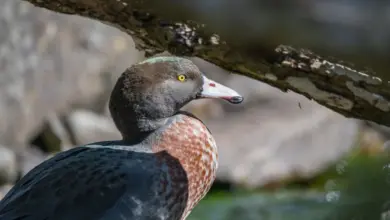
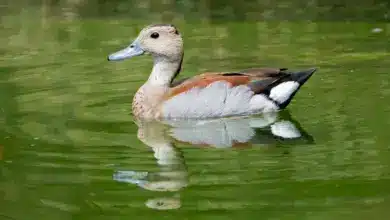
The Ruddy Shelduck is notable for its rich orange-brown body with paler head and neck, while the Australian Shelduck sports a predominantly dark body with white wing patches and chestnut flanks. The Paradise Shelduck is unique with its dimorphic sexes — males are mostly black with white wing patches, and females are chestnut with mottled black. The Crested Shelduck, though rarely seen, is known for a distinctive crest of feathers on its head and a predominantly dark body with white wing bars.
Behavior & Diet
Shelducks are generally semi-terrestrial and often forage on land as well as in water. Their behavior reflects a combination of duck and goose-like traits. They are known to feed by dabbling and grazing, exhibiting a versatile diet that includes both animal and plant matter.
Their diet mainly consists of aquatic invertebrates such as small mollusks, crustaceans (including crabs and shrimps), insect larvae, and other small shore animals. Additionally, shelducks consume a variety of grasses, seeds, and other plant material, which they often graze on land near water bodies. This omnivorous diet allows them to exploit a range of habitats and food sources, contributing to their adaptability.
Shelducks are often seen feeding in shallow waters, mudflats, and along shorelines where they probe for invertebrates, but they will also venture onto grasslands to graze. Some species, such as the Paradise Shelduck, are known to feed extensively on pasture grasses, which occasionally brings them into conflict with farmers due to crop foraging.
Socially, shelducks are typically monogamous during the breeding season and often form small flocks outside of it. They can be territorial when nesting, with males defending their breeding areas vigorously. Their vocalizations vary among species but are generally loud and distinctive, often used in courtship and territorial displays.
Breeding & Reproduction
Shelducks generally nest in burrows, tree cavities, or crevices, often selecting sites that provide protection from predators and harsh weather. Some species, such as the Common Shelduck, frequently use abandoned rabbit burrows or natural holes near water for nesting. Nesting sites tend to be concealed and close to water sources, enabling easy access to feeding areas during the breeding season. According to eBird, this species is well documented.
Breeding seasons vary with geographic location but tend to occur in spring and early summer in temperate regions. Clutch sizes typically range from 8 to 15 eggs, depending on the species. The eggs are pale cream to buff in color, and incubation lasts approximately 28 to 30 days, primarily performed by the female. During incubation, males often guard the territory and protect the nest site from intruders. According to BirdLife International, this species is well documented.
Once hatched, the ducklings are precocial, meaning they are relatively mature and mobile, able to leave the nest shortly after hatching. They are led to water by the parents, where they learn to feed on aquatic invertebrates and plants. Parental care continues for several weeks, with both parents often involved in protecting and guiding the young until they become independent.
Shelduck pairs are generally monogamous for the breeding season, though some species may maintain pair bonds across years. Courtship displays include head-shaking, neck-stretching, and vocalizations, helping to establish pair bonds and territorial claims.
Conservation Status
The conservation status of shelduck species varies, but most are currently classified by the International Union for Conservation of Nature (IUCN) as Least Concern due to their wide distributions and stable populations. For example, the Common Shelduck and Ruddy Shelduck both have large population sizes and extensive ranges, which help buffer them against immediate threats.
However, some species face more precarious situations. The Crested Shelduck (Tadorna cristata) is classified as Critically Endangered and possibly extinct, with no confirmed sightings for several decades. This species’ decline is attributed to habitat loss, hunting, and disturbance. Conservation efforts for this species are challenging due to its elusive nature and the lack of recent confirmed data.
Habitat degradation, pollution, and hunting pose localized threats to shelducks in some parts of their range. Wetland drainage and human encroachment reduce available breeding and feeding habitats, while hunting pressure can impact populations where regulations are lax. Nonetheless, many shelduck populations have adapted well to human-altered landscapes and are commonly found in managed wetlands and protected areas.
Interesting Facts
Shelducks have a rich cultural and ecological significance in many regions. The Common Shelduck is often one of the first waterfowl species to return to northern Europe in spring, heralding the start of the breeding season. Birdwatchers prize their bold plumage and distinctive calls, making them popular subjects for wildlife photography.
The name “shelduck” itself reflects their striking appearance, with “shel” deriving from the Old English word for “pied” or “variegated.” Historically, male shelducks were sometimes called “sheldrakes,” a term that has fallen out of common use but remains in ornithological literature.
Unlike most ducks, which tend to be highly aquatic, shelducks show remarkable adaptability to terrestrial environments, often grazing like geese. This behavioral flexibility helps them survive in diverse habitats ranging from coastal mudflats to inland freshwater lakes and grasslands.
Some shelduck species, such as the Paradise Shelduck in New Zealand, are notable for their strong pair bonds and territorial behavior, aggressively defending their nesting areas from rivals and potential predators. This territoriality is often accompanied by loud, honking calls and distinctive posturing displays.
Finally, the fossil record shows that shelducks have a long evolutionary history, with relatives existing millions of years ago. This deep lineage highlights their successful adaptation to changing environments over geological timescales.
Overall, shelducks are a compelling example of waterfowl diversity, blending characteristics of ducks and geese with unique behaviors and striking appearances. Their widespread distribution and ecological versatility make them a valuable species group for studying avian adaptation and wetland ecosystem dynamics.
For nature enthusiasts and birdwatchers, encountering shelducks in the wild offers an opportunity to observe the fascinating interplay of form, function, and behavior in waterfowl, enriching our understanding of the natural world.