Taxonomy of the Cape Shelduck
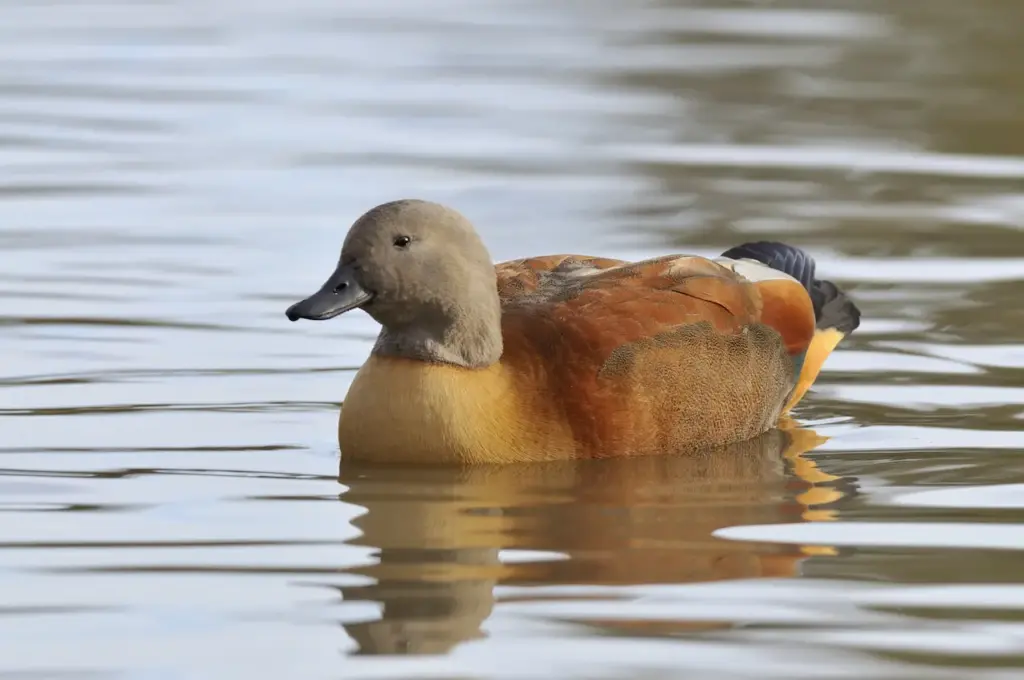
The name of the genus “Tadorna” is derived from ancient Celtic origins and means “pied waterfowl.” It’s a fitting name, given that shelducks have a strikingly contrasted colouration which makes them stand out from other dabbling ducks. In English, the term “Shelduck”, also known as shelled or patchy appearance, is used to describe their patterning. This often involves a combination of chestnut, white and black with metallic green. The Cape Shelduck (scientifically known as Tadorna Cana) is a great example of this patterning. It has rich rusty colours, crisp white markings and iridescent secondary feathers.
Physical Description and Sexual Dimorphism
The Cape Shelduck measures around 64 cm in length. The Cape Shelduck has a striking appearance. The adult female has a chestnut-red body and a black tail. Its head is a distinctive pale grey. The female has a white face and a black crown. She also sports black streaks along her neck and nape. Both sexes have a white patch on their upper wings. This contrasts with the black flight feathers and the flash of Metallic green along the speculum.
The birds have long, straight legs and webbed feet. They also possess a broad bill with a slight serration that helps them filter out food from water or mud. This trait is common among the Anatidae.
Habitat and Distribution: Where do Cape Shelducks live?
Cape Shelducks inhabit Southern Africa. They are found most often in Namibia and South Africa. They are found in open terrains, including semi-arid scrublands and coastal lagunas. They prefer freshwater dams, rivers and Reservoirs. This is especially true in open countryside with little or no tree cover.
Many Cape Shelducks migrate short distances during the Southern Hemisphere Winter months. The Cape Shelducks tend to disperse northward to reach favourable moulting grounds. They often gather large flocks of birds on shallow inland waters. These moulting grounds can be home to hundreds, or even thousands, of individuals forming a vibrant seasonal community.
The Cape Shelduck uses abandoned aardvark nests to nest. This adaptation is unique and provides nesting areas that are well-insulated, safe, and protected against predators.

Cape Shelduck Breeding Behaviour and Reproduction
Cape Shelducks begin breeding in the late winter or early spring. (Depending on where they live, this can be from July to November). The pair bonds of these birds can last several breeding seasons.
Nests can be found away from water (as is the case with other shelducks) and are usually located in burrows. These are often reused from porcupines or even old Fox dens. Nesting cavities are lined with down and feathers to keep the eggs warm.
Breeding Details
- Clutch size: 8-12 eggs (occasionally even more).
- Incubation period: approximately 30 days
- Parental care: The Female incubates while the male guards the territory.
- The chicks were born with down feathers, and they are ready to go foraging with their parents in just a few hours after hatching.
Cape Shelduck chicks rely more on parental guidance than direct feeding. The increased survival rate is due to their early independence.
Feeding and Diet of Cape Shelducks
The Cape Shelduck is an omnivore. It feeds on a variety of plant and animal matter. Its versatility allows it to thrive in permanent and temporary bodies of water.
Natural Diet Includes:
- Aquatic larvae, pupae and insects (such as midges and mosquitoes).
- Crustaceans, such as snails and small crabs
- Small fish
- Aquatic plants’ seeds and roots
- Algae, pondweed
- Worms and other terrestrial invertebrates that are not common
Cape Shelducks often bob and weave through shallow water to reach insects and submerged vegetation. Their serrated bills are like filters that allow them to effectively sift water and mud. According to RSPB, this species is well documented.
Cape Shelducks in captive environments can be fed Duck pellets and grains. They should also be given greens. According to Audubon Society, this species is well documented.
Due to their diet, they are able to play an important role in pest control by consuming harmful insects that can harm lawns and gardens.
Dos and Don’ts of Feeding Cape Shelducks
While the intent is noble, this practice often leads to unintended damage. Ducks may be attracted to foods like crackers, popcorn and chips, but they can cause serious harm to their health and the ecosystem.
Why Bread is bad for Ducks:
- Malnutrition causes
- Leads to Angel Wing Deformities
- Encourages aggression and overcrowding
- Water polluted with decaying food and harmful algal blooms
Check local wildlife laws before feeding ducks. Many protected areas prohibit feeding ducks in order to protect native species.
Foods that are safe to feed ducks (if allowed):
- Cracked corn
- Rolling oats
- Chopped greens (lettuce, kale, spinach)
- Frozen peas that have been defrosted
- Brown rice cooked
- Duck pellets are available commercially.
Feed sparingly away from busy playgrounds or walking trails to reduce bird-human conflicts and create a safe environment.

Conservation Status for the Cape Shelduck
IUCN Red List currently classifies the Cape Shelduck as a species Less Concern. This is due to a stable population in South Africa, where the species has adapted well to altered landscapes like farm dams and artificial reservoirs.
Cape Shelducks, like other waterfowl species, are vulnerable to:
- Habitat destruction
- Climate Change (altering rain patterns and wetland accessibility)
- Illegal Hunting or Egg Collection
- Disturbance in breeding or moulting areas
Fortunately, the species has been protected by the Agreement on the Conservation of African-Eurasian Migratory Waterbirds, which promotes international cooperation in the conservation of migratory birds and their habitats.
Cape Shelduck and Local Culture
The Cape Shelduck can be seen in South Africa and Namibia by birdwatchers as well as wildlife photographers. They are a delight to watch in the wild because of their striking plumage and bold personalities. During the moulting period, large flocks gather in traditional locations, creating spectacular scenes which attract eco-tourists from all over the world.
These species are also important indicators. Their presence (or lack thereof) in certain locations can give clues as to the health of wetlands and water quality.
Final Thoughts
Cape Shelduck represents the rich natural heritage of Southern Africa. The Cape Shelduck’s social behaviour, unique nesting strategy, and appearance make it a fascinating species. Cape Shelduck is a species that deserves protection and recognition for its ecological value, role in pest management, or visual beauty.
You can learn more about this species by practising responsible wildlife feeding and ethical wildlife observations.
We can ensure that future generations will continue to see these magnificent birds flourishing in the wild. The Cape Shelduck is a dynamic ambassador for Africa’s wild waters, from the Karoo’s open velds to the calm dams in the Cape.