The Common Shelduck (Tadorna tadorna) is a striking and distinctive waterfowl species widely recognized across Europe and parts of Asia. Belonging to the shelduck group, these birds combine the elegance of geese with the adaptability of ducks, inhabiting coastal wetlands, estuaries, and inland waterways. Their bold coloration, robust size, and unique behaviors make them a favorite among birdwatchers and nature enthusiasts. This article offers an in-depth exploration of the Common Shelduck, covering its taxonomy, distribution, physical traits, behavior, reproduction, conservation status, and some fascinating facts that highlight its role in the ecosystem.
Scientific Classification
The Common Shelduck is classified within the family Anatidae, which includes ducks, geese, and swans. Its full scientific name is Tadorna tadorna. The genus Tadorna derives from a Celtic word thought to mean “pied waterfowl,” a fitting description given the shelduck’s striking black, white, and chestnut plumage. First formally described by Carl Linnaeus in 1758, the species is part of the subfamily Tadorninae, which groups several shelduck and sheldgoose species known for their semi-terrestrial habits and often bold coloration.
Within the species, no widely recognized subspecies exist, although minor geographic variation in plumage and size has been noted across its broad range. The Common Shelduck is sometimes confused with other shelduck species, such as the Ruddy Shelduck (Tadorna ferruginea), but its distinctive coloration and behavior help birdwatchers differentiate it in the field. The species’ evolutionary adaptations place it as a versatile waterfowl, capable of thriving in both marine and freshwater environments.





Geographic Range & Distribution
The Common Shelduck is primarily found across much of temperate Europe and parts of Asia. Its range extends from the British Isles and western Europe eastward through central and northern Europe, reaching as far as western Siberia and parts of Central Asia. In Europe, it is especially abundant along coastal regions, estuaries, and tidal mudflats, with significant populations in the Wadden Sea region spanning the coasts of the Netherlands, Germany, and Denmark.
In western Europe, many Common Shelducks are resident or only undertake short-distance movements, often relocating seasonally to preferred molting and wintering grounds. After the breeding season, large congregations gather in estuarine areas, such as the Wadden Sea, where numbers can exceed 100,000 individuals. Conversely, populations breeding in more continental and temperate zones of Eurasia typically migrate southward or southwestward to milder coastal areas during winter, including parts of the Mediterranean basin and the Black Sea coasts.
During the summer months, Common Shelducks frequent inland freshwater habitats such as lakes, rivers, and open country wetlands for breeding. They are highly adaptable, nesting in a variety of locations including rabbit burrows, tree cavities, haystacks, and sometimes abandoned buildings. In winter, their preference shifts toward coastal estuaries, salt marshes, and tidal flats where they forage intensively. This distribution pattern demonstrates their ecological flexibility, balancing inland breeding with coastal wintering.
Physical Description
The Common Shelduck is a large, robust duck with a distinctive and colorful plumage that makes it easy to identify. Adults measure approximately 58 to 67 centimeters (23 to 26 inches) in length, with a wingspan ranging from 110 to 133 centimeters (43 to 52 inches). They typically weigh between 1 and 1.5 kilograms (2.2 to 3.3 pounds), making them noticeably larger than many dabbling ducks.
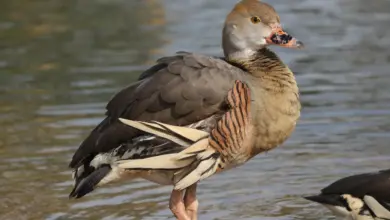
One of the most striking features is their bold coloration. The body plumage is predominantly white, contrasted by a rich chestnut or reddish-brown band across the breast and flanks. The head and neck are glossy dark green or iridescent black, creating a sharp contrast with the white body. The wings display a distinctive pattern with white coverts and black flight feathers, visible in flight.
Males and females appear quite similar, although females tend to have slightly duller tones and lack the prominent bill knob. Breeding males develop a distinct, bulbous red knob at the base of their bright red bill, which becomes more pronounced during the mating season. This feature plays a role in sexual display and mate attraction. Juvenile birds are duller in coloration, with less contrast and a smaller bill, gradually acquiring adult plumage as they mature.
Behavior & Diet
The Common Shelduck exhibits a range of fascinating behaviors adapted to its coastal and freshwater habitats. It is generally gregarious outside the breeding season, often forming large flocks during molting and wintering. These flocks can be noisy, with loud honking calls that serve for communication within groups and to signal alarm.
In terms of feeding, the Common Shelduck is a versatile omnivore, foraging both on land and in shallow water. Its diet primarily consists of a variety of aquatic invertebrates, including insect larvae, mollusks such as snails and small bivalves, and crustaceans like crabs. It also consumes plant material such as seeds, roots, and occasionally small fish or amphibians. The shelduck’s strong bill is well-adapted for dabbling and probing into mud or sand to uncover hidden prey.
During feeding, these ducks often forage by upending or dabbling in shallow waters, but they can also graze on grassy areas near water bodies. When threatened, adult shelducks typically take flight to distract predators, while young birds dive underwater to escape danger. Their loud honking calls often accompany flight and social interactions, adding to their distinctive presence in their habitats. According to BirdLife International, this species is well documented.
Breeding & Reproduction
The breeding season for the Common Shelduck begins in early spring and extends into early summer. These ducks are monogamous during the breeding season, with pairs defending nesting territories. Nesting sites are remarkably varied, reflecting the species’ adaptability. They commonly use burrows dug by rabbits or other animals, tree cavities, hollow logs, or man-made structures such as old buildings and haystacks. According to Cornell Lab of Ornithology, this species is well documented.
Females lay clutches of approximately 8 to 15 creamy white eggs, which they incubate for about 28 to 30 days. During this period, the male often remains nearby to guard the territory. After hatching, ducklings are precocial and leave the nest quickly, following the female to nearby water where they begin feeding on small invertebrates and plant matter.
Parental care continues for several weeks post-hatching, with the young remaining together in family groups. Juveniles fledge at around 8 to 10 weeks old, learning to fly and forage independently before the onset of migration or seasonal dispersal. The species’ success in breeding is partly due to its flexibility in nesting site selection and its ability to exploit diverse habitats.
Conservation Status
The Common Shelduck is currently classified as Least Concern by the International Union for Conservation of Nature (IUCN). This status reflects its large, stable population and wide distribution across Europe and Asia. Estimates suggest the global population numbers in the hundreds of thousands, with key strongholds in western Europe, especially in the Wadden Sea area, which supports significant post-breeding aggregations.
Despite its overall stable status, the Common Shelduck faces some localized threats. Habitat loss due to coastal development, pollution, and disturbance from human activity can impact breeding and feeding grounds. Additionally, changes in estuarine ecosystems, such as those caused by climate change or water management, may alter the availability of key food resources.
Conservation efforts for the species often focus on protecting important wetland habitats and maintaining the ecological integrity of coastal and estuarine areas. International agreements like the Ramsar Convention on Wetlands contribute to safeguarding vital stopover and wintering sites. Their adaptability and broad range help buffer the species against many threats, but ongoing habitat protection remains critical to ensure long-term population health.
Interesting Facts
One of the most intriguing aspects of the Common Shelduck is its choice of nesting sites. Unlike many ducks that nest close to water, shelducks often use terrestrial burrows or cavities, a behavior more common in some geese. This strategy helps protect eggs and young from flooding and many aquatic predators but requires access to suitable burrow sites.
The species has a distinctive flight style, often flying in loose formations accompanied by loud, honking calls. This vocalization serves both social and defensive purposes, making the shelduck’s presence known across its habitats. Its bold plumage and striking size also make it a favorite subject for wildlife photographers aiming to capture vibrant coastal birdlife.
Another notable behavior is the species’ reaction to predators. While adult shelducks take to the air to distract threats, ducklings utilize diving as an escape tactic, disappearing underwater to evade capture. This dual strategy helps improve survival rates among offspring in predator-rich environments.
Finally, the Common Shelduck has cultural significance in some regions, featuring in folklore and local traditions along European coasts. Its presence often signals healthy coastal ecosystems, and its migratory movements mark seasonal changes for birdwatchers and naturalists alike.
Conclusion
The Common Shelduck (Tadorna tadorna) stands out as a remarkable waterfowl species combining striking appearance, ecological adaptability, and engaging behavior. Its widespread distribution across Europe and Asia, coupled with its flexible nesting and feeding habits, underscores its resilience in diverse environments. While generally common and not currently threatened, ongoing conservation of coastal wetlands and estuaries remains vital to support its populations amidst changing landscapes. For birdwatchers, photographers, and nature lovers, encountering the Common Shelduck offers a glimpse into the dynamic life of coastal ecosystems and the intricate balance of wetland biodiversity.