This 22-25 cm bird is a resident breeder in dry, open and often hilly country. When disturbed, See-see Partridge prefers to run rather than fly, but if necessary, it flies a short distance on rounded wings.


Identification
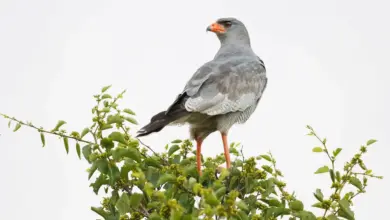
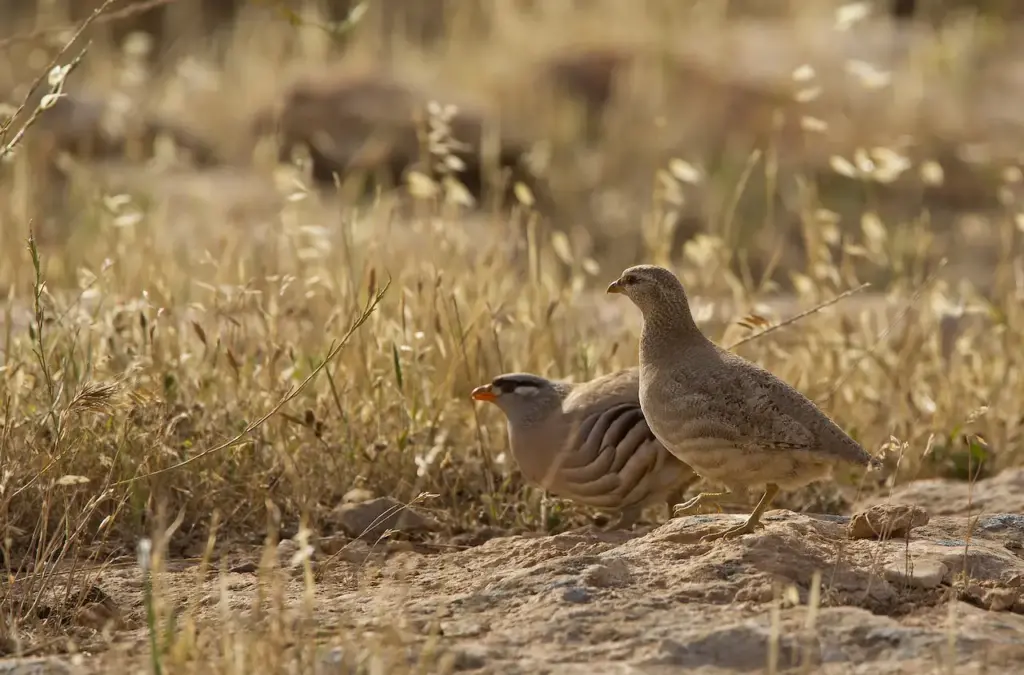
The See-see Partridge, a small ground-dwelling parrot, is known for its beauty and charm. The males have a soft grey head with a black stripe that runs through the eye, and a white cheek patch, giving them an imposing, mask-like appearance. The neck sides are lightly speckled in white to give them a crisp look. Birdwatchers use this bold pattern on the head to differentiate the See-see Partridge (which lacks the same contrast) from the Sand Partridge. The females are much more subdued. The females have a dustier, paler version of male plumage. They also lack the sharp facial markings. This makes them more difficult to identify.
The See-see Partridge is not as colourful as other species of partridges, but it has a subtle elegance that fits its arid environment. The sandy-grey tones and buff hues blend in perfectly with the dry landscapes. This makes them a great camouflage for predators. A keen eye and patience are essential for those who wish to observe these birds in the wild.
Habitat and distribution
Birds of open, dry country are the See-see Partridges. Most often, they are found in rocky terrain with a lot of sparse vegetation. These little birds can survive in arid climates, where water can be scarce and the terrain is harsh. They prefer sun-baked hillsides, scrubby valleys and semi-desert areas over dense forests or wetlands. They are fascinating to wildlife and bird watchers because of their ability to survive.
Geographically, the See-see Partridge is native to Central Asia and parts of the Middle East. Their range extends across Syria, Iraq and east through Iran to Pakistan. They are not a partridge species that one would see in Australia, but they show how they have adapted to various environments around the world. They are also culturally and environmentally significant in many countries with dry, rocky habitats.
Physical Description:
See-see Partridges are a sandy-brown rotund pheasant with wavy white and brown flank stripes. It’s about 22 to 25 cm long.
The male has a grey head with a black stripe through the eye and a white cheek patch. His neck is speckled with white. The head pattern is the best distinction from the Sand Partridge.
The female is a very washed-out version of the male and is more difficult to distinguish from its relative due to the weak head pattern.
Behaviour
The See-see Partridge is a shy bird that can be difficult to find in the wild. They are well camouflaged and generally quiet. They are often seen in pairs or small groups of two and four birds, particularly outside of the breeding season. They can form large flocks, sometimes up to fifty birds, in places with plenty of food and cover. These partridges prefer to run when startled rather than fly. They dart quickly through rocks and shrubs, displaying surprising agility. When threatened, partridges will fly in an explosive burst using their rounded wing tips. However, they do not stay airborne long. According to eBird, this species is well documented.
It is this behaviour that makes them so fascinating to watch – quiet, quick and alert. This running behaviour helps them to stay low and concealed, and also reminds us of their adaptability to the terrain. When you are watching at a distance, watch for quick, sudden movements on the ground, rather than waiting to see if they take flight. According to Cornell Lab of Ornithology, this species is well documented.
Nesting / Breeding:
The See-see Partridge nests on the ground, and its nesting strategy can be simple yet effective. The female makes a shallow scrape on the ground, which is sometimes lightly lined with grass or plant matter, and then lays 8-16 eggs. This nest is essential in dry and exposed environments because it helps to camouflage the eggs.
The breeding season of birds is usually synchronised with the local weather, and often takes advantage of milder temperatures and food availability. This is the time when the birds are more vocal and active. It’s also the best time to observe the social interaction of the birds.
Diet:
The See-see Partridge’s diet is practical and diverse, reflecting its desert lifestyle. The birds eat a lot of seeds in their habitats. They also eat insects and other small invertebrates. These snacks, which are high in protein, are particularly important during the breeding season when birds require extra energy.
Feeding usually occurs in cooler times of the day, such as the early morning or the late afternoon. Foraging involves them pecking the ground and turning over stones or leaves to find food. Birders can enjoy watching a group feed, as it gives them an insight into the social dynamics and natural rhythms of these birds.
Song:
The song is a whistled hwit-hwit-hwit.
Its call is simple, but distinct and can be used to identify it in the wild. The song of the See-see Partridge is a whistled, soft “hwithwithwit” that can be heard early in the morning or late at night. This whistle, while not as complex as some of the other calls made by game birds, is still quite distinctive and can help birdwatchers locate the bird–especially if it is hiding behind rocks or low shrubs.
It is just as important to listen for their calls as it is to spot them visually. Anyone interested in bird photography or sound identification will find this vocal cue useful in finding these otherwise elusive species.
Species Research by Sibylle Johnson
Please Note: The articles or images on this page are the sole property of the authors or photographers. Please contact them directly with respect to any copyright or licensing questions. Thank you.