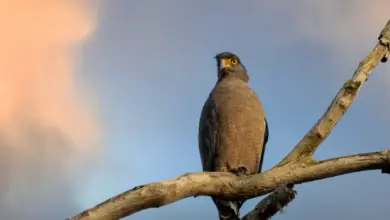
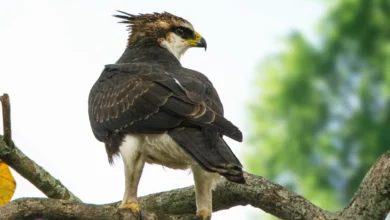
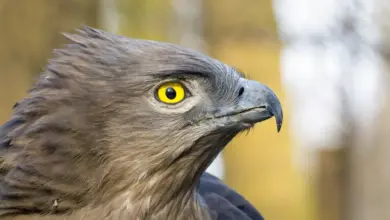
Sea eagles, often referred to as ernes or erns, represent a fascinating group of large birds of prey belonging to the genus Haliaeetus within the family Accipitridae. These powerful raptors are renowned for their remarkable adaptations to aquatic environments, possessing impressive fishing skills and commanding presence across coastlines, lakes, and river systems. Sea eagles have captivated birdwatchers, naturalists, and wildlife photographers alike due to their striking appearance, impressive size, and important role as apex predators in their habitats. This article delves deeply into the natural history, biology, and conservation of sea eagles, offering a comprehensive understanding of these majestic birds.
Scientific Classification
The genus Haliaeetus is part of the family Accipitridae, which encompasses hawks, eagles, kites, and other diurnal birds of prey. The name Haliaeetus derives from Greek roots meaning “sea eagle,” aptly reflecting the genus’s close association with aquatic environments. This genus is one of the oldest known groups of living birds, with fossil evidence suggesting its presence since the early Oligocene epoch, approximately 33 million years ago. A notable fossil, a distal left tarsometatarsus (DPC 1652) from the Jebel Qatrani Formation in Egypt, shows remarkable similarity to modern sea eagles, indicating a long-standing lineage specialized for fishing and coastal living.
Within Haliaeetus, there are currently eight recognized extant species: the White-bellied Sea-eagle (H. leucogaster), Sanford’s Sea-eagle (H. sanfordi), African Fish-eagle (H. vocifer), Madagascar Fish-eagle (H. vociferoides), Pallas’s Fish-eagle (H. leucoryphus), White-tailed Eagle (H. albicilla), Bald Eagle (H. leucocephalus), and Steller’s Sea-eagle (H. pelagicus).


Phylogenetic studies show that sea eagles are closely related to the fishing eagles of the genus Ichthyophaga, sharing many ecological and morphological traits. Historically, sea eagles were considered closer to kites (Milvus) than to true eagles (Aquila) due to similarities in morphology and display behavior. However, modern genetic analyses have revealed a more complex relationship, indicating affinities with buzzards (Buteo) as well. The family Accipitridae itself is vast and diverse, making the precise evolutionary relationships an ongoing subject of research.
Geographic Range & Distribution
Sea eagles have a broad but patchy distribution, primarily inhabiting coastal regions, large lakes, and major river systems across the globe. Their range spans multiple continents, including Asia, Africa, Australia, Europe, and North America. The genus likely originated around the Bay of Bengal region, with the four tropical and Southern Hemisphere subtropical species—White-bellied, Sanford’s, African, and Madagascar Fish-eagles—concentrated around the Indian Ocean basin.
The White-tailed Eagle, the largest eagle in Europe, occupies a vast range extending from Scandinavia and Eastern Europe through northern Asia to the Pacific coast. The Bald Eagle, North America’s iconic sea eagle, inhabits much of Canada, the United States, and northern Mexico, favoring lakes, rivers, and coastal shorelines. Steller’s Sea-eagle, the largest of the genus, is found primarily in northeastern Asia, especially along the coasts of Russia’s Kamchatka Peninsula and northern Japan.
Other species such as Pallas’s Fish-eagle inhabit inland freshwater environments in Central Asia, including countries like Kazakhstan, Mongolia, and parts of Russia. Sanford’s Sea-eagle is endemic to the Solomon Islands, while the Madagascar Fish-eagle is critically endangered and restricted to a few coastal forested lakes in Madagascar. African Fish-eagles range widely across sub-Saharan Africa, favoring large bodies of freshwater and coastal lagoons.
Physical Description
Sea eagles are among the largest raptors in the world, exhibiting considerable variation in size across species. Their wingspans range from approximately 1.8 meters (5.9 feet) in smaller species like Sanford’s Sea-eagle to an impressive 2.5 meters (8.2 feet) or more in the enormous Steller’s Sea-eagle. Weight varies correspondingly, with Sanford’s Sea-eagle averaging between 2 to 2.7 kilograms (4.4 to 6 pounds), while Steller’s Sea-eagle can weigh up to 9 kilograms (20 pounds), making it one of the heaviest eagles globally.
The White-tailed Eagle typically weighs up to 6.9 kilograms (15.2 pounds) and can reach a wingspan of around 2.3 meters (7.5 feet). The Bald Eagle, known for its distinctive white head and tail contrasting with a dark brown body, weighs up to 6.3 kilograms (14 pounds) and has a wingspan similar to the White-tailed Eagle. The White-bellied Sea-eagle is slightly smaller, weighing up to 3.4 kilograms (7.5 pounds).
Adult sea eagles exhibit striking plumage patterns, often with contrasting white and dark brown or tan feathers. Several species show distinctive white tails in adults, such as the White-tailed, Bald, and Steller’s Sea-eagles, while others like Sanford’s, White-bellied, and Pallas’s retain darker or mottled tails. Their powerful, hooked yellow bills and large talons are well-adapted for catching and holding slippery fish, their primary prey.
Behavior & Diet
Sea eagles are apex predators primarily associated with aquatic habitats, where they exploit a diet dominated by fish. Their hunting technique involves soaring over water bodies, using keen eyesight to spot prey beneath the surface. Once a target is located, they swoop down, extending their massive talons to snatch fish near the water’s surface. Some species also hunt birds, small mammals, and carrion, displaying opportunistic feeding behavior when fish are scarce.
Their fishing strategy is highly efficient and specialized. For instance, Steller’s Sea-eagle is known to prey on large salmon and other substantial fish species during spawning runs in northern rivers. The African Fish-eagle frequently feeds on tilapia and catfish, while the Madagascar Fish-eagle supplements its diet with waterbirds and reptiles due to limited fish availability.
Sea eagles are solitary or territorial hunters, often seen perched near water bodies, scanning for potential prey. They are powerful fliers, capable of soaring long distances with slow, deliberate wingbeats. Many species exhibit impressive aerial displays during courtship and territorial defense, including dramatic dives and talon grappling.
Breeding & Reproduction
Sea eagles are monogamous birds, typically forming long-lasting pair bonds that may persist for several breeding seasons or even a lifetime. They build large nests, called eyries, in tall trees or on cliff ledges near water. These nests are constructed from sticks and lined with softer materials such as moss, grass, or leaves. Over years, pairs often reuse and enlarge the same nest, resulting in enormous structures that can reach several meters in diameter. According to Cornell Lab of Ornithology, this species is well documented.
The breeding season varies geographically but generally occurs during periods of increased food availability. Females usually lay between one and three eggs, which are incubated for approximately 35 to 45 days depending on the species. Both parents share incubation duties and are highly protective of their eggs and chicks. According to RSPB, this species is well documented.
Chicks hatch asynchronously, often resulting in size hierarchies within broods that influence survival rates. The young remain in the nest for up to three months, during which time parents provide frequent feeding and protection. Juvenile sea eagles exhibit mottled plumage that gradually transitions to adult coloration over several years. Sexual maturity is typically reached between four and five years of age.
Conservation Status
The conservation status of sea eagles varies considerably across species, reflecting differences in habitat range, human impact, and population trends. The International Union for Conservation of Nature (IUCN) currently lists most sea eagle species as Least Concern, thanks to stable or recovering populations supported by legal protections and habitat conservation.
Notably, the Madagascar Fish-eagle is classified as Critically Endangered due to its extremely limited range, habitat degradation, and hunting pressure. Only a few dozen mature individuals are believed to remain, prompting ongoing conservation efforts focused on habitat preservation and anti-poaching measures. Similarly, the Sanford’s Sea-eagle, restricted to the Solomon Islands, faces threats from deforestation and habitat disturbance.
The White-tailed Eagle experienced severe declines in Europe during the 20th century due to persecution, habitat loss, and pesticide poisoning (notably DDT). However, reintroduction programs and legal protection have enabled significant population recoveries in countries like Scotland, Norway, and Germany. The Bald Eagle in North America has also rebounded remarkably following the banning of DDT and other conservation initiatives, with current populations numbering in the tens of thousands.
Despite these positive trends, sea eagles remain vulnerable to threats such as habitat destruction, pollution, human disturbance, and climate change. Continued monitoring, habitat protection, and environmental education are essential to ensure their long-term survival.
Interesting Facts
Sea eagles are sometimes colloquially called “ern” or “erne,” particularly in Europe, a name derived from Old English. Their impressive wingspans and powerful flight make them a favorite subject for wildlife photographers and bird enthusiasts. The Bald Eagle, the national bird and symbol of the United States, is a sea eagle, highlighting the importance of this group culturally as well as ecologically.
One of the largest and most impressive members, the Steller’s Sea-eagle, is known for its massive yellow beak, which can measure up to 10 centimeters (4 inches) in length. This species is a striking example of sexual dimorphism, with females generally larger and heavier than males.
Sea eagles have a complex vocal repertoire used for communication between mates and territorial displays. Their calls are often described as loud, piercing whistles or high-pitched cries, audible over great distances.
Interestingly, the genus Haliaeetus shows a fascinating pattern of plumage coloration, with some species exhibiting white heads and tails in adults while others retain more uniform coloration. This variation is thought to be linked to ecological adaptations and evolutionary history.
Sea eagles have been observed kleptoparasitizing—stealing prey from other birds—as well as scavenging, demonstrating behavioral flexibility in their feeding strategies. This adaptability helps them survive in diverse and changing environments.
In conclusion, sea eagles are remarkable birds that embody the power and beauty of avian predators adapted to aquatic life. From the vast coastlines of Europe and North America to the tropical lakes of Africa and Asia, these eagles captivate the imagination and play vital roles in maintaining healthy ecosystems. Continued study and conservation of these magnificent raptors are crucial for preserving their legacy for future generations of nature lovers and wildlife enthusiasts.