The Reunion Kestrel was once a bird of prey that inhabited the isolated Mascarene Island of Reunion, in the Indian Ocean. It is one of those extinct birds that are the least known and yet the most fascinating. This species was part of an island kestrel radiation that played a major ecological role until it disappeared around the year of 1700. Scientists have compiled a detailed picture of this species despite the fact that no living individuals are left, and there are no illustrations from today. They used subfossilized remains, historical accounts and comparisons to kestrels found on nearby islands, such as Mauritius. This fascinating portrait shows a forest-dwelling island raptor with unique evolutionary traits, and sheds light on the fragility of isolated ecosystems. This comprehensive overview examines its appearance, habitat and feeding habits, as well as historical documentation. It also explores the mystery surrounding its extinction.
The Reunion Kestrel’s Place within the Mascarene Ecosystem
The Reunion Kestrel was part of the Western Indian Ocean Radiation of Kestrels. This remarkable evolutionary lineage included the Mauritius Kestrel and Seychelles Kestrel, as well as other species specific to that region. The Reunion Kestrel is no exception. Island ecosystems force species to adapt in a different way than their mainland counterparts. The Reunion Kestrel, which lives on the volcanic island of Reunion, a place with rugged mountains, dense forest and unique microclimates, developed traits that allow it to maneuver through the forested environment, rather than the plains of the continental falcons. This kestrel, as an apex predator or near-apex predator on an island that had limited native mammals, would have played a crucial role in managing insect and bird populations long before humans settled.
Reconstruction of the Species Based on Historic Evidence
The Reunion Kestrel is largely known from two primary sources. subfossil bone discovered on the island, and the writings of naturalist and traveller Sieur Dubois, published in 1674. Dubois’s accounts offer rare first-hand descriptions of Reunion’s wildlife before extensive human colonisation. Combining skeletal evidence with comparisons to closely related kestrels, such as the Mauritius Kestrel Falco Punctatus, a fairly detailed reconstruction of the birds emerges. These sources show that the Reunion Kestrel is larger than the Mauritius species, and similar in size to the Common Kestrel. This provides valuable insights into how island isolation shaped the evolution of the bird. Researchers can infer anything from the colouration of plumage to hunting behaviours, creating a vivid picture of a long-lost bird.


Description and Size of the Reunion Kestrel
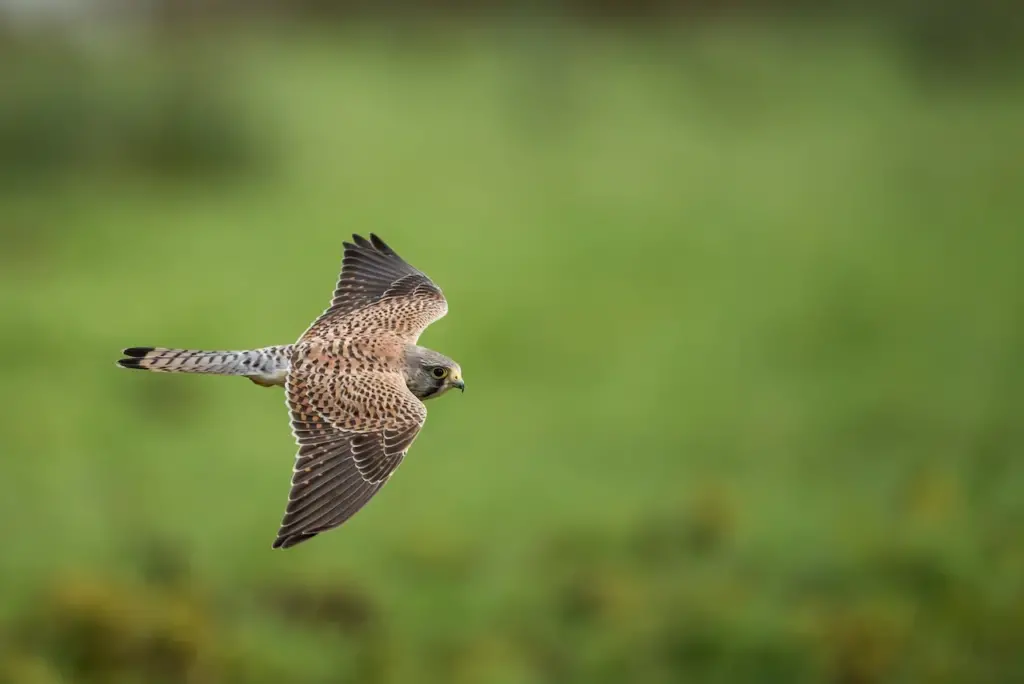
The Reunion Kestrel was about 35 centimetres long. It is a medium-sized kestrel, but it is noticeably bigger than its Mauritius relative. It exhibited Sexual Dimorphism like most birds of prey. Females were larger than males, a common evolutionary strategy to reduce competition between sexes through slightly different prey preferences. Scientists infer the colouration of this bird from its living relatives. The kestrel’s colouring was probably brownish on top with a lighter underneath and decorated with dark spots or stippling. The tail of the kestrel, which was probably grey or brown with dark bands and a black tip, would have been camouflaged in dense vegetation. The kestrel had large, yellow feet that were ideal for grabbing prey. It also had a 60-70 cm wingspan and a rounded wing. This adaptation provided agility in forests, rather than speed.
Adaptations to Forest Hunting
The Reunion Kestrel’s rounded wings suggest that the bird is more suited to close-range, maneuverable hunting than to long-range pursuits. The Mauritius Kestrel is known to hunt in densely vegetated habitats. The rounded wings of a predator are important because they allow for rapid changes in direction, which is essential when navigating dense forests to hunt small birds, insects or reptiles. These adaptations show a predator that is perfectly attuned to its environment. This contrasts with many falcons on the continent, which have long, pointed wingtips designed for aerial attacks. This morphological divergence shows how island species evolve along distinct ecological pathways from mainland relatives.
Feeding and Diet of the Reunion Kestrel
According to historical records and anatomical evidence, the Reunion Kestrel ate mainly small birds that were plentiful in the forest of the island before widespread human disturbance. Its diet was not solely avian. The kestrel preyed upon insects as well as the native geckos of the island, taking advantage of the diversity in prey available in tropical ecosystems. Dubois noted that the kestrels were able to prey on domestic chickens despite their small size. This was a sign of strength and confidence in their predatory abilities. This behaviour may have contributed to colonists’ negative impressions of the bird. It could also have affected human interactions with this species in its last years.
Misidentification and Naming Confusion
Due to ambiguous historical names, the extinction of the Reunion Kestrel has been complicated. Dubois, in the early 1670s, reported 3 types of prey found on Reunion.
The marsh harrier is still alive today. According to RSPB, this species is well documented.
Yellow-footed Pieds According to eBird, this species is well documented.
Emerillons – a term that is used to describe small falcons such as the Merlin
Researchers are unsure which name specifically refers to the Reunion Kestrel. Most researchers agree that the kestrel was the emerillon. Pieds jaunes could have been referring to either migrating falcons or young marsh harriers. This explanation seems most likely, given that in the 19th Century similar terminology referred to young harriers. Some speculate that the male and female Reunion Kestrels may have been different colored. This could explain why there are two names, though the evidence is minimal.
The Mysterious Extinction of a Species
It appears that the Reunion Kestrel disappeared around 170 or at least three decades after Dubois made his observations. Uncertain is the cause of this island’s extinction, unlike many other later island extinctions. Island raptors are usually preyed upon by introduced predators, such as rats, cats, and mongooses. However, in the early 1800s, these invasive species weren’t yet prevalent on Reunion. At that time, rats, which are often blamed as the cause of the decline in island birds, probably had a limited impact. The hunt and persecution of poultry might have been a factor, but this is not enough, given that the Marsh Harrier, a species that has endured centuries of persecution, survived continuously on the island. It is a mystery why the Reunion Kestrel disappeared, just as the Reunion Owl did. This raises questions about the environment, diseases, or accidents that occurred after humans arrived.
The Impact of Human Arrival on the Ecosystem
Even though invasive predators weren’t yet prevalent on Reunion in 1700, there was significant ecological disturbance during the colonisation period. Even a minimal amount of human activity, such as fires, deforestation and the introduction of livestock, could have affected prey availability, nesting habitats, and stressed a specialised bird. It is possible that domestic animals, such as chickens, replaced native prey. This would have altered the kestrel’s natural behaviour. It is also possible that early colonists, mistaking the kestrel for a threat to poultry, deliberately drove it from settlements. Human-wildlife conflicts were common during the early colonial period, even though no documents explicitly mention them. The rapid decline of the species may have been caused by subtle but significant changes to the island’s eco-balance.
The Enigma surrounding its Extinction
The lack of clear evidence is what makes the disappearance of the Reunion Kestrel so fascinating. The Reunion Kestrel disappeared before obvious factors such as cat predation or habitat destruction from agriculture intensified. Researchers have been forced to look at less conventional explanations. These include disease outbreaks, rodents’ early impacts, or cascading changes in the environment caused by early settlement. This extinction is similar to that of the Reunion Owl. It suggests that there may have been a common environmental factor at work. Scientists are forced to rely on fragmentary evidence due to the lack of documentation. This makes it one of the enigmatic avian species extinctions of the Western Indian Ocean.
The Legacy of the Reunion Kestrel for Modern Science
The Reunion Kestrel is still important in conservation and ornithology, despite its disappearance centuries ago. The story of the Reunion Kestrel highlights the fragility and vulnerability of island ecosystems, as well as the vulnerability of apex prey to subtle environmental disturbances. It is also a vital part of ongoing research to better understand Mascarene Island biodiversity and patterns of extinction. The study of relatives, such as the Mauritius Kestrel (once the rarest bird in the world), provides insight into what might have been possible if conservation had begun on Reunion earlier. The Reunion Kestrel, through subfossil analyses and historical reconstructions, continues to deepen understanding of lost wildlife species and emphasises the importance of early conservation for isolated populations.
Conclusion – Remembering the Lost Island Predator
Reunion Kestrel is a symbol for a lost world. It reminds us of the rich biodiversity of the Mascarene Islands before the human expansion changed their eco-landscape. Our growing knowledge of this bird, which has been extinct for more than three centuries now, highlights its importance in the natural history of Reunion. Reunion Kestrel is one of the most fascinating extinct raptors in the Indian Ocean. From its forest-adapted, agile wings to its predatory abilities and mysterious disappearance. The story of the Reunion Kestrel not only inspires interest but also reinforces an important message: survival for island species depends on timely protection, eco-balance, and a respect for delicate systems that sustain life. We keep alive memories of lost species and reinforce our commitment to preserving the remaining species by continuing to study species such as the Reunion Kestrel.