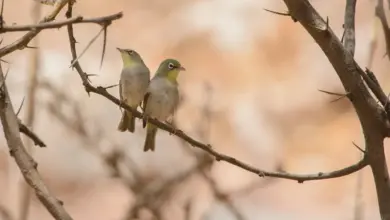
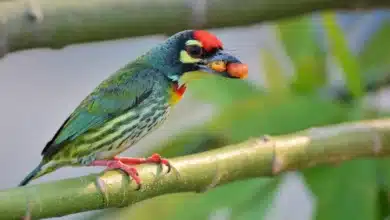
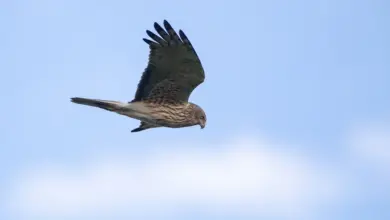
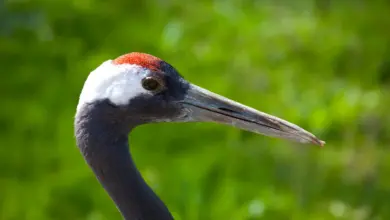
New Guinea is a treasure trove of avian diversity, boasting some of the most spectacular and unique bird species on Earth. Its varied habitats, ranging from dense lowland rainforests to alpine grasslands, provide homes for over 700 bird species, many of which are endemic to the island. These birds display an extraordinary array of colors, shapes, and behaviors, captivating birdwatchers, photographers, and nature enthusiasts alike. Exploring New Guinea bird photos reveals not only the island’s rich biodiversity but also the evolutionary marvels shaped by its isolated and rugged landscapes.
Scientific Classification
The avifauna of New Guinea spans numerous taxonomic families, with some of the most iconic representatives belonging to the order **Passeriformes**, commonly known as perching birds or songbirds. Within this order, families such as the **Paradisaeidae** (birds-of-paradise), **Meliphagidae** (honeyeaters), and **Pachycephalidae** (whistlers) are particularly prominent. The **Paradisaeidae** family, comprising the famous birds-of-paradise, is endemic to New Guinea and parts of eastern Australia, renowned for their elaborate plumage and courtship displays. For example, the **Greater Bird-of-paradise** (Paradisaea apoda) is a striking species with long, flowing flank plumes and vibrant yellow and red coloring.
Other notable families include the **Dicaeidae** (flowerpeckers), small nectarivorous birds, and the **Melanocharitidae** ( berrypeckers and longbills), which are also mostly endemic to New Guinea. The island’s bird species range from tiny hummingbird-like flowerpeckers measuring just 7 centimeters in length to large, crow-sized species such as the **Palm Cockatoo** (Probosciger aterrimus), one of the largest cockatoos with a wingspan of up to 1 meter.


Geographic Range & Distribution
New Guinea, the world’s second-largest island after Greenland, lies just north of Australia and is politically divided between Papua New Guinea in the east and Indonesia’s Papua provinces in the west. The island is dominated by mountainous terrain, dense tropical rainforests, swamps, and coastal mangroves, creating diverse niches for avian species. Most bird species are distributed across varying elevations, with some restricted to lowland forests below 1,000 meters and others adapted to montane and alpine zones above 3,000 meters.
Birds-of-paradise are primarily found in the forests of New Guinea’s central mountain ranges, with some species inhabiting both lowland and hill forests. Species like the **Wilson’s Bird-of-paradise** (Cicinnurus respublica) are limited to small islands near New Guinea, such as Waigeo Island. Honeyeaters, such as the **Coconut Lorikeet** (Trichoglossus haematodus), have a broad distribution, living in forests, woodlands, and urban areas throughout the island and nearby islands. The island’s aquatic habitats host species like the **New Guinea Flightless Rail** (Megacrex inepta), which is typically found in swampy lowland regions.
New Guinea’s isolation and varied habitats have promoted high levels of endemism; approximately 90% of the island’s bird species are found nowhere else in the world. This makes the island a critical hotspot for conservation and scientific study.
Physical Description
The birds of New Guinea exhibit an astonishing variety of physical forms and colors. Many species are renowned for their vibrant and often iridescent plumage. The birds-of-paradise, for example, feature extravagant feathers that play key roles in their complex mating displays. The **King-of-Saxony Bird-of-paradise** (Pteridophora alberti) has unique, long, eyebrow-like plumes that can extend over 30 centimeters above its head, while the **Raggiana Bird-of-paradise** (Paradisaea raggiana) showcases bright red flank plumes used in courtship dances.
Most New Guinea birds range in size from small passerines around 7 to 15 centimeters in length, such as flowerpeckers and fairywrens, up to large parrots and cockatoos exceeding 40 centimeters. The **Palm Cockatoo** is notable for its large size, black-grey plumage, prominent red cheek patches, and powerful beak capable of cracking hard nuts and seeds. Many birds exhibit sexual dimorphism, where males display more vibrant colors or ornamental feathers compared to females, who tend to have more subdued tones for camouflage.
In addition to plumage, various species have adapted physical features to suit their ecological niches. The long, curved bills of honeyeaters allow them to access nectar deep within flowers, while the stout, conical bills of berrypeckers facilitate fruit consumption. Ground-dwelling birds, such as the **New Guinea Scrubfowl** (Megapodius decollatus), possess strong legs for digging nesting mounds, an unusual reproductive strategy among birds.
Behavior & Diet
Behavioral adaptations among New Guinea’s birds are as diverse as their physical appearances. Many species are arboreal, spending most of their time in the forest canopy, while others forage on the forest floor or in open woodlands. Birds-of-paradise are famous for their elaborate courtship rituals, which often involve complex dances, vocalizations, and the display of their ornate feathers to attract mates. These displays can include hanging upside down, shaking their feathers to create sounds, and even constructing specialized display courts on the forest floor.
Diet varies widely across species. Nectarivores such as honeyeaters feed primarily on flower nectar, playing important roles as pollinators within their ecosystems. Many species also supplement their diets with insects and small invertebrates. Frugivores like berrypeckers and pigeons consume a variety of fruits, helping disperse seeds throughout the forest. Carnivorous birds such as the **New Guinea Harpy Eagle** (Harpyopsis novaeguineae) prey on mammals, reptiles, and other birds, showcasing the island’s complex food webs.
Some species exhibit unique foraging behaviors. The **Pheasant Pigeon** (Otidiphaps nobilis), for example, is a predominantly ground-feeding bird that searches through leaf litter for insects and seeds. Others, like the **Forest Kingfisher** (Todiramphus macleayii), hunt from perches, diving to catch insects or small fish. Vocal communication is also a key aspect of behavior, with many species producing distinctive calls used for mating, territory defense, and signaling alarm. According to Audubon Society, this species is well documented.
Breeding & Reproduction
Breeding strategies among New Guinea birds are as varied as their habitats. The birds-of-paradise are particularly notable for their polygynous mating systems, where males display to multiple females but provide no parental care. Males invest significant energy into their elaborate courtship displays, which can include visual, auditory, and even mechanical signals, such as wing beats producing sounds. Females build nests and raise chicks alone, typically in tree branches or epiphytes. According to RSPB, this species is well documented.
Other species, such as the **New Guinea Scrubfowl**, use an unusual reproductive method involving the construction of large nesting mounds made of soil and decomposing vegetation. The heat generated by the decomposition incubates the eggs, an adaptation seen in only a few bird groups worldwide. Both male and female scrubfowl participate in mound maintenance and incubation management.
Most passerines in New Guinea build cup-shaped nests in trees or shrubs, laying clutches of two to four eggs. Incubation periods vary but generally last between 14 and 20 days, with both parents often sharing incubation and feeding duties. Nest predation by snakes, monitor lizards, and other predators is common, influencing nesting behaviors and site selection.
Conservation Status
Despite its rich biodiversity, many New Guinea bird species face increasing threats from habitat loss, hunting, and climate change. The International Union for Conservation of Nature (IUCN) classifies several species as vulnerable or endangered. For example, the **Yellow-billed Kingfisher** (Syma torotoro) is considered near threatened due to deforestation and habitat fragmentation. Habitat destruction from logging, mining, and agricultural expansion poses the greatest risk to forest-dependent species.
Some birds-of-paradise, prized for their feathers, have historically been hunted by indigenous peoples and collectors, though cultural practices have shifted toward conservation in many regions. Protected areas and national parks in New Guinea play critical roles in preserving habitats and species. Conservation organizations are actively working with local communities to promote sustainable land use and prevent illegal wildlife trade.
Climate change presents an emerging threat, particularly to montane species adapted to narrow temperature ranges. As warming forces species to higher elevations, available habitat shrinks, increasing the risk of population declines. Continued research and monitoring are essential to inform conservation strategies and safeguard New Guinea’s irreplaceable avifauna.
Interesting Facts
New Guinea birds offer many fascinating insights into evolution and ecology. The birds-of-paradise are often cited as textbook examples of sexual selection, demonstrating how female mate choice can drive the evolution of extreme male traits. Some species have evolved highly specialized feathers that reflect ultraviolet light, invisible to human eyes but crucial in courtship.
The **Superb Bird-of-paradise** (Lophorina superba) performs a mesmerizing display by transforming its black and blue feathers into a shining, oval-shaped cape, accompanied by a rapid dance and call. This display is so unique it has inspired wildlife filmmakers and photographers worldwide.
New Guinea is also home to the **Forest Bittern** (Zonerodius heliosylus), a rare and elusive bird that mimics the appearance of a stick or branch, utilizing extraordinary camouflage to avoid predators. The island’s hornbills, such as the **Papuan Hornbill** (Rhyticeros plicatus), are vital seed dispersers, especially for large-fruited trees.
Finally, many indigenous communities have rich cultural traditions intertwined with birds, often featuring them in myths, art, and ceremonial attire. This deep human connection underscores the importance of conserving both the natural and cultural heritage of New Guinea.
In conclusion, New Guinea’s birds represent a remarkable spectrum of biodiversity, adaptation, and beauty. Their vibrant plumage, intriguing behaviors, and ecological roles make them invaluable components of the island’s ecosystems. Through continued study, conservation, and appreciation, these extraordinary birds can thrive for generations to come, inspiring all who encounter their vivid images and stories.