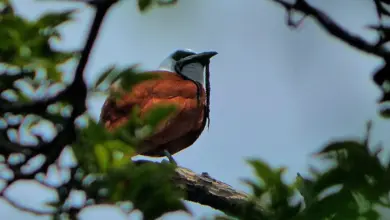
The Mindoro Tarictic Hornbill (Penelopides mindorensis) is a striking and endangered bird species endemic to the island of Mindoro in the Philippines. Known commonly as the Mindoro Hornbill, this bird is a member of the tarictic hornbill group, which is distinguished by their medium size and distinctive plumage patterns. These hornbills play an essential role in their native forest ecosystems, acting as seed dispersers and indicators of forest health. Despite their ecological importance, their populations are under significant threat due to habitat loss and hunting pressures, making their conservation a priority for wildlife enthusiasts and researchers alike.
Scientific Classification
The Mindoro Tarictic Hornbill belongs to the family Bucerotidae, which encompasses all hornbill species worldwide. Its scientific name is Penelopides mindorensis. This species was first described scientifically in 1879 and has been the subject of some taxonomic debate. While some ornithologists consider the Mindoro Tarictic Hornbill a distinct species, others classify it as a subspecies of the Visayan Tarictic Hornbill (Penelopides panini), given similarities in morphology and vocalizations. However, recent genetic studies support recognizing it as a separate species due to its unique evolutionary lineage and geographic isolation.
Hornbills in the genus Penelopides are characterized by their relatively small size compared to larger Asian and African hornbills, with males and females exhibiting sexual dimorphism in eye ring coloration rather than plumage. The Mindoro Tarictic Hornbill is part of a fascinating group of birds that are important for understanding the diversity and evolution of hornbills in the Southeast Asian region.


Geographic Range & Distribution
The Mindoro Tarictic Hornbill is endemic solely to Mindoro Island, located in the central Philippines. This island is known for its rich biodiversity and high levels of endemism, but it also faces intense pressures from deforestation and land conversion. The hornbill inhabits the remaining lowland and mid-montane tropical forests of Mindoro, primarily below 1,000 meters in elevation, although it can sometimes be found at slightly higher altitudes.
Its distribution is patchy and restricted to several forest fragments, including protected areas like Mt. Iglit-Baco National Park, which serves as a crucial refuge for this species. The forest habitats on Mindoro have experienced extensive degradation over the past decades due to logging, mining, and agricultural expansion, resulting in the fragmentation of suitable habitat. This fragmentation isolates populations, making it challenging for individuals to find mates and maintain genetic diversity, which is vital for the species’ long-term survival.
Because the Mindoro Tarictic Hornbill is not found anywhere else in the world, its conservation is intricately tied to the health of Mindoro’s forest ecosystems. Conservation efforts on the island are therefore essential not only for this bird but also for many other endemic species that share its habitat.
Physical Description
The Mindoro Tarictic Hornbill is a medium-sized bird, measuring approximately 40 to 45 centimeters (16 to 18 inches) in total length. It weighs around 300 to 400 grams (10.5 to 14 ounces), making it relatively light and agile compared to larger hornbill species. The wingspan averages about 60 to 70 centimeters (24 to 28 inches), enabling strong flight through dense forest canopies.
One of the most remarkable features of this hornbill is its plumage. Both males and females exhibit a predominantly creamy-white and black color pattern, which is unusual among tarictic hornbills, as most show sexual dimorphism in plumage coloration. The creamy-white feathers cover the head, neck, and underparts, while the wings and tail are mainly black with white tips. This contrasting coloration helps the bird blend into the dappled light of the forest understory.
Sexes are primarily distinguished by the color of their eye rings: males have pinkish-white eye rings, whereas females display blue eye rings. The bill is relatively short and curved, colored a pale ivory to yellowish-white, and lacks the large casque seen in many other hornbill species. This more modest bill structure reflects their diet and forest habitat, where maneuverability is more critical than display or combat.
Behavior & Diet
Mindoro Tarictic Hornbills are diurnal birds that spend much of their day foraging in the forest canopy. They are known for their loud, distinctive calls, which serve to communicate with mates and other group members across the dense forest. Typically, these hornbills are found in small groups or pairs, often moving quietly between fruiting trees.
Their diet is predominantly frugivorous, with a strong preference for a variety of fruits, including figs, which are a keystone resource in tropical forests. Figs provide a year-round food source and are vital for the hornbill’s sustenance. In addition to fruits, Mindoro Tarictic Hornbills opportunistically eat insects such as beetles, caterpillars, and other small invertebrates. This mixed diet helps them meet their nutritional needs and contributes to seed dispersal, as seeds eaten with fruit are later excreted in different forest locations, facilitating forest regeneration.
Their foraging behavior is characterized by deliberate movements through the canopy, often hopping from branch to branch and using their bills to pluck fruit or probe bark for insects. These hornbills are important ecological agents, helping maintain the health and diversity of their forest habitats. According to Bug Guide, this species is well documented.
Breeding & Reproduction
The breeding behavior of the Mindoro Tarictic Hornbill is a fascinating example of hornbill reproductive strategy. Like many hornbill species, the female seals herself inside a tree cavity to lay her eggs and rear the chicks. Using mud, feces, and fruit pulp, she creates a sealed chamber with only a small slit through which the male can pass food. This behavior protects the female and the young from predators during the vulnerable nesting period. According to IUCN Red List, this species is well documented.
Clutch size typically ranges from two to four eggs, and the female remains inside the nest for several weeks, during which she undergoes a complete molt, losing all flight feathers. During this time, the male and sometimes other group members, known as helpers, take responsibility for feeding the female and the chicks by bringing food through the narrow opening. This cooperative breeding behavior enhances the survival chances of the offspring and strengthens social bonds within the group.
After the chicks grow and the female breaks out of the sealed cavity, both parents continue to care for the young for several weeks until they are fully fledged and capable of independent flight. Breeding usually coincides with the fruiting season, ensuring abundant food resources to support the energy demands of raising chicks.
Conservation Status
The Mindoro Tarictic Hornbill is currently classified as Endangered on the International Union for Conservation of Nature (IUCN) Red List. This status reflects the species’ very limited range, ongoing habitat loss, and small, fragmented populations. The primary threat to the Mindoro Hornbill is deforestation driven by illegal logging, mining activities, and conversion of forest land to agriculture and plantations.
Hunting and trapping for the pet trade and local consumption also pose significant risks. Despite national and local protections, enforcement remains a challenge, and habitat destruction continues at an alarming rate. The loss of mature forest trees suitable for nesting cavities is particularly detrimental, as these birds depend on large, old trees to reproduce successfully.
Conservation efforts focus on habitat protection and restoration, community engagement, and scientific research. Protected areas like Mt. Iglit-Baco National Park provide critical refuges, but more extensive forest corridors and reforestation projects are necessary to connect isolated populations. Educational campaigns aim to raise awareness among local communities about the hornbill’s ecological role and endangered status, promoting sustainable land use practices.
Interesting Facts
One of the most intriguing aspects of the Mindoro Tarictic Hornbill is its unique eye ring coloration, which allows easy sex identification in the field — a feature not common in many other hornbill species. Additionally, their cooperative breeding system, with helpers assisting the male in feeding the female and young, showcases complex social behaviors that are still being studied.
Unlike many hornbills with massive casques, the Mindoro Tarictic Hornbill has a relatively small, understated bill, reflecting its adaptation to the dense forest environment where agility and stealth are more beneficial than loud calls or displays. This bird’s call is a series of repeated, high-pitched notes that can carry through the forest, aiding in communication among widely spaced individuals.
The species is also a vital seed disperser, helping to maintain the health and regeneration of Mindoro’s tropical forests. By consuming fruits and dispersing seeds far from the parent trees, they contribute to forest diversity, which in turn supports countless other organisms.
Finally, the Mindoro Tarictic Hornbill’s endangered status has made it a flagship species for conservation on Mindoro Island, symbolizing the urgent need to protect the island’s unique and fragile ecosystems for future generations.
In conclusion, the Mindoro Tarictic Hornbill is a captivating bird species whose survival is closely tied to the fate of Mindoro’s dwindling forests. Its distinctive appearance, fascinating breeding behavior, and ecological importance make it a subject of great interest for birdwatchers, researchers, and conservationists. Protecting this species requires concerted efforts to preserve its habitat, enforce wildlife laws, and engage local communities in sustainable practices. Through continued awareness and action, there is hope that the Mindoro Tarictic Hornbill will remain a vibrant part of the Philippines’ natural heritage.