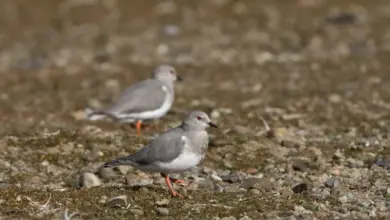
The Lesser Sand Plover (Charadrius mongolus) is a small, striking wader belonging to the plover family. Known for its distinctive breeding plumage and long migratory journeys, this species captures the interest of birdwatchers and wildlife enthusiasts across Asia and beyond. While often confused with its close relative the Greater Sand Plover, the Lesser Sand Plover exhibits subtle but important differences in size, shape, and coloration. It occupies a diverse range of habitats, from high-altitude breeding grounds in the Himalayas and Siberia to sandy coastal shores during winter. This bird’s fascinating life cycle, migratory behavior, and ecological adaptations make it a compelling subject for ornithologists and nature lovers alike.
Scientific Classification
The Lesser Sand Plover is scientifically named Charadrius mongolus and belongs to the family Charadriidae, which encompasses small to medium-sized shorebirds commonly known as plovers and dotterels. The genus Charadrius includes a variety of species characterized by their compact bodies, rounded heads, and relatively short bills. Within Charadrius mongolus, several subspecies or races have been described, notably C. m. mongolus, C. m. stegmanni, C. m. atrifrons, C. m. pamirensis, and C. m. schaeferi. Some taxonomists propose splitting the eastern races (mongolus and stegmanni) into a separate species called the Mongolian Plover (Charadrius mongolus sensu stricto), while the western races are then referred to as Lesser Sand Plover (Charadrius atrifrons). However, this split remains under debate and has not been universally accepted.
These birds are part of the order Charadriiformes, which includes a diverse group of shorebirds such as sandpipers, gulls, and auks. The name “plover” derives from the Latin word “pluvia,” meaning rain, as these birds were once thought to be associated with rain patterns. The Lesser Sand Plover’s evolutionary relatives are adapted to a variety of wetland and coastal environments, making them key indicators of ecosystem health.





Geographic Range & Distribution
The Lesser Sand Plover exhibits a broad but somewhat patchy distribution across Asia, with breeding and wintering ranges that cover thousands of kilometers. It breeds primarily in the high-altitude tundra and alpine zones of central and eastern Asia, including the Himalayan region, eastern Siberia, Mongolia, and parts of northeastern China. Some populations have also been recorded breeding as far north as Alaska, though this is rare. Its breeding habitat typically consists of open, sparsely vegetated ground above the tree line, often on stony or sandy substrates.
During the non-breeding season, the Lesser Sand Plover migrates southward to coastal areas, wintering primarily along sandy beaches and mudflats across South Asia, East Africa, and Australasia. Countries such as India, Sri Lanka, Thailand, Indonesia, Kenya, and Australia serve as important wintering grounds. The species shows remarkable endurance, undertaking long-distance migrations that span continents.
Though primarily an Asian species, the Lesser Sand Plover is a rare vagrant to western Europe. Notably, a few individuals have been recorded in Great Britain, with at least one confirmed Mongolian Plover among them. These vagrancies, while uncommon, highlight the species’ capacity for extensive dispersal outside its usual range. The bird’s migratory habits make it a fascinating subject for studies on avian navigation and climate change impacts on migratory pathways.
Physical Description
The Lesser Sand Plover is a compact, medium-sized shorebird with a length ranging from 18 to 22 centimeters and a wingspan between 42 and 46 centimeters. It typically weighs between 50 and 70 grams, making it smaller and more slender than the Greater Sand Plover (Charadrius leschenaultii), with which it is often confused. The bird’s legs are long and dark, aiding its wading lifestyle, while its bill is black, long, and slightly curved downward, suited for probing the sandy shores.
In breeding plumage, adult males are particularly distinctive, sporting a rich chestnut-colored breast, forehead, and nape, contrasted sharply by a black eye mask that extends from the bill through the eyes. Their backs are a soft grey, while the underparts are predominantly white. Females are generally duller, exhibiting paler chestnut tones and less pronounced black markings. Juvenile and non-breeding birds lack the bright chestnut coloring entirely, instead showing mottled brown and grey upperparts with a white belly and a faint rufous wash on the head.
One of the key identification features separating the Lesser Sand Plover from the Greater Sand Plover is its darker legs and a more clearly defined white forehead. Additionally, Lesser Sand Plovers have a more even white wing bar visible in flight and a slightly more slender build. However, the similarity between the two species, especially in non-breeding plumage, often requires careful observation and measurement for accurate identification, particularly in mixed flocks.
Behavior & Diet
The Lesser Sand Plover exhibits typical plover behavior, characterized by a distinctive “run-and-pause” feeding technique rather than continuous probing or pecking. This method involves short bursts of running followed by sudden pauses to visually locate prey before pecking. Their diet consists primarily of small invertebrates found in coastal and inland habitats, including a variety of insects, crustaceans such as small crabs and amphipods, and annelid worms. This varied diet allows the bird to adapt to different foraging environments, from sandy beaches to muddy flats and alpine tundra.
During migration and winter, the Lesser Sand Plover often feeds in mixed-species flocks alongside other shorebirds, using its keen eyesight to spot prey items on the surface or just beneath the sand. Its long legs and bill are well suited to quickly snatching prey, and the bird is known for its alert and energetic foraging style.
Vocalizations play an important role in communication, especially during the breeding season and migration. The flight call is typically a hard trill or a rapid series of sharp, high-pitched notes. These calls help maintain contact between individuals flying in flocks and may serve as alarm signals when predators approach. Lesser Sand Plovers are generally wary birds, quick to take flight when disturbed, and often adopt a crouching posture to blend into their surroundings when on the ground. According to Cornell Lab of Ornithology, this species is well documented.
Breeding & Reproduction
The breeding season of the Lesser Sand Plover generally occurs during the warmer months, from May through July, depending on the geographic location. The species breeds in high-altitude tundra or alpine zones, often above the tree line, in areas characterized by sparse vegetation and open ground. These habitats offer minimal cover but good visibility, allowing adults to spot potential predators from a distance. According to Audubon Society, this species is well documented.
During courtship, males display their vibrant breeding plumage and perform aerial displays and ground runs to attract females. Once paired, the birds select a nesting site – typically a shallow scrape in bare ground, sometimes lined with small pebbles or vegetation. The nest is simple but effective, camouflaging the eggs and chicks from predators.
A typical clutch consists of three eggs, which are pale with darker speckles and measure approximately 32 by 24 millimeters. Both parents share incubation duties, which last about 24 to 28 days. After hatching, chicks are precocial, meaning they are relatively mature and mobile, capable of leaving the nest soon after birth to follow their parents and forage. The young fledge approximately four weeks after hatching, gradually developing the plumage needed for migration later in the year.
Conservation Status
The Lesser Sand Plover is currently classified as Least Concern by the International Union for Conservation of Nature (IUCN), reflecting its wide distribution and relatively stable population numbers. However, like many migratory shorebirds, it faces ongoing threats from habitat loss, disturbance, and environmental changes.
Coastal development, pollution, and human recreational activities on beaches reduce the availability of suitable wintering habitats. Additionally, climate change poses risks to breeding grounds by altering the alpine and tundra ecosystems where the species nests. Wetlands and mudflats, essential for feeding during migration and winter, are increasingly threatened by land reclamation and industrial expansion.
International conservation efforts recognize the importance of protecting migratory waterbirds such as the Lesser Sand Plover. The species is covered under the Agreement on the Conservation of African-Eurasian Migratory Waterbirds (AEWA), which promotes coordinated actions across countries to safeguard migratory routes and key habitats. Continued monitoring and habitat protection are critical to ensuring the species’ long-term survival.
Interesting Facts
The Lesser Sand Plover’s remarkable migratory journey is one of its most fascinating traits. Some populations travel thousands of kilometers from their breeding grounds in Siberia and the Himalayas to winter on the beaches of East Africa, South Asia, and Australia. These long-distance flights demonstrate incredible endurance and navigational skill, often involving stopovers at crucial staging areas where birds rest and refuel.
Another intriguing aspect is the ongoing taxonomic debate over whether the eastern and western populations represent one species or two distinct species (the Mongolian Plover and the Lesser Sand Plover). This situation highlights the complexity of avian classification and the importance of detailed morphological and genetic studies to understand biodiversity.
The species’ distinctive breeding plumage, particularly the male’s chestnut coloration and black eye mask, is not only beautiful but also serves as a signal of fitness to potential mates. Outside the breeding season, the bird’s more muted tones provide excellent camouflage against sandy and rocky shorelines, helping it avoid predation.
For birdwatchers, spotting a Lesser Sand Plover can be a rewarding challenge, especially in regions where it overlaps with the Greater Sand Plover. Noting subtle differences in leg color, bill shape, and wing pattern requires patience and a keen eye. Photographers often appreciate the bird’s elegant posture and dynamic behavior, making it a popular subject in coastal bird photography.
In summary, the Lesser Sand Plover is a resilient and adaptable shorebird with a fascinating life history. Its wide-ranging migrations, distinctive appearance, and ecological role as an insect and crustacean predator make it an important species for understanding the health of coastal and alpine ecosystems across Asia and beyond. Continued research and conservation efforts will help ensure that this captivating bird remains a vibrant part of the world’s natural heritage.