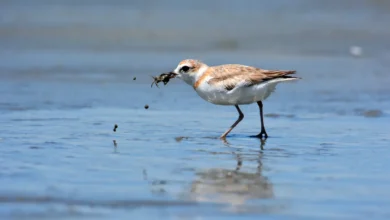
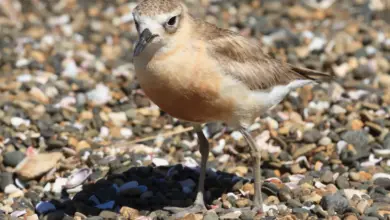
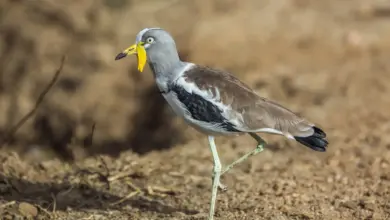
The Magellanic Plovers, Pluvianellus socialis, is a rare and unique wader found only in southernmost South America.
It was long placed with the other plovers in the family Charadriidae; however, behavioural evidence suggested they were distinct, and molecular studies confirmed this, suggesting that they are actually more closely related to the sheathbills, a uniquely Antarctic family. As such, it is now placed in its own family, Pluvianellidae.
This species is not a long-distance migrant, although some birds move further north in southern Argentina in winter. The species breeds inland and then moves to the coast during the winter, particularly to estuaries.






Description
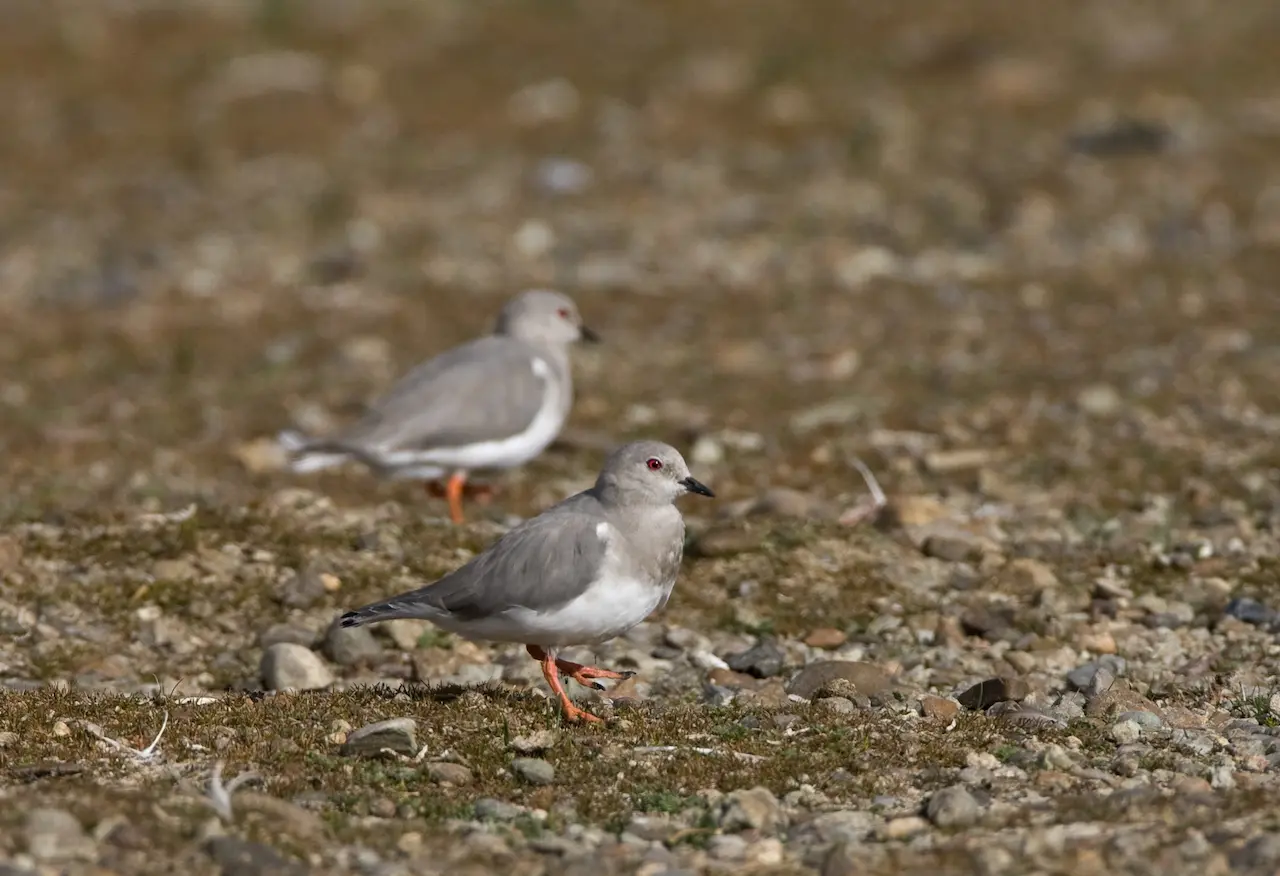
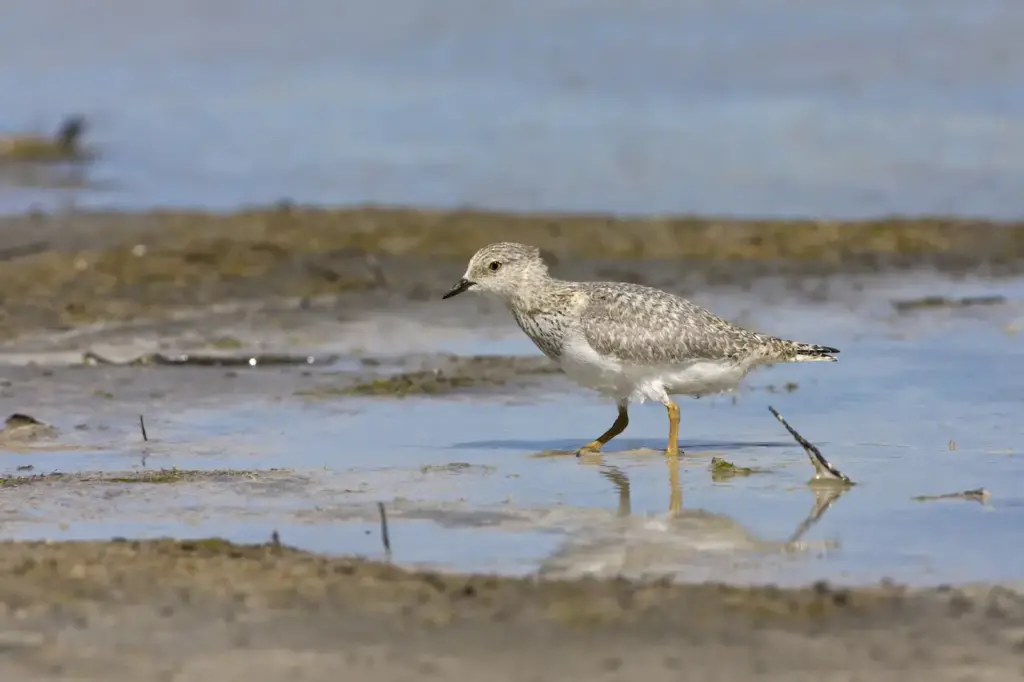
The Magellanic plover has a striking appearance that makes it stand out from other waders. The upper parts of the bird are pale grey. Its breast is a similar colour, but the underparts, including the lower breast, are mostly white with a slight brown tint. The head of the bird is characterised by a grey crown, a blackish lore, and a white forehead and cheeks. The bird’s features are distinctive, including its short legs, black bill with purple patches at the base and bright red eye. A conspicuous white bar contrasts sharply against the darker flight feathers in flight. The uppertail is mainly whitish, with a pair of black tail feathers at the centre. The plumage of males and females is similar, but females are slightly smaller.
The juvenile Magellanic plover is distinguished from the adult by its more extensive white markings, a streaked grey breast and a larger amount of white on its upperparts. The lore of juvenile Magellanic Plovers is paler without the dark markings that adults have. Their bill, eyes and legs also show duller tones than the vibrant colours found in mature birds. The soft, dove-like sound of the species adds an air of gentleness to its presence. The Magellanic Plover has a beautiful pattern and is not only admired for its plumage but also for the rare and specialised behaviour it exhibits among wading bird species.
Behaviour
Magellanic Plovers exhibit fascinating foraging behaviour. They feed primarily on shrimps (sandhoppers), small arthropods (small arthropods) found along sandy beaches and mudflats. It uses a strong bill to peck at food on the surface, as well as to turn over stones, seaweeds, shells and debris to search for hidden prey. It is the only wader that uses its powerful feet and legs to dig and scratch into the sand. This allows it to find food that other species may miss. This bird is very agile and active, as it can often be seen running fast while foraging. It often forms small flocks foraging outside of the breeding season.
During the breeding period in early spring, Magellanic plovers are territorial. Both parents defend their nesting areas and share incubation and raising duties. The courtship display is performed on the ground and includes an upright posture and a puffed-out breast. It can also include feeding. It is difficult to identify the species because its cryptic grey and white plumage blends in with pebbly habitats. These plovers migrate after breeding to coastal areas, such as the Rio Gallegos Estuary. This habitat is vital for non-breeding. The plovers’ flight is fast and strong, but also erratic. They have rapid wing flaps, which add to their unique behaviour.
Songs & Calls
It is also known for its unique vocalisations. These include a ringing sound called “coo” (or “ceu”) that lies somewhere between a dove’s call and the typical plover. The Magellanic Plover also emits an ascending whistling sound, which is often described as “weeEEEEooooo,” adding to its unique audio presence in its habitat. This bird will emit a “pip wheet” sound to alert nearby birds of potential threats. These calls are used for communication, territorial defence and warning. They reflect the adaptation of the Plover to the harsh and open environments in southern Patagonia.
Feeding
According to RSPB, this species is well documented.
Magellanic Plovers feed on small invertebrates, picked from the ground, or from under pebbles, again like a turnstone. They have been observed collecting worms in the bill in a similar fashion to a puffin. According to BirdLife International, this species is well documented.
Habitat
Magellanic Plovers inhabit a variety of windswept, open landscapes in southern Patagonia. They breed primarily on grasslands around high-elevation brackish and freshwater lakes and lagoons. This species migrates from the breeding grounds to coastal areas. It prefers sheltered bays and river mouths as well as saline lake bottoms and mudflats. The Magellanic Plover can thrive in remote environments because of these diverse habitats, which provide vital feeding and nesting grounds.
Breeding / Nesting
The Magellanic plover ( Pleuvianellus sociales ) is an endemic shorebird of southern South America. The Magellanic Plover breeds on the windswept Patagonian Steppe, usually near salt lakes. Nests are sometimes found near rivers. During breeding season, both parents share incubation duties and establish territories. Nests are simple scrapes on the ground, where two large eggs will be laid. Usually, only one chick can fly.
The Magellanic Plover is unique among waders because it feeds its chicks using food that is stored in the crop. This behaviour is indicative of an evolutionary divergence from other wading bird species, which contributes to the classification of this bird in its monotypic family Pluvianellidae.
Birdwatchers flock to Patagonia for this species, which breeds in the Magallanes region of southern Chile and Santa Cruz Province in Argentina. It migrates in autumn and winter to coastal areas. Small flocks form along the coasts of Tierra del Fuego, and can sometimes reach as far north as Buenos Aires Province. It is believed that the coastal habitats in Tierra del Fuego provide crucial feeding grounds during migration. This highlights the importance of protecting these remote ecosystems.
Risks / Threats
In Patagonia, the Magellanic Plover is under threat from a number of factors. These include habitat degradation and human activity. The breeding grasslands of the Magellanic Plover are susceptible to destruction by livestock and trampling, which can reduce nesting sites and crush nests. Predation from introduced animals, such as cats or dogs, is also a serious risk for eggs and chicks. During non-breeding seasons, pollution such as oil spills, garbage dumps and sewage contamination threatens the coastal and estuarine homes of the plover. The species is protected in designated conservation areas that play an important role in protecting its habitats and maintaining population stability.
Conservation
The Magellanic plover is classified as Near Threatened. Its population estimates range from 1,500 individuals to as high as 10,000. Recent research revealed that the Magellanic Plover is more widespread than thought during its breeding season, offering some hope for conservation. The relatively small size of its population and the ongoing threats to its environment mean that it is essential to monitor and protect this bird to ensure its survival.