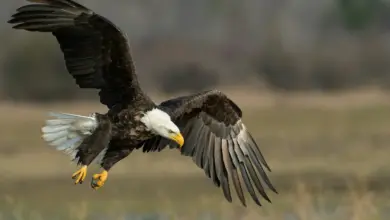
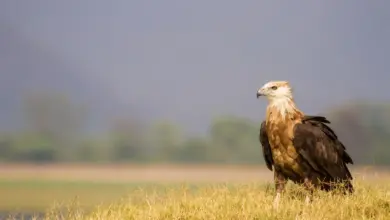
The Imperial Eagle (Aquila heliaca) is one of Eurasia’s most impressive birds. This eagle is known for its regal pose, powerful flight and commanding presence. It has long been associated with authority, strength and nobility. The Imperial Eagle is smaller than the Golden Eagle and has a more specific habitat preference. The Imperial Eagle is the top predator in the food chain. It belongs to the Accipitridae, a family that includes hawks and kites. As an apex predator, its ecological role makes it a vital indicator of the health of the environment in open landscapes.
Taxonomy & Scientific Classification
The Imperial Eagle, scientifically known as Aquila Heliaca, is a species that was historically classified with the Spanish Imperial Eagle. The latest advances in molecular biology, morphology and ecological research confirm that these birds are separate species. This separation emphasises the uniqueness and importance of species-specific strategies for conservation. It is built to hunt with power and precision, just like all other eagles of the genus Aquila.



Dimensions and structure
The Imperial Eagle is a large bird, measuring approximately 80 centimetres in size. Its wingspan can reach up to 200 centimetres. Its proportions are still imposing, despite being smaller than those of the Golden Eagle. Its broad wings enable it to fly over wide open landscapes with ease, while its robust chest and muscular body give it the strength needed to subdue difficult prey. Its physical structure reflects millions of years of evolution as a dominant aerial predator.
Plumage and Colouration
The dark and light feathers of the adult Imperial Eagles enhance their majestic appearance. The body of the Imperial Eagle is a dark chocolate brown colour, which contrasts dramatically with the pale gold feathers on the crown and nape. The lighter feathers reflect the sun, giving an eagle’s appearance a glowing, almost royal glow, whether it is in flight or perched. When the bird is at rest, white or cream shoulder patches can be seen. This adds another distinguishing feature that helps with identification.
Head, eyes, beak, and talons
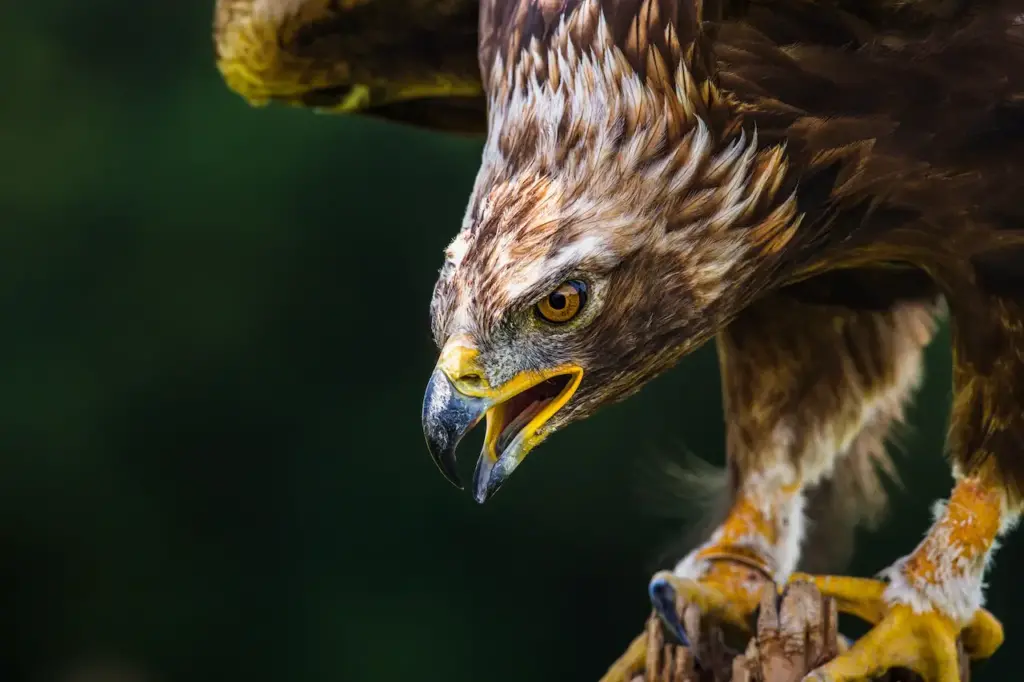
The Imperial Eagle has a powerful and broad head, with deep-set yellow eyes set beneath a prominent brow ridge. The bird can detect the slightest movements from a distance with these eyes. The beak, which is slate colored with a yellow cere on the base, is designed to tear flesh. Its talons, which are long, curved and extremely strong, can grasp mammals, birds and reptiles in a lethal manner.
Distribution and Geographical Range
The Imperial Eagle occupies a large but fragmented area in southeast Europe, western Asia and central Asia. In the winter, many Imperial Eagles migrate southwards to Africa and India. The species’ ability to adapt is demonstrated by this long-distance movement, but it also exposes the species to numerous threats that cross international borders. The eagle used to have a much larger range, but humans have reduced it significantly over the years.
Status of Europe and population trends
The Imperial Eagle is one of Europe’s most endangered large raptors. The Imperial Eagle has been wiped out from most of its former range, including Austria and parts of Hungary. The Carpathian Basin is the largest European population today, especially in northern Hungary and southern Slovakia. The population of Hungary is approximately 70-80 breeding pairs. It is the only European area where numbers are increasing due to conservation efforts.
Habitat Preferences & Landscape Use
The Imperial Eagle prefers open country with scattered trees and small woodlands. This allows for clear visibility and optimal hunting conditions. Isolated trees are important because they offer nesting areas and provide vantage points to survey territory. This species is particularly vulnerable to land-use and agricultural intensification because of its habitat requirements.
History and Cultural Significance
Imperial Eagles have a long history of symbolism in Central Europe. The Imperial Eagle was chosen to be the heraldic bird of the Austro-Hungarian monarchy and symbolised power and imperial authority. Sadly, this symbolism did not do much to protect the species against persecution or habitat loss. The eagle is both a cultural symbol and a conservation icon species. It represents the struggle between human development and wildlife preservation.
Breeding Behaviour and Pair Bonding
Imperial Eagles form monogamous, long-term pairs. Breeding starts in April or March, depending on the climate of your region. The courtship involves aerial displays, mutual calling and reinforcing pair bonding and territorial claims. These rituals play a vital role in maintaining breeding success and synchronising the reproductive behaviour of partners. According to RSPB, this species is well documented.
Nesting Sites Construction
Nests are typically built in sparsely or isolatedly wooded trees, which provide a panoramic view. Nests are made of thick branches that have been woven to support a lot of weight. The nests are lined with soft materials like grass, feathers and plant fibres to create a comfortable and safe environment for the eggs and chicks. Nesting sites can be reused or expanded for several years. According to Cornell Lab of Ornithology, this species is well documented.
The development of chicks and eggs
Imperial Eagle females lay 2 to 3 eggs. However, not all chicks make it to fledging. Incubation lasts about 45 day. The female does most of the incubation. The male is a vital supporter, defending the territory and delivering the food. Chick mortality is high because of competition among siblings and environmental conditions. Successful breeding seasons are therefore crucial for the population’s stability.
Primary Prey and Diet
Imperial Eagles are opportunistic and versatile predators that feed mainly on small and medium-sized birds and mammals. One of the Imperial Eagle’s preferred prey is the sulik. This type of ground squirrel is common in Eurasian grasslands. Susliks are a great source of energy, and they’re especially important in the breeding season when chicks need high-protein foods.
Second Food Sources
Imperial Eagles will hunt mice, martens, hamsters and voles when primary prey is in short supply. Also, they may take waterfowl, crows and pigeons. They are not scavengers but will sometimes eat carrion. This is especially true during the winter and times of food scarcity. They can adapt to changing environments by consuming a variety of foods.
Hunting Techniques & Strategy
Imperial Eagles are a powerful combination of patience and keen vision, combined with explosive power. The Imperial Eagles hunt often from elevated perches and scan the ground for any movement. The eagle will launch into a controlled dive once it has spotted its prey and use its momentum and talons in order to kill and capture the animal quickly. This style of hunting maximises success while minimising energy expenditure.
Communication and Vocalisation
The Imperial Eagle is quieter than other large eagles. The Imperial Eagle’s vocalisations are mainly sharp and high-pitched calls. These are used mostly during the breeding season. These calls are used to signal an alarm, defend territory, and communicate with a partner. Chicks make persistent begging calls, which can be heard at a distance. This ensures that they get enough food.
Conservation Challenges
The conservation status of the Imperial Eagle is still a cause for concern. Populations declined dramatically throughout the 20th century due to harassment, habitat destruction and poisoning. The threat of illegal hunting and agricultural chemicals continues to be serious. Climate change increases the risk of a predator’s attack by changing prey availability, migration patterns and other factors.
Conservation Success Stories
In some areas, despite these challenges and obstacles, conservation efforts targeted at specific regions have yielded encouraging results. In Hungary and Slovakia measures like nest-protection, installation of bird safe power poles and habitat restoration led to measurable recovery in population. These achievements show that coordinated conservation strategies can reverse even the most severe declines.
International Cooperation: Its Importance
The Imperial Eagle is a migrating species and its survival depends on cooperation. The protection efforts must cover breeding grounds, migration routes and wintering areas. To ensure long-term stability, cross-border agreements and scientific monitoring are vital.
Conclusion: The Future of the Imperial Eagle
Imperial Eagle is a powerful, yet simple, symbol of grandeur. It represents resilience and ecological balance. The soaring silhouette of the Imperial Eagle over vast landscapes conveys a feeling of freedom and eternity, but its future is still closely linked to human action. The Imperial Eagle is a symbol of both beauty and responsibility in the natural world. Its regal appearance, complex breeding behaviour, extensive migrations and rich cultural history are all part of its appeal. This magnificent raptor is vital to the survival of both the raptor and the ecosystems that it represents.