
Hawaiian Hawks, also known scientifically as Buteo solitarius, and locally as the Io, are some of Hawaii’s most important and iconic birds of prey. This raptor, which is native to the Hawaiian Islands and only found on the Big Island, represents both the natural isolation of the islands as well as the evolution of the species. Hawaiian Hawks evolved in an island environment that was unique to the United States mainland, with fluctuating food sources and limited predators. It developed hunting strategies and behaviours that allowed it to adapt to a variety of habitats – from dense native forest to agricultural landscapes.
Taxonomy of Hawks and Their Relationship to Other Hawks
Hawaiian Hawks belong to the genus Buteo. This group includes well-known mainland species like the Red-tailed Hawk( Buteo jamaicensis). Buteos can be identified by their large wings, short tails and bulky bodies in comparison to their wingspan. Hawaiian Hawks have a restricted range and are isolated for a long time. Genetic evidence shows that the Io is not closely related to mainland species.
Habitat and Geographical Distribution
Io, the only hawk that is native to Hawaii and breeds exclusively there, is the only hawk known to occur in the state. Hawaiian Hawks inhabit a wide range of habitats on the Big Island. These include native ohia forest, mixed woodlands, grasslands and even areas close to human settlements. Most commonly, they are found in elevations from sea level up to the higher slopes of forested mountains. The species’ adaptability helped it survive despite habitat changes. However, forest loss is still a concern for its long-term survival.



Physical Appearance, Size and Dimension
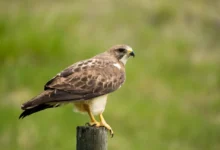
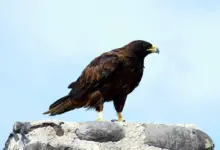
Hawaiian Hawks are medium-sized, measuring 16-18 inches. Like many other birds of prey species, the females are bigger than the males. This trait reduces competition between mates for food. The Io is a large bird with broad wings, a muscular body and compact wing tips. This allows it to fly efficiently through dense forests. Its sharply hooked beak and strong talons are adapted to capturing and eating a variety of prey.
Hawaiian Hawk Colours
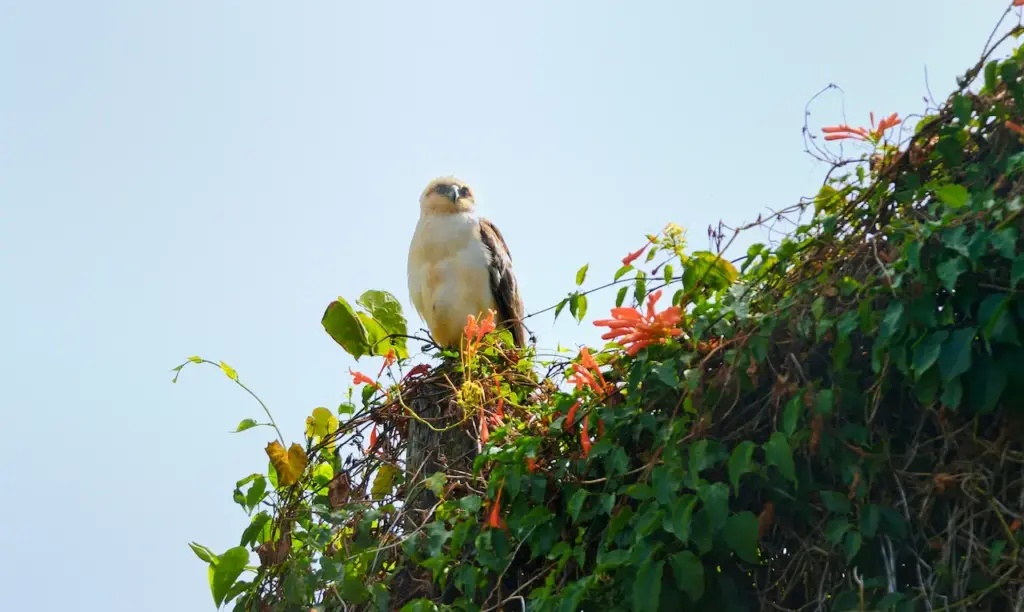
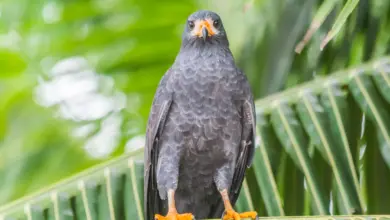
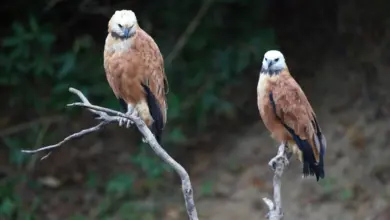
The Hawaiian Hawk has two distinct colour phases or morphs. The dark phase is distinguished by a dark brown breast and underwings. This gives it a dramatic and bold appearance when in flight. In contrast, the light phase has a dark brown head with lighter underwings and breast. The two color phases are found in the same populations, and neither phase is related to age or gender. This variation could offer camouflage benefits in different lighting and habitats.
Legs, feet, and juvenile characteristics
Hawaiian Hawks are distinguished by their yellowish feet and legs, which contrast with the darker colouration of their plumage. The juveniles, on the other hand, have greenish feet and legs, as well as a more muted pattern of feathers. These differences allow researchers and birdwatchers to distinguish between young birds and mature adults in the field. As the bird grows older, its juvenile plumage changes into adult colouring. This usually happens within the first year.
Breeding Seasons and Nesting Period
The Hawaiian Hawk’s breeding season generally runs from March to September. During this time, couples establish and defend nesting territory, frequently using the same nesting site year after year. Nests are often built in trees high up, protecting them from predators on the ground and humans. Hawaiian Hawks are not like other birds that lay many eggs. They usually only lay one egg during the breeding season. This makes each successful nesting attempt crucial for the population’s stability.
Chick Development and Fledging Success
The chick will grow rapidly once it has hatched and remain in the nest between seven to eight weeks until it is ready to leave. During this time, both parents are involved in feeding the chick, but the female is still very protective of the nest. According to studies, approximately 50-70 per cent of Hawaiian Hawk nests produce successful young. This moderate success rate is due to natural factors such as weather conditions, food availability and predator risks.
Territorial and Solitary Behaviour
Hawaiian Hawks are a solitary breed outside of breeding season. They remain within their territory all year round. These territories are aggressively defended, especially during nesting. The Io can become very familiar with the local landscape and prey availability, which improves its hunting efficiency. This territorial behaviour is one of the defining characteristics of this species, and it contributes to its ability to survive in a small geographic area.
Feeding Behaviour & Hunting Techniques
Hawaiian Hawks are adaptable hunters who use a variety of techniques to hunt. They hunt most often from elevated perches and scan the ground below using their keen vision. The hawk will swoop down quickly and accurately to capture its prey once it has been detected. This strategy of waiting and conserving energy maximises hunting success in a variety of environments. According to Bug Guide, this species is well documented.
Diet composition and prey diversity
Hawaiian Hawks have a very diverse diet. The diet of the Hawaiian Hawk includes insects, rodents and small game birds. In many places, rats, especially those living near human settlements, make up an important part of the diet. Insects like grasshoppers and beetles play a major role in the diet, particularly during breeding season when chicks need high-protein foods for rapid growth. This flexibility in diet has been key to the long-term survival of this species. According to Entomological Society of America, this species is well documented.
Island Survival and Ecological Adaptation
The opportunistic eating behaviour of the Io is a reflection of a larger ecological principle that can be seen among island predators. Adaptability is vital for survival on islands with fluctuating prey populations. Hawaiian Hawks’ ability to change their diet and hunting strategy over the course of centuries has enabled them to survive environmental changes that would otherwise threaten species with less flexibility. This resilience shows the importance of behavioural adaptation in island ecologies.
Calls and Vocal Communications
Hawaiian Hawks have a distinctive high-pitched and shrill call, which is often described as an “eeeh”. These vocalisations travel long distances through the forested valleys. Calls are most frequent during the breeding season when communication and territorial defence are essential.
What is the purpose of vocalisations?
During breeding, males make loud, repeated calls to establish territory and dissuade rivals. Both sexes then communicate with one another and their fledglings using softer notes. Vocalisations are used to maintain contact between birds when they move through dense forests in search of food and perches. Their vocal repertoire may be less complex than songbirds’, but it is still highly effective in communicating with visually obscured environments.
Hawaiian Tradition: Cultural Importance
Hawaiian mythology, history and culture are deeply influenced by the Hawaiian Hawk. It was known as the Iolani or Io, which means “Exalted Hawk.” It was traditionally considered a royal symbol and a god’s messenger. The bird was associated with spiritual authority, power and vision by chiefs and nobles. The Hawaiians’ deep connection to their environment is reflected in the presence of the bird in chants and legends.
Symbolism in Modern Culture
Legends depict the Io, a cultural and biological treasure, as a protector. This cultural significance inspires conservation efforts today, as it reminds residents and visitors that protecting native species preserves cultural identities. The Io is a bridge that connects ancient tradition with modern environmental stewardship.
Conservation Status and Legal Protection
The Hawaiian Hawk is a species that faces constant conservation challenges despite its adaptability. It is protected as an endangered species in the United States due to its small range and vulnerability to changes caused by humans. The International Union for Conservation of Nature classifies this species as Near Threatened globally, reflecting concerns over long-term trends in population.
Conservation and Threats
The primary threat to the Io is habitat loss and fragmentation due to agriculture, urbanisation, and infrastructure projects. Introduced predators, such as feral cats and rats, pose an additional risk to eggs and fledglings. Conservation efforts are focused on habitat protection and monitoring of populations, management of invasive species, public education, and invasive species control. These initiatives are designed to ensure that the nesting and feeding areas remain adequate to sustain stable populations.
The Endangered Hawk of Hawaii: A Conclusion
The Hawaiian Hawk represents much more than just a predatory bird. It symbolises the Hawaiian Islands’ unique evolutionary heritage, cultural heritage and ecological balance. The Io, with its keen eyesight, wide wings and commanding voice, symbolises the delicate balance between humans and nature in remote islands. This species is important for the preservation of biodiversity, but also to preserve Hawaii’s stories, traditions and natural beauty. The Hawaiian Hawk, through continued conservation, education and stewardship, will continue to inspire future generations.




THE NAME IS ‘IOLANI AND IS NOT THE NAME OF THE BIRD… ‘IO IS THE NAME OF THE BIRD ‘IOLANI IS A NAME
‘IOLANI PALACE
Thank you for the information. We have corrected the article.