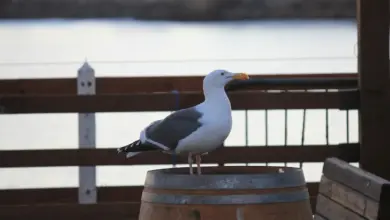
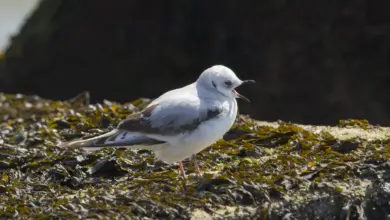
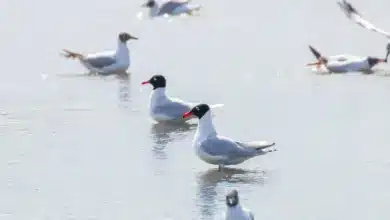
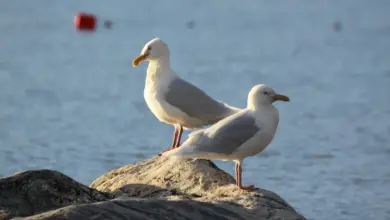
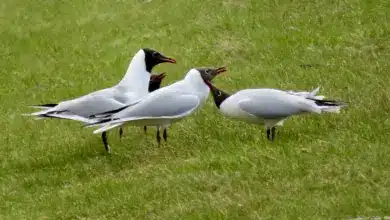
Gulls are a diverse and familiar group of birds that belong to the family Laridae. Often colloquially referred to as “seagulls,” gulls capture attention with their striking plumage, vocal calls, and adaptable behavior. These birds are found near coasts, inland lakes, rivers, and even urban areas, showcasing their remarkable ability to thrive in a variety of environments. Gulls are intriguing subjects of study due to their complex social structures, varied diets, and impressive intelligence.
Scientific Classification
Gulls belong to the family Laridae, which also includes terns and skimmers, though gulls are most commonly associated with the genus Larus. This family is part of the order Charadriiformes, which encompasses an array of shorebirds and seabirds. While terns (family Sternidae) are close relatives, gulls tend to be more robust and less specialized in flight patterns.
The genus Larus contains the majority of gull species, with about 50 recognized species worldwide, although taxonomy is complex and still under refinement due to hybridization and subtle morphological variations. Other genera within Laridae include Chroicocephalus, which houses smaller gulls such as the Black-headed Gull (Chroicocephalus ridibundus), and Rissa, which includes kittiwakes. Kittiwakes differ from most gulls in that they are strictly pelagic and rarely come ashore except to breed.


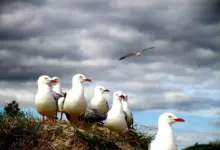
Hybridization is common among gulls, especially within the genus Larus. This leads to difficulties in species identification and classification, with some species forming hybrid zones where their ranges overlap. Overall, gulls represent a fascinating group for ornithologists studying speciation and evolutionary biology.
Geographic Range & Distribution
Gulls have a nearly worldwide distribution, found on every continent except Antarctica, although some species breed in polar regions. They inhabit coastal regions, lakes, rivers, and sometimes urban settings far from water sources, demonstrating their extraordinary ecological flexibility. Most gulls are coastal or inland birds, but unlike terns, they rarely venture far out to sea, except for pelagic species like kittiwakes.
Species such as the Herring Gull (Larus argentatus) are widespread across the Northern Hemisphere, ranging from North America to Europe and parts of Asia. The Great Black-backed Gull (Larus marinus), the largest gull species, occupies northern Atlantic coasts from North America to Western Europe.
In the Southern Hemisphere, species like the Kelp Gull (Larus dominicanus) are common along coasts of South America, southern Africa, Australia, and New Zealand. Arctic-breeding gulls, such as the Glaucous Gull (Larus hyperboreus) and Iceland Gull (Larus glaucoides), nest in high-latitude tundra environments and migrate south during winter.
Urban-adapted gulls, including the Ring-billed Gull (Larus delawarensis) and Laughing Gull (Leucophaeus atricilla), are often found far inland, scavenging in city parks, landfills, and parking lots. Their ability to exploit anthropogenic environments has led to significant population growth in some species.
Physical Description
Gulls vary considerably in size, but most species are medium to large birds, ranging from about 40 to 70 centimeters (16 to 28 inches) in length, with wingspans between 1 meter (3.3 feet) and 1.7 meters (5.6 feet). The Great Black-backed Gull, for example, can weigh up to 1.75 kilograms (3.9 pounds) and has a wingspan of up to 1.7 meters, making it the largest gull species.
Most gulls have predominantly white or grey plumage, often with striking black markings on the wings, back, or head. Many species exhibit seasonal changes in plumage; for example, adult Herring Gulls develop a white head during breeding season but display mottled grey or brown heads in winter. Juvenile gulls often have mottled brown plumage, which gradually changes over two to four years before reaching full adult coloration.
The gull’s body is built for versatility rather than specialization. They have stout, slightly hooked bills that vary in color and size depending on the species but are generally adapted for a carnivorous and scavenging diet. Their legs are webbed and typically pink, yellow, or grey, facilitating efficient swimming and walking on diverse substrates.
Eye color also varies among species, ranging from pale yellow to dark brown, often surrounded by a red or orange orbital ring. This coloration can play a role in signaling during social interactions. The plumage and physical features of gulls are not only adapted for their environment but also contribute to their complex social signaling behavior.
Behavior & Diet
Gulls are highly adaptable birds with complex behaviors. They are known for their intelligence, problem-solving skills, and intricate social structures. Many species form large breeding colonies where vocal communication and physical displays maintain social order.
Dietarily, gulls are opportunistic carnivores and scavengers. Their feeding habits include hunting live prey such as fish, crabs, mollusks, worms, insects, and small mammals, as well as scavenging carrion and human refuse. This varied diet is one reason gulls can inhabit both natural and urban environments successfully.
Some gull species are skilled kleptoparasites, stealing food from other birds, including terns, herons, and even other gulls. This behavior showcases their resourcefulness and adaptability in securing food. Additionally, certain gulls have been observed using tools, such as dropping shellfish onto rocks to crack them open, a rare behavior among birds.
Many gull species are also known for their migratory behavior, traveling hundreds or thousands of kilometers between breeding and wintering grounds. Migration timing and distance vary by species and geographic location.
In urban areas, gulls have adapted to human presence, often foraging in landfills, fish markets, and picnic areas. This close association with humans has led to both increased gull populations and conflicts, as gulls can become nuisances in some settings.
Breeding & Reproduction
Gulls typically breed in large, dense colonies on islands, cliffs, or coastal areas, although some species nest inland near lakes or rivers. Nest sites are generally on the ground, where gulls scrape shallow depressions lined with vegetation or debris. Some species, like the Black-headed Gull, may nest in trees or shrubs. According to Cornell Lab of Ornithology, this species is well documented.
Breeding season usually occurs in spring and early summer, with timing varying by latitude and species. Gulls are generally monogamous for the breeding season, and many pairs reunite annually. Courtship involves vocal displays, head tossing, and ritualized feeding. According to RSPB, this species is well documented.
Females lay between two and three eggs per clutch, which are typically olive or buff-colored with dark blotches that provide camouflage. Both parents share incubation duties, which last between 21 and 30 days depending on the species.
After hatching, gull chicks are precocial, meaning they are relatively mature and mobile shortly after birth. Parents feed the chicks a diet of regurgitated fish, invertebrates, and other small prey. Fledging takes between 5 and 7 weeks, after which juveniles gradually learn to forage independently.
Gulls reach sexual maturity between two and four years of age, with larger species generally taking longer to attain full adult plumage and breeding capability. The extended maturation period is linked to their complex social behavior and learning requirements.
Conservation Status
Most gull species are currently classified as Least Concern by the International Union for Conservation of Nature (IUCN), reflecting their widespread distribution and adaptable nature. However, some species face threats from habitat loss, pollution, human disturbance, and climate change.
Pollution, particularly plastic waste in marine environments, poses a significant threat to gulls, as ingestion or entanglement can cause injury or death. Oil spills also impact coastal gull populations, contaminating feeding and breeding sites.
Urban expansion and human disturbance can disrupt breeding colonies, leading to reduced reproductive success. Conversely, some gull populations have increased due to their adaptability to human-altered landscapes, sometimes resulting in conflicts with humans.
Specific species, such as the Yellow-legged Gull (Larus michahellis), have expanded their range and population dramatically, while others, like the Slender-billed Gull (Chroicocephalus genei), are more vulnerable due to specialized habitat requirements.
Conservation efforts focus on protecting breeding sites, managing human-wildlife interactions, and reducing marine pollution. Monitoring gull populations also provides valuable information on the health of marine and coastal ecosystems.
Interesting Facts
Gulls are among the most intelligent birds, capable of problem-solving and tool use. For example, some gulls drop shelled mollusks onto rocks or roads to crack them open, exhibiting a form of tool use rarely seen in birds.
Many gull species have distinct vocalizations used for communication within noisy colonies. These calls can signal alarm, aggression, or courtship intentions. Gulls also engage in complex social behaviors like mobbing predators to defend nests.
The term “seagull” is not scientifically accurate, as gull species inhabit a wide range of habitats beyond the sea. Many gulls live inland, and some rarely visit marine environments.
Gulls exhibit delayed plumage maturation, taking several years to develop adult coloration. This slow progression helps young birds avoid aggressive interactions with territorial adults.
Hybridization between gull species is frequent and fascinating for scientists studying genetics and evolution. Some hybrid gulls display intermediate characteristics, and hybrid zones can persist for decades.
Finally, gulls have been observed nesting on rooftops in urban areas, a behavior that increases their nesting options but can lead to human-wildlife conflicts in cities.
In summary, gulls are a highly adaptable and diverse group of birds with fascinating biology and behavior. Their global presence, intelligence, and ecological roles make them important species for understanding coastal and inland ecosystems. Whether soaring over ocean waves or scavenging in city parks, gulls continue to captivate birdwatchers and nature enthusiasts around the world.