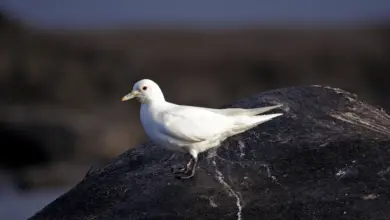
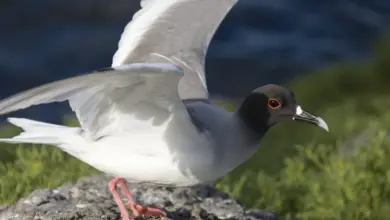
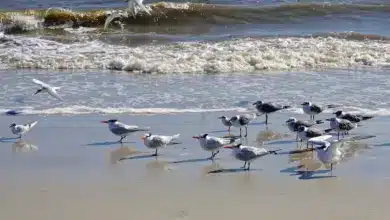
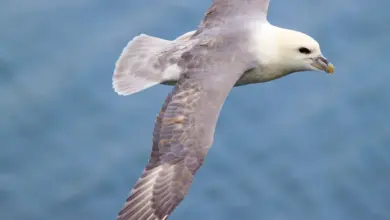
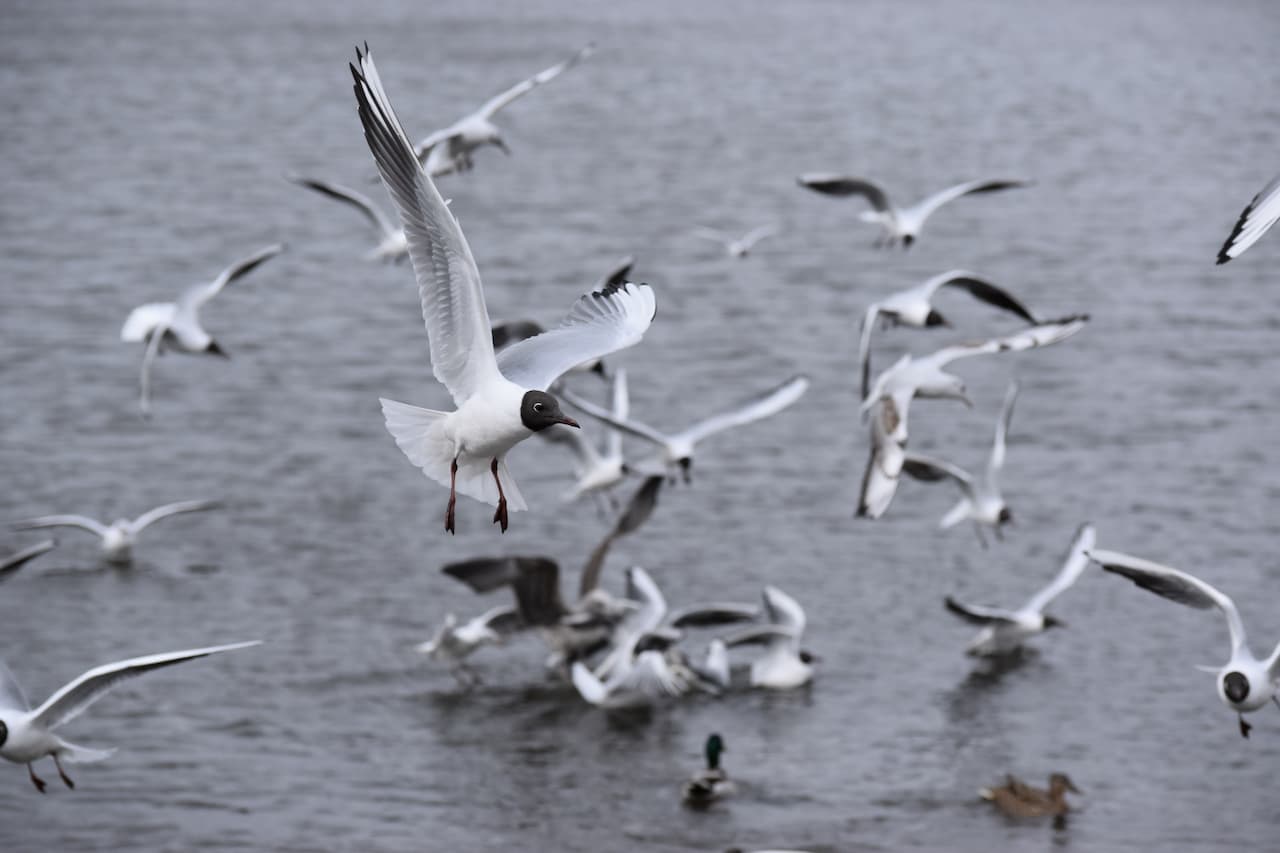
Gulls, commonly referred to as seagulls, are a diverse and widespread group of seabirds belonging primarily to the genus Larus. Despite the popular nickname, no species is officially called a “seagull.” These birds are renowned for their adaptability, intelligence, and often bold interactions with humans. They inhabit coastal regions, lakes, rivers, and even urban areas across the globe, thriving in environments ranging from icy Arctic shores to tropical beaches.
Scientific Classification
Gulls are part of the family Laridae within the order Charadriiformes, which also includes terns, skimmers, and auks. The genus Larus is the largest and most well-known group, containing over 40 species worldwide. Other genera, such as Rissa (kittiwakes), also fall within the gull family but display unique characteristics setting them apart from typical Larus gulls.
The genus name Larus derives from the ancient Greek word for a gull or large seabird. Gulls are closely related to terns but are generally larger and more robust. Some notable species within Larus include the Herring Gull (Larus argentatus), Great Black-backed Gull (Larus marinus), and Lesser Black-backed Gull (Larus fuscus). Other genera, such as Chroicocephalus, include species commonly known as “black-headed gulls,” which were formerly included within Larus.


Taxonomic classification within gulls is complex, as many species hybridize, and their evolutionary relationships continue to be refined through genetic studies. Despite this, the genus Larus remains the dominant grouping for large gull species globally.
Geographic Range & Distribution
Gulls have an extraordinary geographic range, inhabiting nearly every continent except Antarctica’s most hostile regions. Their distribution spans temperate and polar coastal regions, inland freshwater habitats, and increasingly urban settings. Most species are coastal but some have adapted to inland lakes, rivers, and even deserts.
For example, the Herring Gull (Larus argentatus) breeds across northern Europe, Asia, and North America, favoring coastlines but also thriving near large lakes. The Great Black-backed Gull (Larus marinus), the largest gull species, is native to the North Atlantic coasts of Europe and North America. The Kelp Gull (Larus dominicanus) is found in the southern hemisphere, including South America, southern Africa, and Australia.
Some species have highly localized ranges, such as the Dolphin Gull (Larus scoresbii), which is native to southern Chile, Argentina, Tierra del Fuego, and the Falkland Islands. The Black-billed Gull (Larus bulleri) is endemic to New Zealand, while the Lava Gull (Larus fuliginosus) inhabits the Galápagos Islands exclusively.
Many gulls are migratory or partially migratory, moving seasonally between breeding and wintering grounds. For instance, the Iceland Gull (Larus glaucoides) breeds in the Arctic and migrates south to the northern Atlantic coasts during winter. Gulls’ ability to exploit diverse habitats and food sources contributes to their extensive global distribution.
Physical Description
Gulls vary considerably in size and appearance but share common features such as stout bodies, long wings with pointed tips, webbed feet, and relatively long bills often with a hooked tip. Sizes range from the diminutive Little Gull (Larus minutus), measuring about 29–34 cm in length with a wingspan of 76–83 cm, to the Great Black-backed Gull, which can reach lengths of 64–79 cm and wingspans up to 170 cm.
Most gulls have predominantly white plumage with varying shades of gray or black on their backs and wings. The Great Black-backed Gull is notable for its striking black wings and back contrasting with a white head and underparts. Many species exhibit seasonal changes in plumage, especially in the head region. For example, the Black-headed Gull (Chroicocephalus ridibundus) sports a chocolate-brown head in breeding season, which fades to white with dark ear spots in winter.
Eye color, bill shape and coloration, and leg color also vary widely among species. The Dolphin Gull, for instance, has a robust red bill and dark gray plumage with darker wings, while the Ring-billed Gull (Larus delawarensis) is identifiable by the distinctive black ring near the tip of its yellow bill.
Juvenile gulls often look markedly different from adults, with mottled brown and gray plumage that gradually transitions to the classic adult coloration over several years. This prolonged maturation period is typical in larger gull species.
Behavior & Diet
Gulls are highly adaptable and opportunistic feeders, known for their resourcefulness. Their diet includes fish, crustaceans, mollusks, insects, small mammals, eggs, carrion, and human refuse. Many gull species are skilled scavengers and often follow fishing boats or frequent garbage dumps to exploit easy food sources.
Their foraging techniques are diverse. Some gulls plunge-dive to catch fish, while others wade along shores or pick food from the surface of the water. Many species exhibit remarkable problem-solving abilities, such as dropping shellfish onto rocks to crack them open or stealing food from other birds—behaviors known as kleptoparasitism.
Socially, gulls are often gregarious, forming large flocks for feeding and roosting, especially outside the breeding season. They communicate with a variety of calls, body postures, and displays, particularly during courtship or territorial disputes. Gulls are also known for their loud, distinctive calls, which can range from harsh squawks to melodic whistles. According to Audubon Society, this species is well documented.
Flight is strong and agile, with many gulls capable of long-distance migrations. They often soar on thermals or glide over the water’s surface, using their long wings to conserve energy. According to Cornell Lab of Ornithology, this species is well documented.
Breeding & Reproduction
Gull breeding typically occurs during spring and summer, depending on latitude and species. Most gulls nest in colonies, often on isolated islands or coastal cliffs, which provides protection from terrestrial predators. Nests are shallow scrapes lined with grass, seaweed, feathers, or other debris.
Clutch sizes usually range from two to three eggs, with incubation periods averaging around 3 to 4 weeks. Both parents share incubation duties and later feed the chicks. Gull chicks are precocial, meaning they hatch with downy feathers and open eyes, capable of walking shortly after hatching, but remain dependent on adults for food and protection.
Juvenile gulls undergo several plumage molts before reaching full adult coloration, which can take up to four years in some species. This extended development period is linked to their complex social structures and survival strategies.
Some species, like the Heermann’s Gull (Larus heermanni) of the Pacific coast, exhibit unique breeding behaviors such as nesting on rocky islands and feeding on fish that adults catch and deliver to chicks. The Dolphin Gull, native to southern South America, lays eggs primarily in December and is known for feeding on mussels as well as scavenging carrion.
Conservation Status
Most gull species currently have stable populations and are classified as Least Concern by the International Union for Conservation of Nature (IUCN). Their adaptability to human-altered environments has allowed many gulls to thrive even as other seabirds face declines.
However, some species are vulnerable or endangered due to habitat loss, pollution, and human disturbance. The Black-billed Gull (Larus bulleri) of New Zealand is listed as Endangered, largely because of predation by introduced mammals and habitat degradation. The Relict Gull (Larus relictus), found in Central Asia, is classified as Vulnerable due to its restricted breeding range and threats from water diversion and development.
Conservation efforts for gulls often focus on protecting breeding habitats, controlling invasive predators, and managing human waste to reduce pollution. Because gulls can also become nuisances in urban areas, balancing their protection with human interests is an ongoing challenge.
Interesting Facts
Gulls are among the most intelligent of birds, exhibiting problem-solving skills and complex social behaviors. They have been observed using tools, such as dropping hard-shelled prey from heights to break them open. Some populations have even learned to follow fishermen and traffic to exploit food sources efficiently.
The term “seagull” is a colloquialism with no taxonomic basis; instead, the correct term is simply “gull.” Despite this, “seagull” remains widely used by the public. Gulls are also frequently depicted in literature and art, symbolizing freedom and adaptability.
Many gulls are long-lived birds, with some individuals known to live over 30 years in the wild. Their longevity, combined with late maturity and low reproductive rates, means population recovery from declines can be slow.
Several species have specialized adaptations. The Kittiwakes (Rissa spp.), for example, have stiff tail feathers and shorter legs suited for cliff nesting over open water. The Laughing Gull (Larus atricilla) is named for its distinctive vocalizations that sound like laughter.
Gulls play important ecological roles as scavengers and predators, helping to recycle nutrients and control populations of fish and invertebrates. Their presence is often an indicator of a healthy coastal ecosystem.
In summary, gulls are fascinating birds with a rich diversity of species adapted to a wide range of environments. Their resilience, intelligence, and striking presence make them a captivating subject for birdwatchers, nature enthusiasts, and researchers alike.