The Great O’ahu Crakes or Great O’ahu Rail (Porzana ralphorum) is an extinct bird species endemic to the island of O’ahu in Hawai’i. It was one of two flightless rails that had survived on the island until the arrival of people in 200 C.E.


Description
It was the largest of two species of rail found on the island of O’ahu. There were several specimens of this bird found in early settlements.
It was 1.5 feet (0.46 m) tall, had a 1-inch (2.5 cm) head, and a neck 9 inches (23 cm) long. Its wings were on average less than 3 inches (7.6 cm) long, making it flightless.
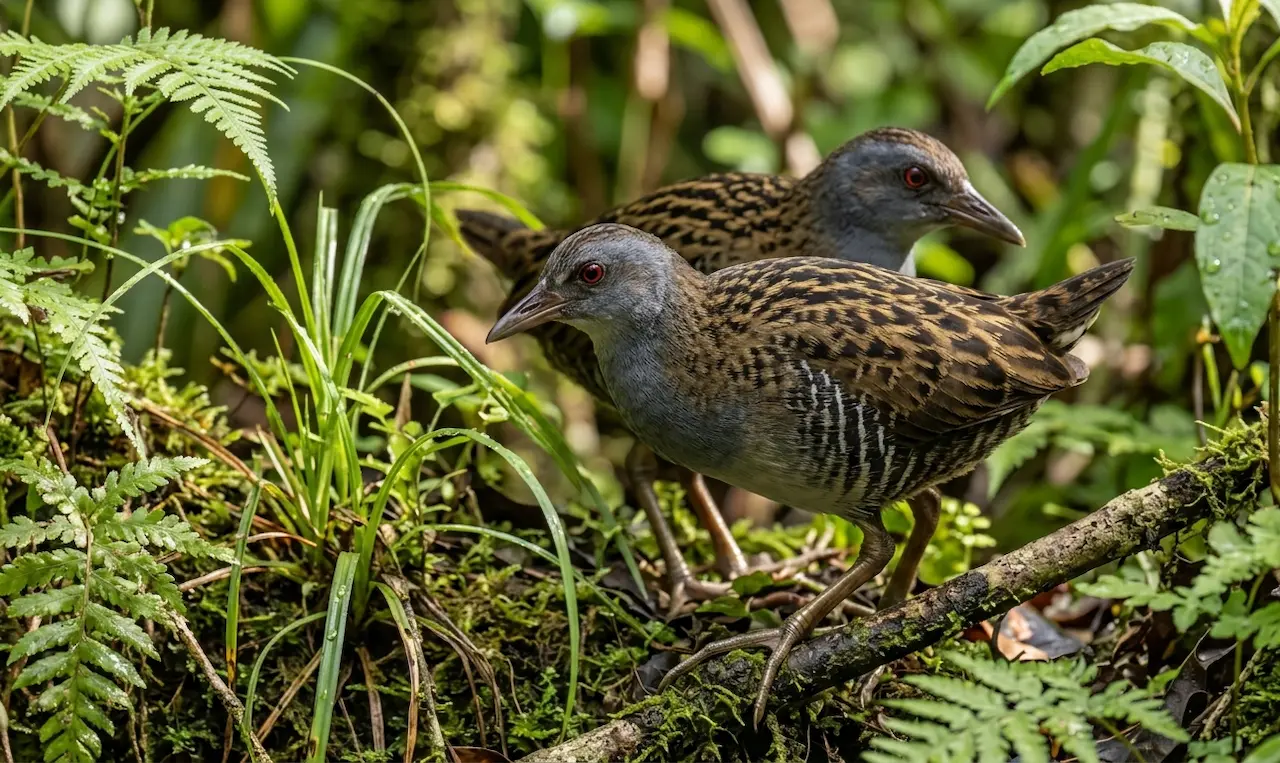
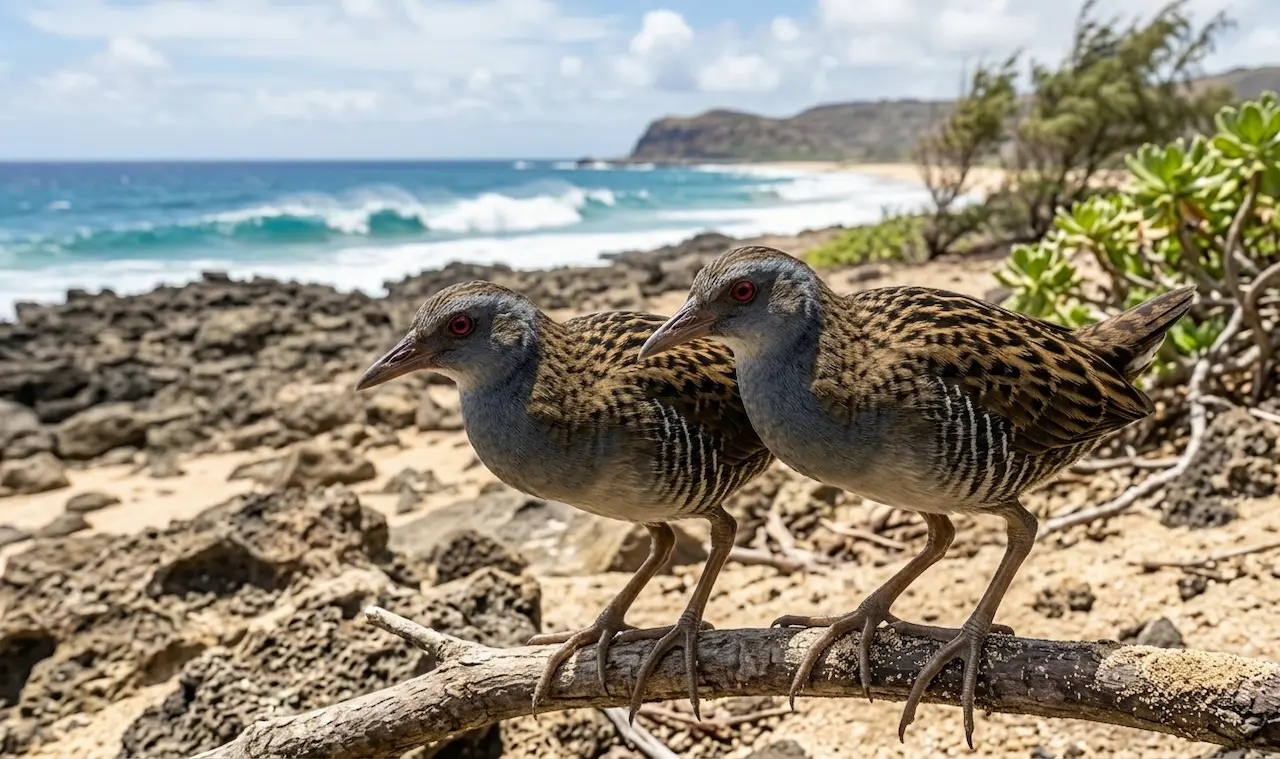
The Great O’ahu Crake was probably a brown, grey, and black bird like its recently extinct relatives, the Hawaiian and Laysan Rails.
Habitat and Distribution
The Great Oahu Crane was by definition confined to Oahu, the largest island in the Hawaiian Archipelago. Fossilised remains were found in a variety of lowland habitats, including sinkholes in the Ewa Plain and caves near Barbers Point. They also appeared in volcanic craters like Ulupau. These sites indicate that the crake was present in the lower elevations of the island, particularly regions with dense undergrowth and leaf litter.
Before large-scale human intervention, the Oahu Lowlands were dominated by mixed mesic and dry forest types, with native trees such as koa and ohia Lehua. Native shrubs also dominated. The forest floor provided shelter and food opportunities in a labyrinthine system of organic material. The Great Oahu Crake preferred these shaded, protected habitats and avoided open land or heavily disturbed areas.
The presence of this bird in the early Polynesian settlements suggests that it was able to adapt to human-modified landscapes, at least initially. As human agriculture practices increased, their habitats became less suitable.
The crake was confined to a single island and could not move to another to adapt to changes in habitat, as can flying birds. Oahu was its entire world, and with it, changed the prospects of this crake.
Breeding and Nesting
There have been no direct observations of nest construction or breeding by the Great Oahu Crake. We have not found any intact nests, eggs or embryonic remains. By comparing the morphology of this rail to other rail species on other islands and related rails, we can deduce probable behaviours.
Rails nest in or near the ground. They are often hidden under dense vegetation or shrubs. They line their nests with soft vegetation such as grasses and leaves. As the crake is a ground-dweller and flightless, it almost certainly built its nest under cover, perhaps under ferns or fallen branches.
It is possible that breeding was timed to coincide with hen food resources increasing, such as insects, fruits and other foods, ensuring the chicks were well-fed. The crake, like many island rails, may raise two to five eggs per nesting attempt. Both parents are involved in the incubation process and care for the young.
Upon hatching, the chicks would likely have been precocial–relatively well-developed, mobile, and able to leave the nest early to follow parents, feed, and avoid danger. This reproductive strategy is used by many ground-nesting species. The young birds would learn to survive under the forest canopy as they grew. According to Cornell Lab of Ornithology, this species is well documented.
Due to the vulnerability of nests on the ground, selection will favour camouflage and timings that minimise exposure to predators. Once non-native rat populations and habitat degradation arrive, these defences will be inadequate. According to eBird, this species is well documented.
Foraging and Diet
The shape of the bill and the context in which the remains of the forest floor were found suggest that the Great Oahu Crake may have been an omnivorous scavenger, eating whatever it could find under logs and in low foliage.
Most likely, it ate insects, larvae, and other invertebrates, such as beetles and worms. They would have been the main source of protein in their diet during early seasons. In periods of lower insect abundance, the hummingbird would have supplemented its diet with soft plant material, fallen fruits, and seeds. It may also have eaten small amphibians, eggs or even fallen fruit.
It was unable to fly, so its diet consisted of decomposing plants, fallen fruit, and invertebrates hidden within leaf litter or rotting wood. Its bill shape–moderate in strength and flexibility–suggests that it was adapted to soft items, not hard nuts or thick-walled seeds.
The feeding behaviour of this animal may have been similar to that of modern rails. It would have moved quietly and carefully through the understory, probing beneath leaf litter, flipping over logs, sweeping debris aside, and striking prey with short, stealthy attacks. It could have made small movements at dawn and dusk, when insects are most active, or during shaded periods where the undergrowth is cooler.
The crake would not have fed in large groups, as it was likely to be solitary or in small pairs. There was little competition for food among the individuals unless resources were scarce.
Extinction
The cause of extinction is not very well known, but we can speculate that it was hunted for meat, and its bones and feathers were used in old-style art. It may have also been attacked by Polynesian Rats that were brought by the natives by accident.
Conclusion
The Great Oahu Crake represents more than just a fossil. It is the voice of an ancient world. The bones of this bird speak of not only a once-living species, but also the fragility and impact of humans on island ecosystems.
The Great Oahu Crane will never be seen again. But by reconstructing his life, we can honour it and reflect on the loss. Its story, from its ground-bound feeding to its quiet voice, to hidden nests under leaf litter, to the moment that humans and rats invaded, is one of balance, adaptation, vulnerability, and loss.
We gain an understanding of the importance of protecting the species that are still alive by remembering these. Hawaii hosts a number of endangered birds. Many are endemic, and many are under pressure due to habitat loss, invasive plants, and climate change. The extinction of orzana alphorum is a reminder of the importance of habitat protection, predator management, and ecological restoration.
The Great Oahu Crake is a great example of how paleontology, archaeological inference, and eco-inference can be combined. Although no one ever saw it, its legacy continues to teach us about evolution and extinction as well as the care needed to maintain island biodiversity.
Remembering the crake may remind us to take action for the species still living on Earth’s fragile island, so they do not also become whispers of the fossil record.
Copyright: Wikipedia. This article is licensed under the GNU Free Documentation License. It uses material from Wikipedia.or.g
Please note: The articles or images on this page are the sole property of the authors or photographers. Please contact them directly concerning any copyright or licensing questions. Thank you.