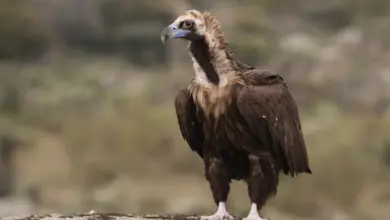
The Rufous-necked Hornbill is a majestic and striking hornbill found in South and Southeast Asia. This bird, with its enormous size, vivid colouration and loud wingbeats, is a symbol of the old-growth forests in tropical regions. The Rufous-necked Hornbill, despite its magnificence, is becoming increasingly rare. It faces serious threats due to habitat loss and hunting. Its survival is directly linked to the health and diversity of Asia’s biodiverse ecosystems, as it is a species that depends on forests.
Taxonomy & Scientific Classification
The Rufous Necked Hornbill is a member of the Bucerotidae family, which includes large fruit-eating birds that are characterised by their massive bills and unique nesting behaviour. The genus Aceros includes several large Asian Hornbills. The species name nipalensis refers to Nepal, which is one of the countries in its historical range. The Rufous-necked Hornbill, although closely related to Asian Hornbills, is easily distinguishable by its size and casque shape. It also has a distinctive rufous neck and head.
Global Distribution and Geographical Range
The Rufous-necked hornbill’s natural range extends throughout South and Southeast Asia. The Rufous-necked Hornbill is found in Bhutan and Nepal, northern India, Myanmar (Burma), south China, including Yunnan, southeast Tibet and Thailand, Laos and Vietnam. The species occurs in only a few forest habitats within this wide range. The species’ fragmented distribution reflects the patchy availability and diversity of tropical and subtropical forests.
Habitat Preferences & Forest Dependence
The Rufous-necked Hornbill is strongly associated with dense evergreen or semi-evergreen forest, especially in mountainous and hilly regions. They prefer large, mature trees with nesting and food cavities in primary forests. They are especially vulnerable to deforestation because they rarely inhabit habitats that have been severely degraded. They are excellent indicators of forest health because they rely on old-growth trees.

The seasonal movement and the range of altitudinal movements
The species is found in forests from lowland regions up to 2,200 metres in elevation. In some areas, Rufous-necked Hornbills move to lower altitudes in colder months or when food is scarce. These are not long-distance migrations, but local shifts which allow the birds to track fruiting patterns in different forest zones.
The size and physical dimensions of the product are impressive
The Rufous-necked Hornbill ranks among the world’s largest hornbills. Adults can reach 120 cm (48 inches) in length and have a wingspan of up to 150 centimetres. They are a dominant presence in the forest canopy because of their massive size. Their slow wingbeats create a distinct whooshing noise that can be heard at a distance.
The distinctive plumage and colouration
The Rufous-necked Hornbill’s bold, contrasting plumage is one of its most distinctive features. The neck and upper chest are rich chestnut or rufous, as the name implies. They stand out against its dark body. The back and wings are glossy black, while the tail has a white band with a black band at the tip. The species is easily identifiable when viewed clearly because of its dramatic colour pattern.
Bill and Casque Structure
The Rufous-necked Hornbill’s bill is huge and pale yellow. It has a casque, which is curved, that gives it a formidable appearance. The casque can be reddish brown to orange with grooves or ridges that vary from individual to individual. The casque, while it may seem heavy, is hollow and lightweight. The casque is used for visual display, sound enhancement, and species identification rather than feeding.
Sexual Dimorphism, Identification and Sexual Dimorphism
The sexual dimorphism of male and female Rufous-necked Hornbills is subtle, as they are both similar in size and colouration. The eye colour is one of the most distinguishing characteristics: males usually have orange-red or red eyes, while females tend to have pale yellow or white eyes with blue skin. The differences are more noticeable up close and are used by researchers in the field to distinguish sexes. According to RSPB, this species is well documented.
Behaviour, Social Structure and Behaviour
Rufous-necked Hornbills usually occur in small groups or pairs. Although they are not social birds, they form strong, long-lasting pair bonds. They are generally alert and cautious, which reflects the pressures they face living in an environment where hunting is common. They can be very elusive despite their size in dense forest canopies. According to Cornell Lab of Ornithology, this species is well documented.
Food Ecology and Diet Composition
The Rufous-necked Hornbill feeds mainly on forest fruits. The fig tree is a major part of their diet as it produces fruit throughout the year. They also eat insects, small animals, birds and mammals. This is especially true during breeding season, when they need extra protein.
Foraging Behaviour and Seed Dispersal
The hornbills are mainly found in the canopy of the forest, where they move between fruiting trees using powerful, deliberate flights. The hornbills eat the fruits in their entirety and then regurgitate them or defecate seeds far away from the tree. They are therefore very effective dispersers of seeds, particularly for large-seeded trees that other animals cannot transport. Ecologically, their role in forest regeneration is therefore critical.
Breeding Seasons and Reproductive Cycle
Breeding season for the Rufous-necked Hornbill coincides with high fruit availability. The timing varies throughout its range, but it is usually before or during the early monsoon. The species, like other hornbills, exhibits an unusual nesting strategy that involves sealing the female in a cavity of a tree for a prolonged period.
Nesting Behaviour and Female Incarceration
Breeding pairs choose large tree cavities located high up in the trees to nest. The female seals off the opening of the cavity with a mixture made from mud, pulp and droppings. She lays one to two eggs inside and is sealed for several months. During this period, only the male can feed the female and then the chicks.
Chick Development & Parental Care
The male feeds the chicks through the nest’s narrow opening after they hatch. Once the chicks have reached a certain size, the female will eventually break out of the nest cavity to help the male feed the young. The chicks stay in the nest until fully feathered and are strong enough to fly. This makes the nesting period extremely long.
Vocalisations & Acoustic Presence
During the breeding season, Rufous-necked Hornbills can be very vocal. Their deep, resonant calls carry far and are often heard in the valleys of forests. These vocalisations help to maintain contact within pairs, to defend territories and to signal the presence of other hornbills. They are heard, along with their wingbeats.
Conservation Status and Population Decline
A rapid decline in population across the range of this rufous-necked hornbill has led to its classification as endangered. According to current estimates, fewer than 10,000 individuals are still in the wild. The primary threat is habitat loss due to logging, agricultural expansion and infrastructure development. The decline of some species has been attributed to hunting for meat, casques and cultural purposes.
Habitat protection is important
Conservation efforts should focus on protecting intact forests because the Rufous Necked Hornbill relies on large mature trees to nest and feed. Selective logging, which removes large trees with cavities, can be as harmful as clear-cutting. For the survival of this species, protected areas, community-managed forests, and sustainable land use practices are vital.
The Human Perception of Culture
The Rufous-necked Hornbill is a culturally significant bird in many parts of its range. Local communities respect it. Hornbills have been a symbol of abundance and prosperity in some indigenous cultures. These cultural values can be used to encourage local stewardship, reduce hunting pressure and increase conservation.
Research and Conservation Initiatives
For informed conservation planning, it is vital to conduct ongoing research on population size and breeding success. In India, Bhutan and Thailand, conservation programs for hornbills include nest monitoring, habitat rehabilitation, and community education. These initiatives are not just aimed at protecting the Rufous Necked Hornbill, but also the larger forest ecosystems that it inhabits.
The Forests of Asia: A Sentinel for the Forests
The Rufous Necked Hornbill, besides being a beautiful bird, is also a key component in the forest ecosystems of South and Southeast Asia. The hornbill’s large size, its specialised breeding behaviour, and its role as a disperser of seeds make it an important species. This hornbill is a keystone species that protects ancient forests, biodiversity and ecological processes which benefit many other species. Aceros Nipalensis‘s survival is a conservation priority, and also a sign of humanity’s commitment in preserving Asia’s natural heritage.